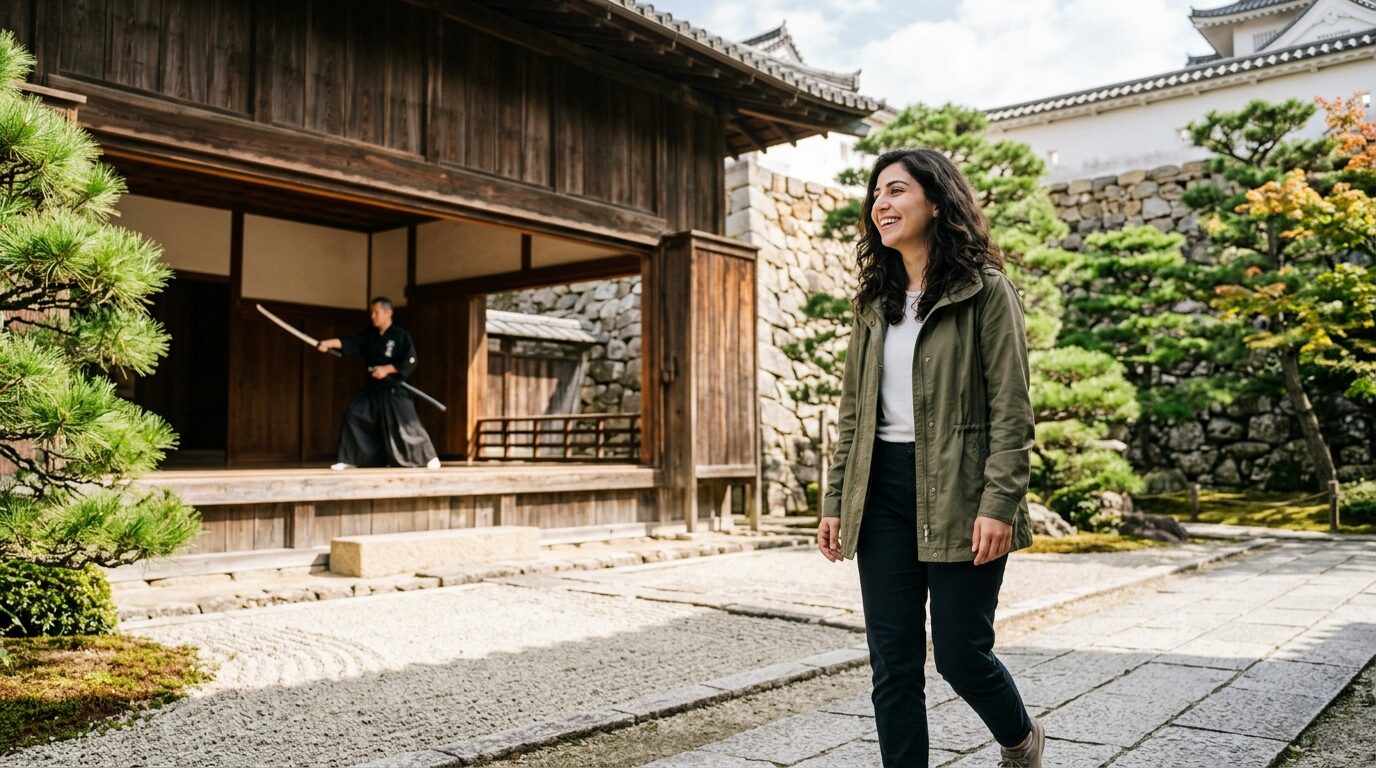
Close your eyes and picture a samurai. Most likely, you envision a solitary warrior in heavy, lacquered armor, locked in a dramatic duel beneath falling cherry blossoms. Now, picture a ninja. You almost certainly see a shadow cloaked in black, scaling a castle wall in the dead of night with supernatural agility.
These images are powerful, captivating, and internationally recognized. They have been exported globally through centuries of theater, cinema, and pop culture. However, they are also largely fictional. The cinematic gloss has effectively painted over the complex, deeply human reality of Japan’s historical warrior classes.
When you strip away the Hollywood embellishments and the neon-lit theme parks, what remains is a fascinating story of survival, administration, covert intelligence, and shifting societal roles. To truly understand this legacy, you must leave the crowded avenues of Tokyo. You must venture into the remote mountain valleys, the heavy snow regions of the north, and the preserved rural districts where these figures actually lived and operated.
This journey is not about collecting souvenirs. Engaging with the real samurai & ninja: tracing Japan’s authentic martial history is an invitation to practice observational travel. It is a chance to walk the uneven wooden floorboards of ancient estates, to look at the landscape through the eyes of a covert scout, and to understand how the profound discipline of the past continues to quietly shape the real Japan today.
Key Details and Breakdown: Deconstructing the Myths
Before stepping onto an ancient battlefield or into a preserved manor, it is crucial to unlearn the myths. Understanding the true nature of these two distinct classes provides the necessary context for your journey.
The Samurai: Bureaucrats with Blades
The word samurai roughly translates to “those who serve.” While their origins were strictly martial, their role evolved drastically over Japan’s history, particularly during the 250 years of relative peace known as the Edo Period (1603–1867).
- From Warriors to Administrators: During the long period of relative peace under the Tokugawa Shogunate, the samurai gradually transitioned from battlefield combatants to educated bureaucrats. They became civic planners, tax collectors, scholars, and local magistrates.
- The Pen and the Sword: The concept of Bunbu-Ryodo (the dual way of the pen and the sword) became the ideal. A true samurai was expected to be as proficient in poetry, calligraphy, and the tea ceremony as he was with a katana.
- A Life of Rigid Status: Being a samurai was not a profession you chose; it was a hereditary caste you were born into. They were bound by strict codes of conduct (Bushido), which dictated everything from their moral obligations to their daily etiquette.
The Ninja: The Shadows of the Soil
If the samurai were the highly visible enforcers of the ruling class, the shinobi (the historically accurate term for ninja) were the invisible operators acting behind the scenes.
- Intelligence, Not Assassination: The primary role of a shinobi was not to fight, but to gather information. They were spies, scouts, and survivalists. Engaging in open combat meant a mission had failed.
- Masters of Disguise: Forget the black pajamas. A real shinobi operating in broad daylight would dress as a monk, a traveling merchant, a street performer, or a farmer to blend seamlessly into the populace.
- The Science of Ninjutsu: Ninjutsu was less about magical martial arts and more about practical science and psychology. It encompassed meteorology, topography, the creation of explosives, and the deep understanding of human behavior required for successful espionage.
Practical Examples and Recommendations: Where to Find the Real History
To fully appreciate the real samurai & ninja: tracing Japan’s authentic martial history, you must visit the regions that shaped them. The geography of Japan—its isolating mountains and harsh winters—dictated the terms of their existence. Here are the most compelling, authentic locations to include in your itinerary.
Kakunodate (Akita Prefecture): The Scholar-Warrior’s Domain
Tucked away in the northern prefecture of Akita, Kakunodate is often called the “Little Kyoto of Michinoku.” However, its atmosphere is distinctly different from the former capital. It is one of Japan’s most perfectly preserved samurai districts (bukeyashiki).
- The Experience: Walk down wide streets lined with imposing black wooden fences and ancient weeping cherry trees. Several samurai estates, such as the Ishiguro House and the Aoyagi House, remain intact and are open to the public, some still inhabited by the descendants of the original families.
- The Authentic Angle: Look closely at the architecture. The houses were designed for dual purposes: daily domestic life and sudden defensive action. Notice the heavy thatched roofs designed to withstand the brutal Akita winters. Inside the Aoyagi House, the extensive collections of anatomical drawings, old cameras, and literature reveal the samurai’s intense dedication to academic study and modernization during the late Edo period.
Aizu-Wakamatsu (Fukushima Prefecture): The Tragic End of an Era
If you want to understand the tragic, resolute spirit of the samurai at the end of their reign, you must visit Aizu. This region was the site of the Boshin War (1868), a civil conflict where the local samurai fought fiercely—and ultimately lost—to defend the old Shogunate against the new Imperial forces.
- The Experience: Visit the reconstructed Tsuruga Castle, notable for its unique red-tiled roof. But the true emotional core of Aizu is Mount Iimori. This is the site where the Byakkotai (White Tiger Force), a group of teenage samurai fighting for Aizu, committed ritual suicide. Seeing the castle town in flames, they chose to end their lives honorably rather than face the shame of capture.
- The Authentic Angle: Aizu is not a place of Hollywood triumph; it is a place of profound melancholy and historical weight. Visiting the graves of the Byakkotai is a deeply moving experience that underscores the uncompromising reality of samurai loyalty and the harsh consequences of their rigid code.
Iga and Koka (Mie & Shiga Prefectures): The Birthplace of the Shinobi
To understand the ninja, you must go to the rugged, mist-shrouded mountains of the Iga and Koka regions, located near Kyoto and Nara. The difficult terrain here fostered fiercely independent, self-governing communities that relied on guerrilla tactics to repel outside warlords.
- The Experience: Visit the Iga-ryu Ninja Museum in Iga Ueno. While it has elements of a tourist attraction, the core of the museum is an authentic, relocated ninja farmhouse.
- The Authentic Angle: The farmhouse looks entirely unremarkable from the outside—and that is the point. Inside, female guides (kunoichi) demonstrate the hidden architectural secrets: revolving walls, hidden second floors, and concealed weapon stashes beneath the floorboards. You quickly realize that these people were essentially farmers whose agricultural tools (like sickles and threshing flails) doubled as highly effective, concealable weapons. It highlights their pragmatic, survivalist nature.
Tips for Travelers: A Respectful Pilgrimage
Exploring the real samurai & ninja: tracing Japan’s authentic martial history requires a shift in perspective. You are not visiting theme parks; you are walking through ancestral homes and sites of profound historical gravity.
- Look for the Mundane: When visiting samurai houses, do not just look at the armor displays. Look at the low wooden writing desks, the inkstones, and the delicate teacups. These everyday objects tell the story of the bureaucrats and scholars who occupied these rooms for centuries.
- Hire Local Guides: In places like Kakunodate or Aizu, the nuance is hidden in the details. A local guide—often a local volunteer with deep ancestral ties to the region—can explain the specific meaning behind a family crest carved into a roof tile, or the tactical reason a street is curved rather than straight.
- Respect the Residences: Remember that in districts like Kakunodate and Hagi, many of the old houses are still privately owned and inhabited by the descendants of samurai. Keep your voice low, do not peek over fences, and respect the boundaries of private property.
- Venture Off the Train Lines: To truly access the remote mountain valleys of Koka or the deeper historical sites of Fukushima, consider renting a car. The true history of rural Japan is often located miles away from the convenient bullet train stations. Driving allows you to observe the shifting topography that shaped these distinct martial cultures.
- Embrace the Seasons: The atmosphere of these historical sites changes drastically with the weather. Kakunodate is famously beautiful in the spring with its cherry blossoms, but visiting in the dead of winter, when the black fences are blanketed in heavy snow, provides a much more accurate sense of the harsh isolation these warriors endured.
Conclusion
The enduring fascination with Japan’s martial past is entirely justified, but the truth is far more captivating than the fiction. The samurai were not merely swordsmen; they were the complex, educated architects of Japanese society who ultimately engineered their own obsolescence to modernize their nation. The shinobi were not supernatural assassins; they were brilliant, resourceful survivalists who used their deep understanding of nature and human psychology to protect their communities.
By seeking out the real samurai & ninja: tracing Japan’s authentic martial history, you are choosing to look deeper. You are choosing the quiet observation of a beautifully crafted inkstone over the loud clash of cinematic steel. As you walk the misty mountain paths of Iga or stand beneath the heavy wooden beams of an Akita manor, the ghosts of the past become suddenly, tangibly real.
This is the essence of travel beyond the ordinary. It is the discovery that Japan’s true strength has never been found in myth, but in the profound, enduring resilience of its people. It is time to step off the beaten path, look beyond the neon lights, and uncover the quiet, authentic history that the locals know best.