
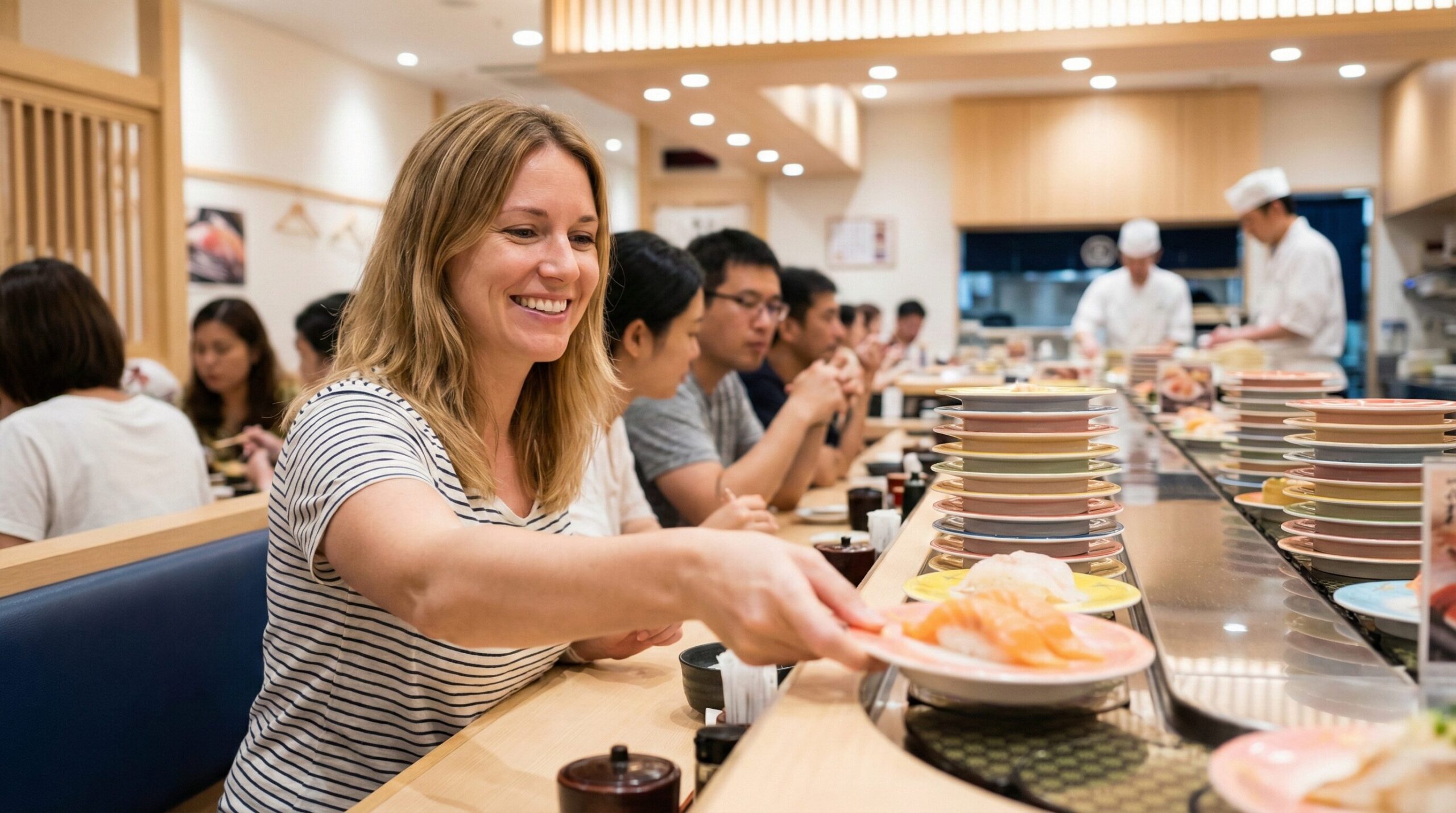
In the high-stakes world of Japanese gastronomy, sushi often feels like a gated community. The most famous counters in Ginza or Kyoto are hidden behind heavy wooden doors, requiring introductions, reservations made months in advance, and a wallet prepared for a bill that rivals a mortgage payment. It is a theater of silence and tension.
But there is another world of sushi—one that is loud, colorful, and relentlessly democratic. Kaitenzushi (conveyor belt sushi) was invented in Osaka in 1958 by a man named Yoshiaki Shiraishi. Struggling to staff his small restaurant, he watched beer bottles moving on a conveyor belt in a brewery and had an epiphany. If he couldn’t bring the sushi to the customer, he would bring the customer to the sushi.
For decades, kaitenzushi was synonymous with “cheap.” It was fast food for families, a place where quantity trumped quality. But in the last ten years, a quiet revolution has occurred. A new wave of “Gourmet Kaitenzushi” has emerged, originating largely from the seafood powerhouses of Hokkaido and Kanazawa. These restaurants combine the casual, approachable nature of the belt with fish quality that rivals mid-range traditional counters.
Today, finding the Best Sushi Train Restaurants in Japan is no longer about finding the cheapest plate. It is about finding the freshest catch, the most skilled shokunin (craftsmen), and the most authentic regional flavors—all moving past you at a standard speed of about 8 centimeters per second.
The Two Worlds of Kaitenzushi
To navigate the scene effectively, the traveler must understand that not all belts are created equal. The industry is split into two distinct tiers.
The “100-Yen” Giants (The Big Four)
Chains like Sushiro, Kura Sushi, Hama Sushi, and Kappa Sushi dominate the landscape.
- The Vibe: High-tech, family-oriented, and extremely affordable.
- The Tech: Tablets in multiple languages, automated prize games (Bikkura Pon at Kura Sushi), and high-speed “bullet trains” that deliver special orders.
- The Food: While decent, the fish is often frozen and processed centrally. The menu includes non-traditional items like hamburger sushi, corn mayo, and ramen.
- Verdict: Fun for a quick lunch or with kids, but not the culinary peak.
The “Gourmet Kaitenzushi” (Regional Chains)
This is where the Beyond Nippon reader should focus. These are often smaller chains originating from specific fishing ports.
- The Vibe: Slightly more expensive (plates range from ¥200 to ¥1,000 or more), but the chefs are visible in the center, slicing fish in front of you.
- The Food: Fresh (often never frozen) fish, sourced directly from local markets. The neta (topping) is larger, the shari (rice) is seasoned with better vinegar, and the wasabi is real.
- Verdict: This is the sweet spot of Japanese dining—exceptional quality accessible to everyone.
The Northern Kings: Hokkaido’s Gifts to the Belt
Hokkaido is the holy land of Japanese seafood. The cold currents of the Okhotsk Sea produce fish with higher fat content and sweeter flesh. When Hokkaido chains opened branches in Tokyo, they fundamentally changed the capital’s expectations of quality.
Toriton (The People’s Champion)
- Origin: Kitami, Hokkaido
- Key Locations: Hokkaido, Tokyo (Skytree, Ikebukuro)
If you ask a Tokyo local where to get the best conveyor belt sushi, Toriton is the answer 8 times out of 10. The name is legendary.
- The Experience: The chefs here are loud and energetic. When a fresh fish is broken down, they announce it to the whole restaurant. The portions are massive—the fish often drapes over the rice, hiding it completely.
- Must-Order:
- Botan Ebi (Botan Shrimp): Huge, sweet, and creamy.
- Nishin (Herring): Rarely eaten as sushi outside of Hokkaido due to its delicate nature. Here, it is fresh and crunchy.
- Giant Scallop: Cultivated in the freezing waters, these are the size of a child’s fist.
Nemuro Hanamaru (The Port Town Hero)
- Origin: Nemuro, the easternmost city in Japan
- Key Locations: Sapporo, Tokyo (KITTE Marunouchi, Ginza)
Nemuro is a fishing town famous for Sanma (Pacific Saury) and crab. Hanamaru brings the rustic, hearty spirit of the port to the city.
- The Vibe: The Tokyo branch in the KITTE building often has a 2-hour wait. Is it worth it? Absolutely. The atmosphere is bustling, resembling a fish market more than a restaurant.
- Must-Order:
- Double-Layered Scallop: Two slices of scallop stacked for texture.
- Hanasaki Crab Miso Soup: A soup made with the spiny “blooming crab” native to Nemuro. It is famously flavorful.
- Zuke Maguro: Tuna marinated in soy sauce, a technique that concentrates the umami.
The Sea of Japan Gem: Kanazawa’s Gold Standard
Kanazawa is known for its samurai culture and gold leaf production, but its proximity to the Sea of Japan makes it a sushi powerhouse. The currents here bring different fish than the Pacific side.
Kanazawa Maimon Sushi (The Luxury Belt)
- Origin: Kanazawa, Ishikawa
- Key Locations: Kanazawa, Tokyo (Ueno, Shibuya), Kyoto
Maimon Sushi elevates the kaitenzushi concept to near-fine dining levels. The interior often features black lacquer and gold accents, reflecting Kaga aesthetics.
- The Experience: It feels expensive. The plates are beautiful ceramic designs (Kutani style), not just plastic. The chefs move with the precision of traditional shokunin.
- Must-Order:
- Nodoguro (Blackthroat Seaperch): Known as the “white toro,” this is the king of Kanazawa fish. It is fatty, white fish, usually served slightly seared (aburi) with salt and lemon. It melts on the tongue.
- Gasu Ebi: A shrimp that is sweeter than the famous Ama-ebi but loses freshness so quickly it rarely leaves the prefecture. Maimon manages to transport it.
- Kani-men: Seasonal crab (Kobako-gani) served in the shell.
The Tokyo Heavyweights: Quality in the Capital
Tokyo is the battleground where all regional styles compete. However, a few local chains have managed to stand out by offering incredible value in the most expensive city in the world.
Mawashizushi Katsu Midori (The Volume King)
- Origin: Meguro, Tokyo
- Key Locations: Shibuya, Ikebukuro, Meguro
Originally a spin-off of the famous “Sushi no Midori” (a popular traditional sushi chain), Katsu Midori is infamous for its lines.
- The Vibe: It is chaotic, loud, and fast. This is not a place for a romantic date; it is a place to eat high-quality tuna until you can’t move.
- Must-Order:
- Overflowing Tuna (Kobore Maguro): A gunkan (battleship roll) piled so high with minced fatty tuna that it spills onto the plate.
- Anago (Sea Eel): A whole strip of eel, simmered until soft and draped across two rice balls.
Kaitenzushi Ginza Onodera (The Michelin Offshoot)
- Origin: Ginza, Tokyo
- Key Location: Omotesando, Osaka
This is the newest and most fascinating entrant. “Sushi Ginza Onodera” is a high-end brand with Michelin-starred branches in New York and LA. They opened a kaitenzushi branch in Omotesando to disrupt the market.
- The Vibe: Chic, modern, and upscale. It uses the same supply chain as their high-end counters (using famous Yamayuki tuna wholesaler) but serves it at a fraction of the price.
- Must-Order:
- Yamayuki Tuna: You are getting top-tier Ginza tuna for 1/5th of the price. The Akami (lean red meat) has that distinct metallic tang of wild-caught tuna.
- Red Vinegar Rice (Akazu): Unlike most sushi trains that use white vinegar, Onodera uses Akazu (aged sake lees vinegar), giving the rice a brownish tint and a deeper, savory flavor usually reserved for high-end shops.
Practical Tips: How to Master the Belt
Eating at a Japanese sushi train has its own unwritten rules. Here is how to navigate the experience like a local.
The Queue Management (EPARK)
The best places (Toriton, Hanamaru) always have lines.
- The Hack: Many use a ticket system or an app called EPARK. You get a ticket with a number and a QR code. You can scan it to see how many groups are ahead of you, allowing you to go shopping and return when your number is close. Do not stand in line physically if you have a ticket.
Touch Screen vs. The Belt
In “Gourmet Kaitenzushi,” the plates on the belt are mostly for show (or strictly for the chefs to advertise freshness).
- The Pro Move: Order from the tablet or the chef directly. Sushi on the belt dries out. Ordering fresh ensures the nori (seaweed) is crisp and the rice is warm (body temperature). If there is no tablet, catch the chef’s eye and say “Sumimasen” (Excuse me).
The Tea and Ginger
- Tea: You will find a container of green powder and a hot water tap at your seat. Put one or two small spoons of powder in the cup, then press the button for hot water. Be careful—it is scalding.
- Ginger (Gari): It is in a box on the table. It is a palate cleanser, not a salad. Eat a slice between different fish (e.g., moving from white fish to tuna) to reset your taste buds.
The Price Code
Plates are color-coded or patterned to indicate price.
- Gold/Black: Usually the most expensive (¥500–¥1,500 or more).
- Red/Blue: Mid-range.
- Yellow: Budget.
At the end of the meal, the staff will come with a handheld scanner that reads the chips embedded in the plates (or counts them manually) to tally the bill instantly.
Seasonal Strategy: What to Eat When
To truly appreciate the “Best Sushi Train Restaurants in Japan,” you must eat according to the calendar. The menu changes.
- Spring (March–May): Look for Tai (Sea Bream) and Sayori (Needlefish). Also, Hotaru Ika (Firefly Squid) from Toyama is a must-try delicacy, often served with a vinegared miso sauce.
- Summer (June–August): Aji (Horse Mackerel) and Iwashi (Sardine) are fatty and delicious. Uni (Sea Urchin) is also in peak season in Hokkaido.
- Autumn (September–November): Sanma (Pacific Saury) and Katsuo (Bonito). This is the “appetite of autumn.”
- Winter (December–February): The best season for sushi. Buri (Yellowtail) is incredibly fatty (called Kan-Buri). Zuwaigani (Snow Crab) and Shirako (Cod Milt – creamy and rich) are winter staples.
Conclusion: The Joy of Choice
There is a specific joy in sitting down at a sushi train. It is the joy of visual abundance. You are not bound by a chef’s set course (Omakase). You are the master of your own meal.
If you want to eat five plates of salmon and nothing else, you can. If you want to try the strange-looking shellfish or the seared beef, you can. It is a judgment-free zone where the only goal is satisfaction.
The Best Sushi Train Restaurants in Japan—Toriton, Hanamaru, Maimon, and the like—have elevated this experience. They have proven that “fast” does not mean “careless,” and “affordable” does not mean “cheap.” They offer a window into the regional diversity of Japan’s oceans, served on a moving platter of blue, gold, and red.
So, take your seat, make your tea, and watch the parade of fish go by. But remember: keep your eyes on the chef, and order the fresh scallops.