When you arrive in Japan, certain cultural touchstones immediately grab your attention: the silent, sweeping curves of a bullet train arriving at the platform, the meticulous architecture of ancient wooden temples, and the sprawling, neon-lit pedestrian scrambles. Yet, as you begin to navigate the country on a granular level, a different, much quieter pillar of Japanese infrastructure reveals itself. Glowing softly on nearly every street corner, nestled alongside rural rice paddies, and standing like silent sentinels at the peaks of hiking trails, are Japan’s ubiquitous jidohanbaiki—the vending machines. With over four million machines scattered across the archipelago, Japan has the highest density of vending machines in the world. For many international visitors, the western concept of a vending machine brings to mind a frustrating experience: a dusty glass box in a motel lobby, a jammed spiral coil, and a crumpled dollar bill being repeatedly rejected. In Japan, however, the vending machine is an engineering marvel of reliability, convenience, and daily ritual. To the uninitiated, these brightly lit monoliths can seem intimidating, covered in flashing buttons, digital screens, and Japanese kanji. But mastering how to use Japanese vending machines is an essential rite of passage for the mindful traveler. It is not just about securing a quick bottle of water; it is about interacting seamlessly with the hyper-efficient rhythm of the country. This guide will break down the mechanics, the etiquette, and the hidden culinary gems of Japan’s vending culture, allowing you to travel deeper and operate with the confidence of a local.
The Anatomy of Convenience: Key Details and Breakdown
Before you approach a machine to purchase a mid-afternoon matcha or a late-night coffee, it is vital to understand how these machines are structured. Japanese vending machines are highly standardized, meaning once you understand the visual language of one, you can operate almost any machine from Hokkaido to Okinawa. When learning how to use Japanese vending machines, you must familiarize yourself with this basic anatomy:
- The Color-Coded Temperature System: This is the single most important rule to learn. Japanese beverage machines dispense both hot and cold drinks simultaneously from the same unit. Look directly below the display bottle or can. A Blue Label (usually with the word つめたい – Tsumetai) means the drink is cold. A Red Label (usually with the word あたたかい – Atatakai) means the drink is hot. Selecting a cold green tea in the dead of winter when you meant to buy a hot one is a classic traveler mistake.
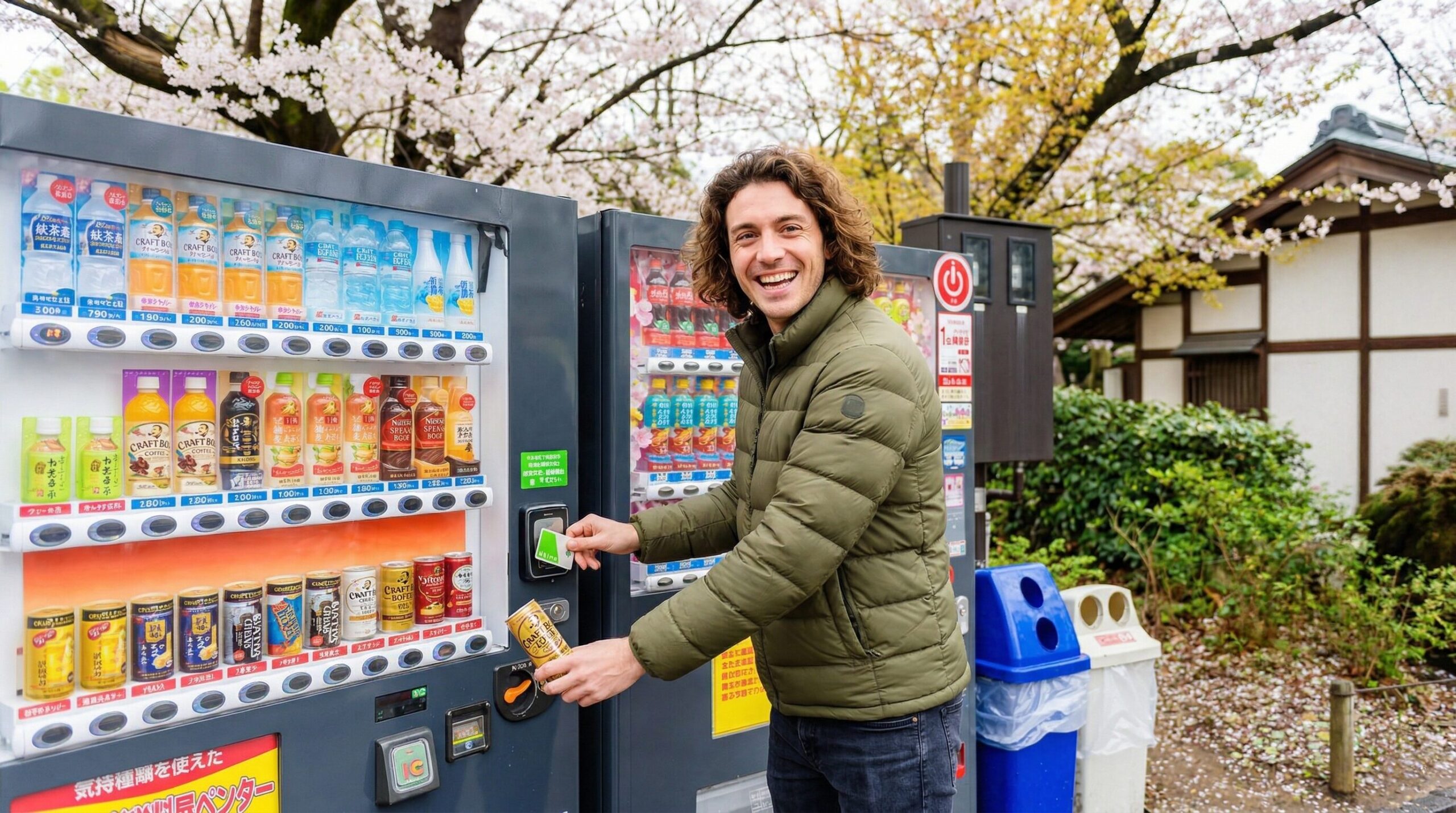
- The Payment Panel: On the right side of the machine, you will find the payment interface. It typically includes a coin slot (accepting 10, 50, 100, and 500 yen coins), a bill acceptor (almost exclusively for 1,000 yen notes), and a glowing, rectangular IC card reader for digital payments. Note: Vending machines do not accept 1-yen or 5-yen coins.
- The Return Lever: Usually located right next to the coin slot, there is a small physical lever. If you insert your money and change your mind, pushing this lever will drop your coins into the return tray at the bottom.
- The Sequence of Operation: Unlike older western machines where you select the drink and then insert money, the Japanese sequence for cash is reverse. When paying with cash, you insert your money first. However, when using an IC card, you must press the button for your desired drink first, and then tap your card. Once the machine registers the funds, the buttons below the available drinks will illuminate. Press your desired illuminated button, and the drink will instantly drop into the collection bin.
Beyond the Bottle: Practical Examples and Recommendations
While the standard beverage machine is the most common, the Japanese vending ecosystem is incredibly diverse. Understanding the specific types of machines you will encounter allows you to leverage them for cheap meals, quick comfort, and cultural immersion.
The Classic Beverage Machine
These machines line the sidewalks of every ward in Tokyo and every rural road in the countryside. They are your lifeline for hydration during the humid Japanese summer and your source of warmth during the crisp autumn evenings.
Highlights and Recommendations:
- Canned Coffee Culture: Japan has an obsession with canned coffee, pioneered by brands like Boss, Georgia, and Fire. You will see businessmen grabbing a small, hot can of “Boss Rainbow Mountain Blend” on their morning commute. These cans double as excellent hand warmers in the winter.
- The Unsweetened Standard: Travelers are often surprised to find that the default green tea (Ryokucha), oolong tea, and barley tea (Mugicha) sold in these machines contain zero sugar. Look for brands like Ayataka or Oi Ocha for a deeply refreshing, authentic, and healthy tea experience.
- Sports Drinks: If you are hiking the Nakasendo trail or exploring Kyoto in July, you must try Pocari Sweat or Aquarius. These are Japanese isotonic sports drinks. Despite the unappetizing name of the former, they are lightly grapefruit-flavored, incredibly hydrating, and essential for combating the intense Japanese summer heat.
The Ticket Machine (Shokkenki)
If you want to know how to use Japanese vending machines effectively, you must master the shokkenki. This is the meal ticket vending machine found at the entrance of almost every casual ramen shop, standing soba joint, and beef bowl chain (like Matsuya) in the country.
How to Navigate the Shokkenki:
- Analyze the Layout: The machine features a grid of buttons, each corresponding to a dish. The top row, usually featuring the largest buttons, highlights the restaurant’s signature or most popular dishes.
- Insert Cash First: The machine will not register your button presses until you insert your money. Insert a 1,000, 5,000, or 10,000 yen note.
- Make Your Selection: Press the button for your meal. If you want a side of gyoza or a draft beer, press those buttons as well. Small paper tickets will print and drop into the tray.
- Collect Your Change: Do not forget to press the change return button (often flashing or marked おつり – Otsuri) to collect your remaining yen.
- Hand to the Chef: Walk to the counter, sit down, and simply place your paper tickets on the elevated counter in front of you. The chef will take them and begin preparing your meal without a single word needing to be exchanged.
The Novelty and Niche Machines
As you travel deeper into the country, you will begin to notice machines that dispense far more than just caffeine and hydration.
Highlights of Niche Machines:
- Seventeen Ice: Found frequently on train station platforms and near public parks, these machines dispense tightly wrapped, cylindrical ice cream cones and ice pops. They are a beloved nostalgic treat for Japanese students waiting for the train.
- Dashi Machines: In cities like Kyoto and Tokyo, you might stumble upon a machine dispensing plastic bottles filled with amber liquid and a whole flying fish floating inside. This is not a beverage; it is premium dashi (soup stock) used for home cooking.
- Hot Soup in a Can: During the winter months, standard beverage machines will switch their inventory to include hot, savory options. The most famous is Corn Potage—a rich, creamy, and sweet corn soup served piping hot in a steel can. It is the ultimate budget-friendly comfort food on a snowy evening.
Mindful Interaction: Tips for Travelers
Interacting with this sprawling network of machines requires an understanding of the unspoken social rules that govern Japanese public spaces. To ensure your behavior aligns with local customs, keep these essential tips in mind:
- Embrace the IC Card: The absolute best way to interact with Japanese vending machines is to use a prepaid transit IC card (like a Suica, Pasmo, or ICOCA). Simply select your drink by pressing the button, and then tap your physical card (or your smartphone, if you have added the digital card to your Apple Wallet) to the glowing reader. It deducts the exact amount instantly, eliminating the need to fumble with heavy pockets full of loose change.
- The “No Walking and Eating” Rule: A crucial aspect of Japanese street etiquette is that people generally do not eat or drink while walking. If you purchase a drink from a vending machine, the polite protocol is to step to the side, stand next to the machine, consume your beverage, and dispose of the container immediately before continuing your walk.
- The Sacred Recycling Bin: Next to almost every single beverage vending machine in Japan, you will find a small, specialized receptacle with two round holes. This is not a trash can. It is strictly a recycling bin for PET plastic bottles and aluminum cans purchased from the machine. Never throw your convenience store food wrappers, used tissues, or coffee cups into these bins. Disrespecting the recycling system is a major social faux pas.
- Alcohol and Cigarette Machines: You will occasionally see machines dispensing beer, highballs, or cigarettes on the street. However, as an international traveler, you generally cannot use them. These machines require a specialized, domestically issued age-verification card (like a “Taspo” card) to unlock. If you wish to purchase these items, you must go to a convenience store and present your passport to the cashier to verify your age.
Conclusion
Japan’s true beauty is not only found in its grand monuments; it is intricately woven into the seamless, brilliant design of its everyday life. The soft hum of a glowing vending machine on a dark, quiet residential street is as much a part of the modern Japanese landscape as the cherry blossoms or the towering skyscrapers. By taking the time to learn exactly how to use Japanese vending machines, you elevate your travel experience from mere observation to active participation. You gain the ability to navigate the country with the ease of a local, unlocking a world of hot winter soups, perfectly chilled summer teas, and frictionless ramen shop dinners. It is time to go beyond the ordinary, pocket your IC card, and discover the deep, comforting, and remarkably efficient rhythm of everyday Japan.