
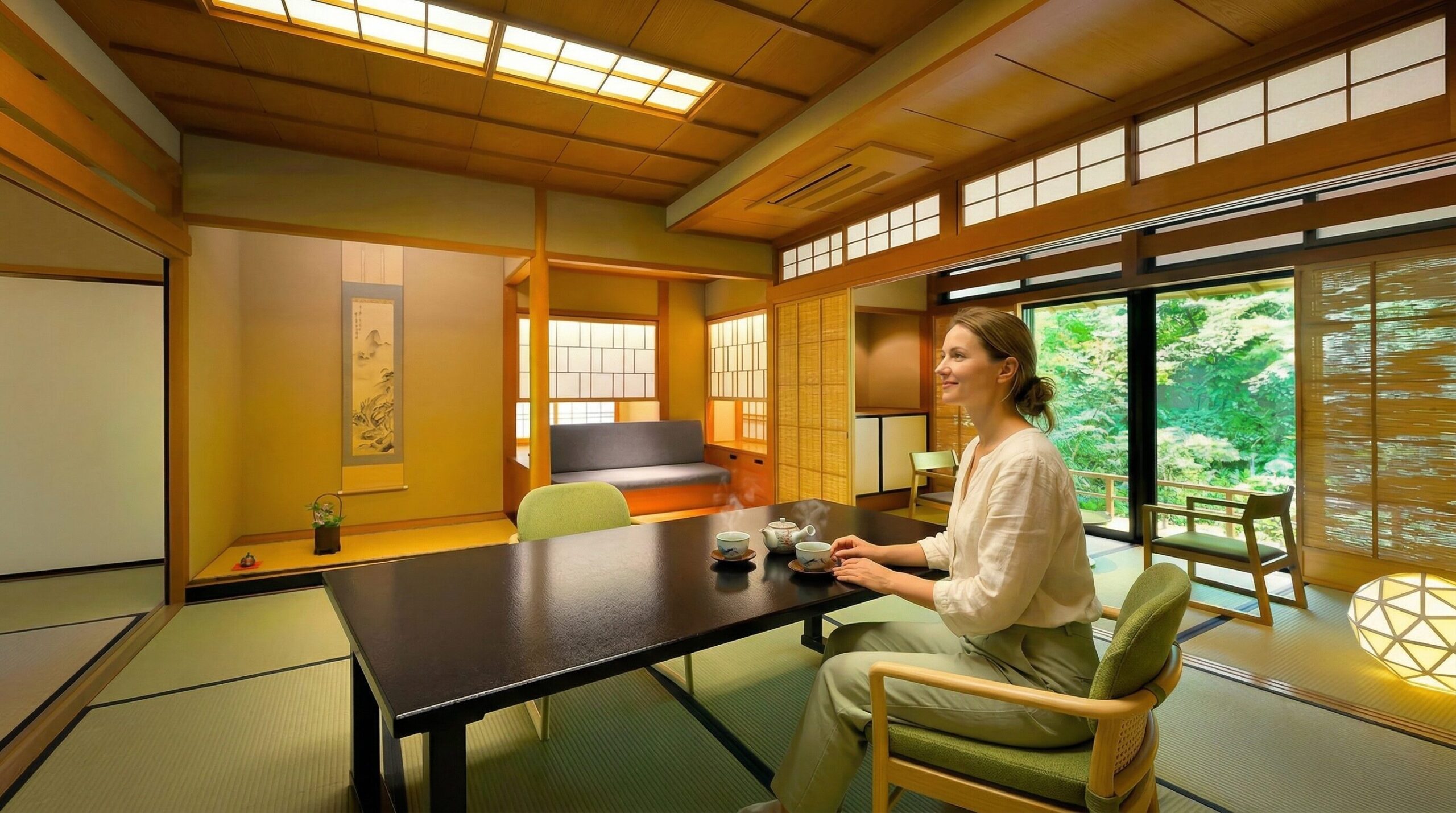
When the discerning international traveler dreams of a luxury Japanese getaway, the mind typically wanders to the manicured zen gardens of Kyoto or the high-end boutique hotels of Tokyo. While these destinations offer spectacular, world-class accommodations, they also come with an unavoidable reality: massive crowds. For the traveler who defines true luxury as absolute privacy, pristine natural surroundings, and unbroken silence, the standard “Golden Route” simply no longer suffices. To find this level of isolation and cultural purity, you must look to the deep north. You must travel to Tohoku.
Comprising the six northernmost prefectures of Japan’s main island of Honshu—Aomori, Akita, Iwate, Yamagata, Miyagi, and Fukushima—Tohoku is a region of dramatic, rugged beauty. It is a land defined by ancient volcanic calderas, dense beech forests, and winters so severe they blanket the landscape in meters of pure white snow. Here, the traditional Japanese inn has evolved to master the harsh climate, transforming it into a spectacular asset. Luxury ryokan retreats in Tohoku do not rely on flashing lights or proximity to major shopping districts. Their luxury is derived from space, stillness, and an obsessive dedication to regional heritage. Booking a stay in this region is an invitation to travel deeper. It is an opportunity to soak in mineral-rich, private hot springs while watching snow fall on a silent cedar forest, and to taste hyper-local ingredients forged by the distinct seasons of the north. This guide will navigate you through the architecture, the culinary philosophy, and the most exquisite hidden sanctuaries of Tohoku.
The Anatomy of Northern Hospitality: Key Details and Breakdown
What elevates a standard hotel into one of the premier luxury ryokan retreats in Tohoku? In a region historically known for its rugged agricultural lifestyle and severe winters, luxury here is defined by profound comfort and deep, restorative warmth. When you venture into the deep north, you will find that the finest accommodations share several distinct architectural and philosophical hallmarks:
- The Mastery of Winter Aesthetics: In Tohoku, winter is not a season to be avoided; it is the main event. Luxury ryokans here are built to frame the snow. They feature massive, floor-to-ceiling glass windows in the lounges and perfectly positioned rotenburo (open-air baths) that allow guests to safely and comfortably observe the brutal, beautiful winter landscape from a place of absolute, heated sanctuary.
- Hyper-Local ‘Michinoku’ Cuisine: The culinary philosophy of Tohoku luxury inns focuses heavily on sansai (foraged mountain vegetables), wild mushrooms, and coastal seafood from the frigid Sanriku coast. Furthermore, the region is home to some of Japan’s most elite, lesser-known Wagyu beef brands, such as Yonezawa, Maesawa, and Sendai beef. A kaiseki dinner here is a profound, edible map of the northern terrain.
- Exceptional Geothermal Diversity: Tohoku is one of the most volcanically active regions in Japan. The hot springs (onsen) here are not just hot water; they are rich, diverse medicinal baths. You will find ryokans offering milky-white sulfur springs, deeply acidic volcanic waters, and iron-rich orange baths, all piped directly into your private suite.
- The ‘Yukiguni’ (Snow Country) Empathy: The concept of omotenashi (Japanese hospitality) takes on a different flavor in Tohoku. It is deeply rooted in the historical necessity of sheltering travelers from the deadly cold. The hospitality here feels less formal and performative than in Kyoto, and more like a warm, genuine embrace from a community that understands the value of a safe haven.
Sanctuaries of the North: Practical Examples and Recommendations
Because Tohoku is geographically massive, the luxury retreats are spread far apart, hidden in remote river valleys and mountain plateaus. Finding the absolute best requires knowing exactly which quiet forest road to turn down. Here are four exceptional luxury ryokan retreats in Tohoku that reward the mindful traveler.
Modern Elegance in the Wild – Chikusenso Onsen (Miyagi Prefecture)
Nestled at the base of the towering Mount Zao in Miyagi Prefecture, Chikusenso Onsen represents the perfect fusion of traditional Japanese ryokan aesthetics and modern, international luxury resort standards. Set within a massive 20,000-tsubo (about 16 acres) private botanical park, it is a masterclass in spatial luxury.
Highlights for the Mindful Traveler:
- The Architectural Fusion: Unlike highly traditional ryokans where you sleep on floor futons, Chikusenso caters to modern comfort. The suites feature massive Western-style luxury beds, soaring ceilings, and sleek, contemporary wooden interiors that blend seamlessly with traditional tatami mats and paper shoji screens.
- Private Zao Hot Springs: Many of the expansive suites feature their own private, open-air wooden baths sourced directly from the Mount Zao hot springs. You can soak in the privacy of your own deck while listening to the rushing mountain river below.
- The Sendai Beef Experience: The dining here is a highly refined kaiseki experience, heavily featuring A5-grade Sendai beef—a heavily marbled, incredibly tender regional Wagyu that rivals Kobe and Matsusaka.
The Samurai’s Rest – Kakunodate Sanso Wabizakura (Akita Prefecture)
The town of Kakunodate in Akita is famous nationwide for its impeccably preserved samurai district and weeping cherry blossoms. Hidden away from the main town in a secluded forest is Wabizakura, a ryokan that offers an unparalleled historical immersion.
Highlights for the Mindful Traveler:
- A Preserved Heritage: The main building of Wabizakura is an actual, 200-year-old thatched-roof farmhouse (kominka) that has been painstakingly dismantled, relocated, and restored. Stepping into the lobby, with its massive, dark, smoke-stained wooden beams, feels like stepping back in time.
- Extreme Exclusivity: This is a true luxury hideaway, featuring only ten rooms on the entire property. This ensures that the ratio of staff to guests is incredibly high, providing a level of personalized, silent service that larger hotels cannot replicate.
- The Taste of Akita: The cuisine highlights Akita’s unique culinary heritage. Expect to dine on kiritanpo (mashed rice skewers roasted over a hearth), exquisite local sake (Akita is one of Japan’s premier sake-producing regions due to its pure snowmelt water), and fresh Hinai-jidori, a premium local breed of chicken.
Minimalist Mastery – Fujiya Ryokan (Yamagata Prefecture)
Ginzan Onsen in Yamagata is arguably the most photogenic hot spring town in Japan. It is a narrow, pedestrian-only street lined with multi-story, Taisho-era (1912-1926) wooden inns illuminated by gas street lamps. Right in the center of this historic district sits Fujiya, a ryokan that completely redefines the area’s aesthetic.
Highlights for the Mindful Traveler:
- Kengo Kuma’s Design: Fujiya was radically redesigned by the world-renowned architect Kengo Kuma. While the exterior respects the historic streetscape, the interior is a breathtaking, minimalist sanctuary utilizing blonde bamboo, fragile washi paper, and modern glass.
- The Five Private Baths: Rather than a massive communal bath, Fujiya features five distinct, private bathing rooms. Each is constructed from a different material (bamboo, cypress wood, stone) and can be locked from the inside, allowing couples to enjoy the town’s famous geothermal waters in absolute, modernist privacy.
- The Contrast: The true luxury of Fujiya is the contrast it provides. You can spend the evening walking the bustling, historic, gas-lit street outside, and then retreat through Fujiya’s wooden doors into a completely silent, hyper-modern, and intimately private world.
The Culinary Pinnacle – Onyado Kawasemi (Fukushima Prefecture)
For the epicurean traveler whose definition of luxury is centered entirely on gastronomy, Onyado Kawasemi in Fukushima Prefecture is a pilgrimage site. Located near the quiet Iizaka Onsen district, this ryokan operates with a singular, obsessive focus on the art of kaiseki dining.
Highlights for the Mindful Traveler:
- The Monthly Masterpiece: The menu at Kawasemi does not just change by the season; it changes strictly every single month, reflecting the microscopic shifts in the local harvest. The culinary team sources the absolute rarest ingredients from across Japan, creating dishes that are visually stunning and deeply complex.
- In-Room Dining: To honor the complexity of the food, meals are served exclusively in the privacy of your suite. A dedicated nakai (room attendant) explains the provenance of every single ingredient, transforming dinner into a two-hour private educational experience.
- Classic Sukiya Architecture: The rooms are designed in the traditional sukiya-zukuri style, offering a refined, understated elegance that does not distract from the main event: the food and the quiet view of the manicured courtyard garden.
Mindful Navigation: Tips for Travelers
Booking one of the luxury ryokan retreats in Tohoku requires a different logistical approach than visiting a hotel in Tokyo. The deep north is stunning, but it is also remote. To ensure your journey is seamless and safe, keep these practical tips in mind:
- The Reality of Winter Transit: If you are visiting Tohoku between December and March, do not rent a car unless you have extensive experience driving in severe blizzard conditions on icy mountain roads. The snow here can be blinding and lethal. Instead, utilize the highly reliable Tohoku Shinkansen (bullet train) to reach the nearest major station, and arrange for the ryokan’s private shuttle service to pick you up.
- Booking Windows and Communication: Elite ryokans in Tohoku often have very limited rooms and sell out six months in advance, particularly during the autumn leaf season (October) and the peak winter months (January/February). When booking, clearly communicate any severe dietary restrictions well in advance. While top-tier ryokans can accommodate allergies, kaiseki is fundamentally built on fish stock (dashi), making strict vegetarianism challenging if not discussed beforehand.
- The Philosophy of the Stay: The greatest mistake international travelers make when booking a luxury ryokan is treating it like a standard hotel. A ryokan is not a basecamp for sightseeing; it is the destination. Aim to arrive exactly at the 3:00 PM check-in time. Spend the afternoon soaking in your private bath, wear your provided yukata (cotton robe) everywhere on the property, and do not plan any activities outside the ryokan until you check out the next morning.
- Shipping Your Luggage: Navigating multiple Shinkansen transfers with large, heavy suitcases is a stressful way to begin a luxury retreat. Utilize Japan’s brilliant Takuhaibin (luggage forwarding service) to ship your large bags directly from your Tokyo hotel to your Tohoku ryokan. Pack a small overnight bag for the train ride, and arrive at your sanctuary unburdened.
Conclusion
Japan’s true luxury does not shout; it whispers. It is not found in the crowded, designer boutiques of the capital, nor is it found on the busy, heavily photographed streets of Kyoto. It is found in the deep, unyielding silence of a northern cedar forest, in the warmth of volcanic water rising from the earth, and in the meticulous, unhurried preparation of a seasonal meal. By venturing out to the luxury ryokan retreats in Tohoku, you actively choose to step away from the noise of modern mass tourism. You choose to travel deeper, engaging with a region of Japan that demands respect for its environment and repays that respect with unparalleled hospitality. It is time to go beyond the ordinary, pack a heavy coat, and discover the profound, restorative stillness that the deep north has to offer.