There is a familiar image that comes to mind when travelers discuss safety in Japan. It is the sight of a businessman sound asleep on the midnight subway, his expensive smartphone resting loosely in his open palm. It is the story of a lost wallet returned to a local police box with every single yen bill perfectly intact. These stories are not exaggerations.
Japan consistently ranks as one of the safest countries on the planet. Violent crime is exceptionally rare. Public spaces are impeccably maintained. You can walk through the quietest backstreets of Kyoto or the neon-drenched alleys of Osaka at 2:00 AM and feel a profound, comforting sense of security. However, this visible blanket of safety can sometimes lull visitors into a false sense of invincibility.
True travel—the kind that takes you away from superficial sightseeing and deep into the heart of local life—requires preparation. The real Japan is a land of untamed nature, shifting tectonic plates, and strictly enforced cultural and legal boundaries.
When you venture beyond the guided tours to explore hidden mountain villages, remote coastal towns, or the deep, unfiltered nightlife of major cities, you must become a proactive traveler.
This comprehensive Japan Travel Safety Guide is not designed to frighten you. Rather, it is designed to empower you. By understanding the environment, the systems in place, and the unwritten rules of the land, you can travel deeper, explore further, and experience Japan with absolute confidence.
Key Details and Breakdown: Understanding the Terrain and the Rules
To navigate Japan safely, you must shift your perspective. The risks here are rarely malicious; they are environmental and legal. Understanding how the country operates beneath the surface is your first line of defense.
The Earth Beneath Your Feet: Navigating Seismic Activity
Japan is located on the Pacific Ring of Fire, resting at the convergence of four major tectonic plates. Earthquakes are not an anomaly; they are a fundamental part of life. The Japanese have spent centuries adapting their architecture and their daily habits to this reality. The cornerstone of modern Japanese disaster response is the Earthquake Early Warning (EEW) system, managed by the Japan Meteorological Agency (JMA).
- How it Works: Earthquakes generate two types of waves: fast-moving P-waves (which cause minor rattling) and slower, destructive S-waves. Japan has a massive network of over 4,000 seismometers. When a P-wave is detected, the system instantly calculates the epicenter and estimated intensity.
- The Alert: If strong shaking is imminent, an alert is broadcast nationwide. Your smartphone will sound a very specific, dissonant chime—an arpeggio designed to wake you up and cut through background noise.
- The Reality: Depending on your distance from the epicenter, this alert gives you anywhere from a few seconds to a minute of warning before the S-waves hit. It is enough time to step away from glass windows, turn off a gas stove, or take cover under a sturdy table.
The Winds and Waters: Typhoon Season
While earthquakes are unpredictable, typhoons run on a schedule. The season peaks between August and October. These massive tropical cyclones bring torrential rain, severe winds, and the risk of landslides, particularly in the mountainous regions of Kyushu, Shikoku, and rural Honshu.
- The Infrastructure: Japan’s infrastructure is built to withstand these storms. Rivers are lined with massive concrete levees, and city drainage systems are engineering marvels.
- The Impact on Travel: The primary danger for tourists is not necessarily the storm itself, but the disruption. The bullet train (Shinkansen) network will proactively shut down if wind speeds exceed safety limits. Domestic flights will be grounded. A crucial part of any Japan Travel Safety Guide is this: during typhoon season, always have a flexible itinerary and a backup plan.
The Strict Pharmacy: Medication Laws in Japan
This is perhaps the most common trap for Western travelers. Japan has incredibly strict, zero-tolerance laws regarding narcotics and stimulant drugs.
- The Trap: Medications that are common and available over-the-counter in North America or Europe may be highly illegal in Japan. For example, cold and sinus medications containing pseudoephedrine (like certain types of Sudafed) are banned.
- Prescription Risks: Medications for ADHD containing amphetamines or methamphetamines (such as Adderall) are strictly prohibited, even if you have a valid doctor’s prescription from your home country. Bringing them into Japan can result in immediate arrest, detention, and deportation.
- The Solution: If you must travel with necessary, approved prescription medication that exceeds a one-month supply, you must apply for a Yunyu Kakunin-sho (an import certificate) from the Japanese Ministry of Health, Labour and Welfare weeks before your departure.
Practical Examples and Recommendations: The Architecture of Help
When things go wrong, Japan has an incredibly efficient, well-organized infrastructure ready to assist. Knowing how to access this help bridges the gap between feeling lost and finding a solution.
The Neighborhood Sanctuary: The Koban System
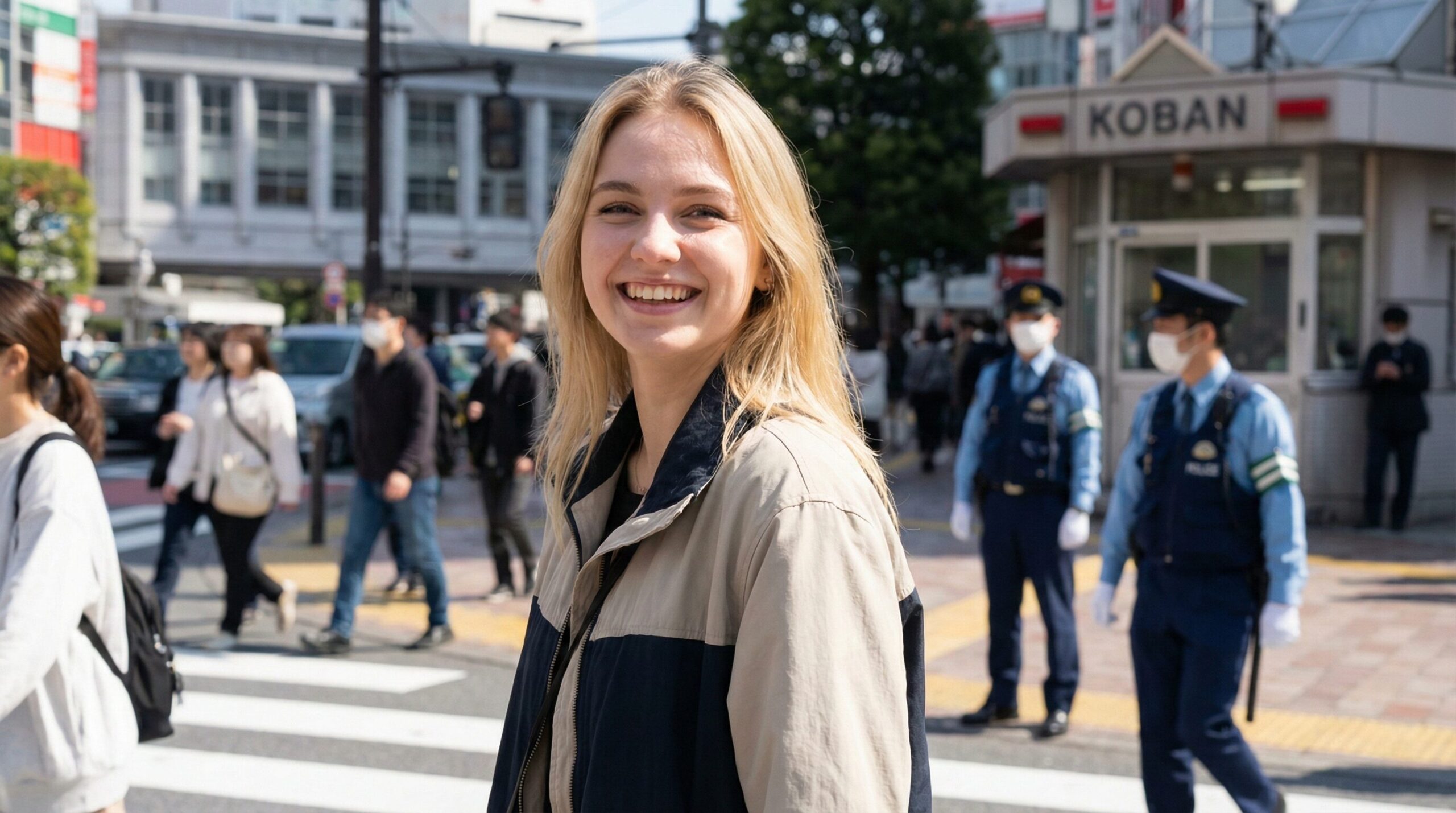
If you lose your wallet, need directions, or feel unsafe, your first destination should be a Koban.
- What it is: A Koban is a small, neighborhood police box. Introduced in the late 19th century, this system relies on community policing. There are over 6,000 Kobans scattered across the country, usually located near train stations, major intersections, and entertainment districts.
- The Experience: They are easily identifiable by a red light above the door and a gold star emblem. The officers inside know their specific grid intimately. While they may not all speak fluent English, they are equipped with translation devices and are accustomed to helping lost or distressed travelers. If you leave a camera on a park bench, chances are a local will hand it in to the nearest Koban.
The Numbers That Matter
In many Western countries, a single number (like 911) dispatches all emergency services. Japan separates them. Memorize or save these numbers:
- 110 (Police): Dial this for crimes, accidents, or immediate threats.
- 119 (Fire and Ambulance): Dial this for medical emergencies or fires.
- #7119 (Non-Emergency Medical Advice): If you are feeling deeply unwell but are unsure if you need an ambulance, this hotline connects you with medical professionals who can advise you on whether to seek immediate emergency care or visit a local clinic in the morning. Note: Public payphones are becoming rare, but they still exist. You can call 110 or 119 from any public phone for free. Simply pick up the receiver and dial the number. If the phone has a red emergency button, press it before dialing.
Navigating the Medical System
If you fall ill in a rural hot spring town or a mountain village, navigating the medical system requires nuance.
- Clinics vs. Hospitals: In Japan, you generally do not go to a large hospital (byouin) for a fever or a minor injury. You go to a specialized local clinic (kuriinikku)—such as an internal medicine clinic or an orthopedic clinic.
- The Language Barrier: Rural clinics rarely have English-speaking staff.
- The Recommendation: Always carry travel insurance that includes a medical concierge service. These services can locate the nearest appropriate clinic, call ahead on your behalf, and sometimes provide over-the-phone translation between you and the Japanese doctor.
Tips for Travelers: Proactive Measures for the Real Japan
Beyond understanding the official systems, there are daily habits and street-level awareness strategies that will ensure your journey remains smooth and enjoyable.
Navigating the Night: The Rule of the Street Tout
While Japan is safe, the entertainment districts in major cities—such as Kabukicho in Tokyo, or certain areas of Roppongi and Osaka’s Minami district—operate by different rules.
- The Risk: The most common crime affecting tourists is credit card fraud and drink spiking. This almost exclusively occurs in bars or clubs that employ aggressive street touts.
- The Tactic: A tout will approach you on the street, speaking friendly English, promising cheap drinks, free entry, or an exclusive experience. Once inside, drinks may be spiked, and victims wake up hours later to find their credit cards charged thousands of dollars.
- The Golden Rule: Never, under any circumstances, follow a street tout into an establishment. The best, most authentic Izakayas and hidden cocktail bars in Japan do not need to drag people in off the street. If you have to be coerced to enter, it is not a place you want to be.
Digital Armor: Essential Downloads
Before you land at Narita or Haneda, your smartphone should be equipped for the environment.
- Safety Tips App: Developed under the supervision of the Japan Tourism Agency, this is an essential download. It pushes early warnings for earthquakes, tsunamis, and extreme weather in English. It also includes communication cards to show to locals during an emergency.
- NHK World Japan: The English-language arm of Japan’s national broadcaster. During a major typhoon or earthquake, this app provides real-time, accurate, and calm reporting in English, counteracting the often sensationalized rumors found on social media.
- Offline Maps: If a storm knocks out local cell towers, you need to know how to get back to your accommodation. Always download your current region on Google Maps for offline use.
The Financial Safety Net: Why Cash is Still King
Japan has made massive strides toward becoming a cashless society. IC cards (like Suica), Apple Pay, and credit cards are accepted almost everywhere in Tokyo. However, if you are venturing into the real Japan—the deep countryside, the ancient pilgrimage trails, or the secluded coastal villages—cash is still king.
- The Emergency Scenario: If a natural disaster occurs and the power grid goes down, card readers and ATMs immediately cease to function. You will need cash to buy water, food from convenience stores, and emergency supplies.
- The Rule of Thumb: Always keep an emergency reserve of at least 20,000 to 30,000 Yen in crisp bills tucked away in a hidden compartment of your bag, entirely separate from your daily spending wallet.
Carry Your Identification
Under Japanese law, foreign tourists must carry their original passport with them at all times. A photocopy is not legally sufficient. Police officers have the authority to stop you at random and ask for identification. While this rarely happens to tourists, failure to produce your physical passport can result in a trip to the local station and hours of questioning. Keep your passport secure, but keep it on your person.
Conclusion: Traveling Deeper means Traveling Smarter
Japan is a country that rewards the observant traveler. It is a place where respect for the rules, the environment, and the community yields an incredibly rich, friction-free experience. The purpose of a Japan Travel Safety Guide is not to build a wall between you and the country, but to give you the tools to open the right doors. When you understand how the earthquake warnings work, you sleep more soundly in your historic wooden ryokan. When you know the rules of the neighborhood Koban, you walk the winding, lantern-lit alleys with peace of mind. When you respect the strict legal boundaries, you engage with the culture on its own terms. Absolute safety is an illusion, but deep preparation is very real. It’s time to go beyond the ordinary, step away from the curated tourist corridors, and explore the rugged, authentic, and breathtakingly real Japan with total confidence. Travel deeper.