In the year 199X, the world was engulfed in nuclear flames… or so the intro goes. In the year 202X, the world is engulfed in tourism. But for the dedicated fan of anime history, there is one destination that stands apart from the maid cafes of Akihabara and the Ghibli forests of Nagoya. It is a destination that demands toughness, resilience, and a Shinkansen ticket.
Welcome to Hokuto City, Hokkaido. Yes, the name is real. Through a cosmic alignment of municipal mergers and naming conventions, a city in southern Hokkaido shares its name with the most masculine, eyebrows-heavy martial arts epic in history: Hokuto no Ken (Fist of the North Star). This is not a coincidence that the locals ignored. Instead, they embraced it. They realized that “Hokuto” belongs to the North. And thus, a pilgrimage site was born. This is not your typical “Cute Japan” travel guide. This is a guide for the “Otoko-tabi” (Manly Trip)—a journey to the northern frontier to stand before the bronze god of the wasteland, Kenshiro, and experience the rugged beauty of Japan’s north. Grab your leather jacket. Crack your knuckles. Here is your guide to the Fist of the North Star Pilgrimage in Hokkaido.
The Holy Land: Shin-Hakodate-Hokuto Station
The centerpiece of your journey sits inside the Shin-Hakodate-Hokuto Station, the northern terminus of the Hokkaido Shinkansen. When the Shinkansen line extended to Hokkaido in 2016, the city needed a guardian. They didn’t choose a cute mascot character. They chose the successor of the Divine Fist of the North Star.
The Statue of Kenshiro
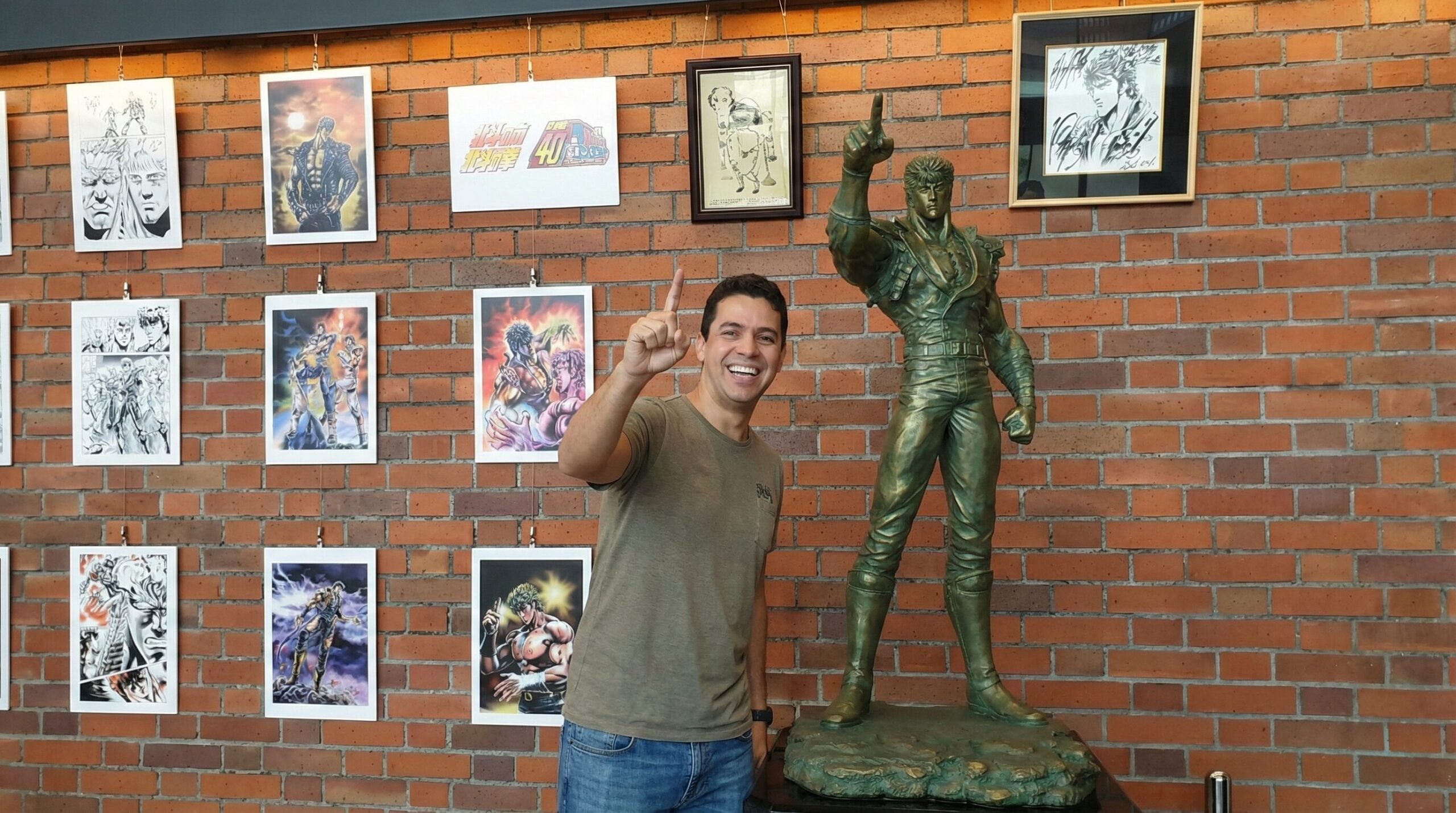
Located in the station’s atrium (near the tourist information center), stands a life-sized bronze statue of Kenshiro. This is not a cheap fiberglass replica. It is a serious, heavyweight artistic installation supervised by the creators, Buronson and Tetsuo Hara.
- The Pose: Kenshiro stands in his iconic “Finish” pose. His right arm is extended, finger pointing directly at the traveler. He is not welcoming you; he is challenging you.
- The Detail: The bronze captures the rippling muscles, the torn leather vest, and the seven scars on his chest in exquisite detail.
- The “Hidden” Gem: Look closely at the base of the statue. It features the signature of the creators and a plaque dedicating the statue to the city.
Photo Op Strategy: The statue is positioned perfectly for the “You are already dead” (Omae wa mou shindeiru) meme photo.
- Step 1: Stand in front of the pointing finger.
- Step 2: Look shocked.
- Step 3: Caption your Instagram post: “I traveled all the way to Hokkaido, and I am already dead.”
The “Zushi-Hokki” Contrast
Ironically, standing near the stoic Kenshiro is often a cutout or plush of the actual city mascot, Zushi-Hokki—a creepy-cute sushi creature with rice for a body and a clam for a head. The contrast between the hyper-masculine anime hero and the bizarre local mascot is the kind of surreal humor that defines rural Japan.
Exploring the “Wasteland”: Rugged Nature Spots
While the statue is the literal connection, the spirit of Fist of the North Star is found in the landscape. Hokkaido is Japan’s frontier. It is vast, cold, and untamed. To truly honor the series, you must venture out into the “wasteland.”
Mt. Esan: The Post-Apocalyptic Volcano
If Kenshiro were to train in real life, he would do it at Mt. Esan. Located about an hour drive from Hakodate/Hokuto, this is an active volcano that looks straight out of the anime’s background art.
- The Vibe: The mountain is bare rock, stained red and yellow by sulfur. Steam vents hiss from the ground. Vegetation is sparse. It feels like the end of the world.
- The Activity: You can hike to the crater. Walking through the desolate, rocky landscape with the ocean crashing below is a visceral experience. It is pure Hokuto Shinken energy.
Trappist Monastery: The Silence of Toki
In the anime, the character Toki represents serenity and healing. In Hokuto City, that spirit is found at the Trappist Monastery.
- The Connection: Established in 1896, this red-brick monastery is approached by a long, straight avenue lined with poplar trees. It is a place of absolute silence and discipline.
- The Food: They make legendary butter and cookies here. It’s a softer side of the pilgrimage, proving that even warriors need a biscuit break.
The Warrior’s Feast: What to Eat
A savior of the century’s end cannot survive on water alone. The food in this region (known as the Donan area) is hearty, rich, and perfect for refueling after a battle.
Genghis Khan (Jingisukan)
There is no dish more fitting for this theme than Genghis Khan. It is lamb or mutton BBQ, grilled on a helmet-shaped iron skillet.
- Why it fits: It is named after a warlord. It involves fire and meat. It is primitive and delicious.
- Where: Look for a local shop in nearby Hakodate or Hokuto. The meat is dipped in a garlic-heavy soy sauce. It pairs perfectly with a “Sapporo Classic” beer (Hokkaido exclusive).
The “Glow” of Squid (Ika)
Hakodate is famous for squid. While not exactly “apocalyptic,” eating fresh, transparent squid sashimi is a rite of passage.
- The Live Experience: At the Hakodate Morning Market, you can catch your own squid from a tank. The chef slices it instantly. The nerves are still active, so the squid “dances” when you pour soy sauce on it. It’s a bit macabre, but undeniably fresh.
Miso Curry Milk Ramen
Just a short train ride (or ferry) away in Aomori (the true north of Honshu), or available in some specialty shops in Hokkaido, is the Miso Curry Milk Ramen. It sounds like chaos—much like the world of 199X—but the blend of spices, rich dairy, and savory miso creates a harmony that is surprisingly addictive.
The “Hokuto” Name Connection: A Deeper Dive
Why did this collaboration happen? It’s all about the kanji.
- North Star: 北斗 (Hokuto)
- City Name: 北斗市 (Hokuto-shi)
The city was formed in 2006 by merging the towns of Kamiiso and Ono. When they needed a new name, “Hokuto” was chosen to symbolize a “shining star in the north.” The connection to the manga was inevitable.
The Manhole Covers
Japan loves its designer manhole covers, and Hokuto City has fully embraced this trend. While Saku City, Nagano (the birthplace of author Buronson) is famous for its collection, Hokuto City in Hokkaido is effectively a rival wasteland. In 2019, seven official Fist of the North Star manhole covers were installed throughout the city.
- The Hunt: You can find distinct designs featuring Kenshiro, Raoh, Toki, and Yuria at key locations, including right in front of Shin-Hakodate-Hokuto Station.
- Note: So, if you are a “Manhole Hunter,” you are in luck. You don’t need to choose between Nagano and Hokkaido—true warriors visit both.
Practical Itinerary: The “End of Century” Day Trip
Here is how to execute this pilgrimage efficiently.
09:00 AM – Arrival
- Arrive at Shin-Hakodate-Hokuto Station via Shinkansen.
- Head to the ground floor atrium.
- The Ritual: Bow to the Kenshiro statue. Take your photos. Visit the attached souvenir shop to see if they have any “Hokuto” branded goods (often sake or cookies). Check outside for the color manhole cover.
10:30 AM – The Nature
- Rent a car (essential for rural Hokkaido).
- Drive the “Poplar Tree-Lined Road” to the Trappist Monastery. Eat the soft-serve ice cream (made with their fresh butter). It is surprisingly rich.
12:30 PM – The Feast
- Drive into Hakodate (30 mins).
- Stop at Lucky Pierrot. This is a local burger chain that is absolutely unhinged. The decor is chaotic, the portions are massive. Order the “Chinese Chicken Burger.” It is the soul food of the region.
03:00 PM – The History
- Visit Goryokaku Fort. This star-shaped fort was the site of the last battle of the samurai era (The Boshin War). The “Last Samurai,” Hijikata Toshizo, died here.
- The Connection: While not Fist of the North Star, the story of Hijikata—a warrior fighting for a dying code of honor—resonates deeply with the themes of Raoh and Kenshiro. Visit the museum and see the history of real Japanese warriors.
06:00 PM – The Night View
- Take the ropeway up Mt. Hakodate.
- Look down at the city lights. This is one of the “Three Major Night Views of Japan.” It’s the perfect place to stand silently, arms crossed, contemplating your destiny.
Tips for the Pilgrim
- Transport is Key: Shin-Hakodate-Hokuto Station is actually quite far (20-30 mins by train) from downtown Hakodate. The Kenshiro statue is at the station, but the food and other sights are in the city. Plan your train connections or rent a car.
- Dress for the North: If you visit in winter (to match the snowy wasteland vibe), it is freezing. Kenshiro might wear a leather vest, but you need a down jacket.
- Buy the Ticket: If you are coming from Tokyo, the Shinkansen ride is 4 hours. It is part of the journey. Watch the landscape change from the concrete of Tokyo to the green of Tohoku and finally the tunnel to the white north of Hokkaido.
- Language: “Omae wa mou shindeiru” is a fun phrase, but don’t say it to the immigration officer. Stick to “Arigato gozaimasu.”
Conclusion
A pilgrimage to Hokuto City is not about ticking off a list of ten different anime shops. It is about the vibe. It is about standing in a station at the edge of the northern wilderness, looking up at a bronze legend, and feeling the connection between pop culture and local identity. Japan is full of “Kawaii” (cute). But sometimes, you don’t want cute. Sometimes, you want cool. You want history. You want a mountain that looks like it could explode and a burger that requires two hands to hold. For those travelers, the North Star is calling. The Shinkansen is waiting. And remember:
You don’t need a return ticket… because your heart will stay in Hokkaido. (Okay, you definitely need a return ticket. Please buy one.)
Travel Deeper. Explore the Real Japan.