
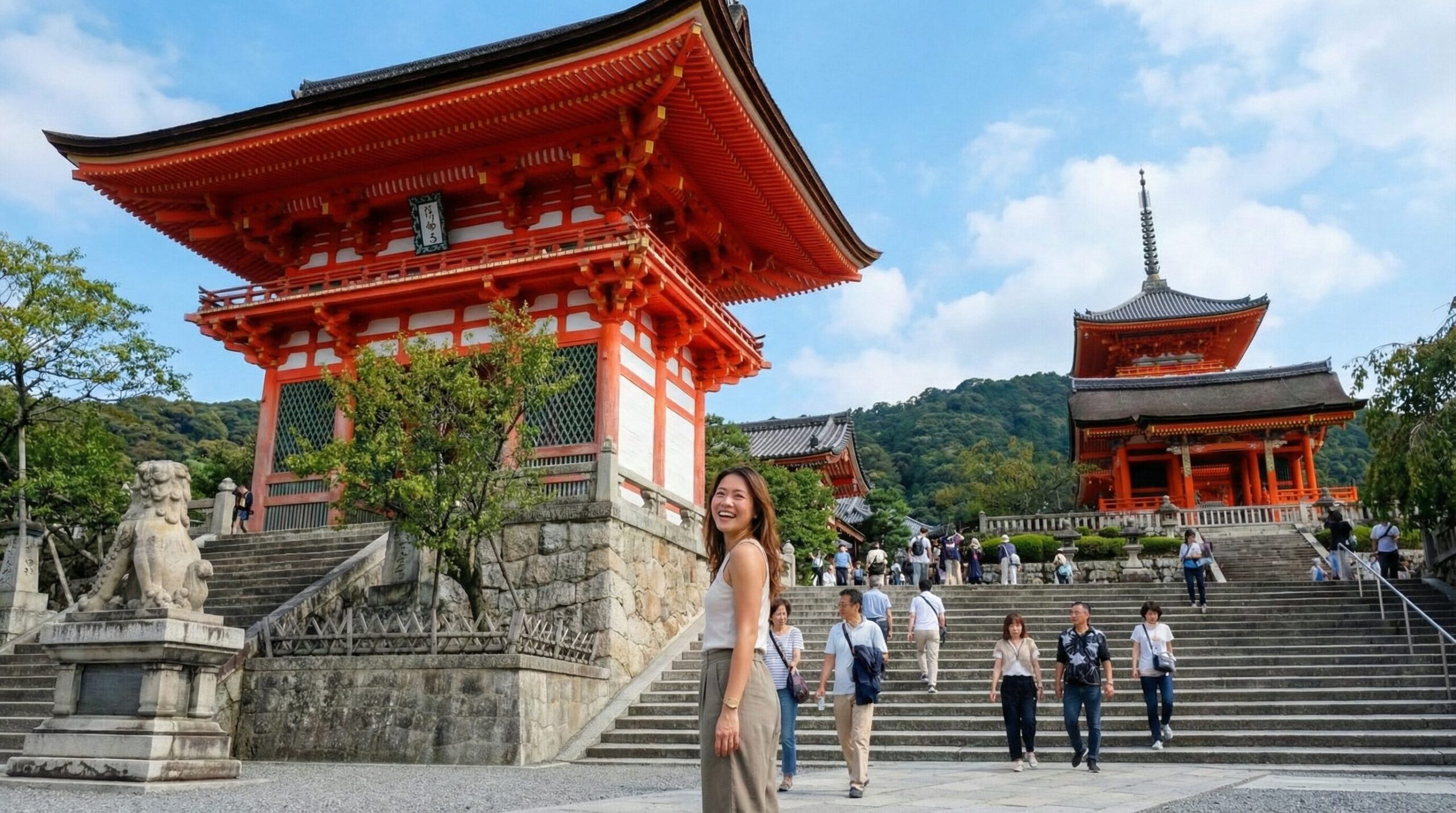
There is a specific kind of romance to traveling alone. It is the freedom to turn left when the guidebook says turn right. It is the luxury of eating dinner at 5:00 PM or 10:00 PM without negotiating with a partner. It is the silence that allows you to hear the place you are visiting.
For the solo traveler, Japan is not just a destination; it is a sanctuary. Often cited as one of the safest countries in the world, Japan offers a unique infrastructure that seems almost engineered for the independent explorer. Here, eating alone is not a sign of social failure; it is a recognized cultural practice. Walking alone at night is not an act of bravery; it is a mundane activity.
However, Japan can also be isolating. The language barrier is high, the cultural codes are complex, and the sheer density of Tokyo can make a single person feel invisible. This guide on Tips for Solo Travel in Japan moves beyond the basic safety advice. We are looking at the art of “Ohitorisama”—the Japanese trend of enjoying activities alone. Whether you are a female traveler navigating the subways or a photographer seeking the perfect silent temple, this is your manual for navigating Japan as a party of one.
The Culture of “Ohitorisama”: You Are Not Alone
In many Western cultures, sitting alone in a restaurant invites pity. The waiter removes the extra place setting with a sympathetic look. In Japan, the script is flipped.
Understanding the Solo Movement
The word Ohitorisama (literally “Mr./Ms. One Person”) refers to the growing demographic of people who choose to live and enjoy life independently. In a society with an aging population and changing marriage dynamics, businesses have adapted.
- Solo Karaoke: Specialized booths for one.
- Solo Yakiniku: Personal grills for one person to cook high-quality beef.
- Solo Bars: Tiny establishments in places like Golden Gai with only 5 seats, designed for conversation between the master and individual patrons.
The Takeaway: You do not need to feel self-conscious. When you walk into a restaurant and raise one finger to indicate a table for one, you are not an anomaly. You are the target demographic.
Dining Solo: The Counter is King
One of the biggest anxieties for solo travelers is dining. “Will I look lonely?” “Will I be turned away?” In Japan, the solo diner actually gets the best seat in the house: The Counter.
The “Counter Seat” Advantage
In high-end sushi shops, tempura restaurants, and humble ramen joints, the counter seat (kaunta-seki) is the primary stage.
- The View: From here, you watch the chef work. You see the precision of the knife skills, the temp of the oil, the assembly of the dish. It is dinner and a show.
- The Connection: This is where the barrier breaks. Chefs often speak a little English and are curious about solo foreigners. “Where are you from?” is the universal icebreaker. By sitting at the counter, you signal that you are interested in the food, not just sustenance.
How to Order Without Anxiety
- Ticket Machines: Many ramen and beef bowl shops use ticket vending machines at the entrance. You buy a ticket, hand it to the staff, and sit down. No verbal ordering required.
- Touch Panels: Chains like Kura Sushi or Torikizoku use tablets with English language options. You can order, eat, and pay without speaking a single word if you don’t want to.
Recommendation: Tachinomi (Standing Bars)
If you want to meet people, avoid tables. Go to a Tachinomi. These are standing-only bars, often spilling out onto the street. Because everyone is standing and squeezed together, the “personal bubble” is smaller. It is socially acceptable to strike up a conversation with the person standing next to your elbow.
Accommodation: The Solo Traveler’s Sanctuary
When traveling as a couple, you split the cost of a room. When traveling alone, accommodation is your biggest expense. However, Japan has unique solutions.
The “Business Hotel” (The Standard)
Japan has a massive industry of hotels designed for the solo salaryman. Chains like Dormy Inn, APA Hotel, and Super Hotel are ubiquitous.
- The Pros: They charge per person, not per room. They are hyper-efficient.
- The Secret Weapon: Dormy Inn is a favorite among savvy travelers because they almost always include a high-quality natural hot spring (onsen) and free ramen (“Yonaki Soba”) served generally between 9:30 PM and 11:00 PM. It turns a budget stay into a mini-spa retreat.
The Ryokan Challenge
Traditional Ryokans (Japanese Inns) historically charged by the room, often refusing single travelers because they lose money on the elaborate dinner service.
- The Tip: Look specifically for “Ohitorisama Plan” (Solo Plan) when booking Ryokans on Japanese sites (or using a translation tool).
- Modern Ryokans: Places like Hoshino Resorts or younger, modern inns are increasingly welcoming to solo guests.
Hostels (The Social Hub)
Japanese hostels are famously clean and quiet.
- Why choose them: Even if you can afford a hotel, a private room in a hostel is often the best choice for solo travelers because of the common room. This is where you trade tips with other travelers. “How do I get to the Monkey Park?” “Is the pass worth it?” The intelligence gathering happens here.
Logistics: Traveling Lighter and Smarter
Navigating the train system with two suitcases is a nightmare. Doing it alone, when you can’t leave a bag with a friend while you run to the bathroom, is impossible.
Takkyubin (Luggage Forwarding)
This is the single most important tip for solo travel in Japan.
- What is it: A service (Yamato Transport, aka “Kuroneko”) that sends your luggage from one hotel to the next, usually overnight, costing between 2,500 JPY and 3,000 JPY depending on the size and distance.
- How to use it: Ask your hotel front desk. “I want to send my bag to Kyoto.” They measure it, you pay, and you walk away.
- The Strategy: Travel with a small backpack for your daily essentials. Send your big suitcase ahead. This leaves your hands free to navigate crowded stations, buy snacks, and take photos without being a burden to yourself or others.
Connectivity is Safety
You do not have a partner to navigate while you drive. You are the pilot and the navigator.
- Pocket WiFi vs. SIM: As a solo traveler, a Data SIM or eSIM is better than a Pocket WiFi. One less device to charge, one less thing to lose.
- Power Bank: Your phone is your lifeline. It is your translator, your map, and your train ticket. If your battery dies at 11:00 PM in a rural suburb, you are in trouble. Carry a 10,000mAh battery pack. Always.
Safety: The Reality Check
Japan is safe, but it is not a utopia. The “Safety Myth” can lead to complacency.
For Female Solo Travelers
- Women-Only Cars: In Tokyo, designated pink-marked cars for women only are usually available during rush hour (7:30 AM – 9:30 AM), while in the Kansai region (Osaka), some lines operate them all day on weekdays. Use them to avoid the infamous “crush” of commuters.
- The “Chikan” (Groping) Reality: Unfortunately, crowded trains can be sites for harassment. If you feel uncomfortable, say “Yamete!” (Stop!) loudly. The shame culture works both ways; drawing attention usually stops the perpetrator immediately.
- Walking at Night: It is generally safe to walk alone at 2:00 AM. However, avoid “touts” (people trying to pull you into bars) in entertainment districts like Kabukicho (Shinjuku) or Roppongi. They can be aggressive. Just keep walking and do not make eye contact.
The “Koban” (Police Box)
In every neighborhood and near every major station, you will see a small building with a red light. This is the Koban.
- Use them: If you are lost, if you lost your wallet, or if you feel unsafe, go here. The officers often have detailed hand-drawn maps of the neighborhood to help lost tourists.
Mental Health: Dealing with “Traveler’s Silence”
The hardest part of solo travel in Japan isn’t the logistics; it’s the silence. You might go days without having a full conversation in English.
- The “Bar Row” Remedy: If you feel lonely, go to an area with tiny bars (Golden Gai in Tokyo, Omoide Yokocho in Shinjuku, Hozenji Yokocho in Osaka). These spaces are physically designed to force interaction. You sit shoulder-to-shoulder. The intimacy makes conversation inevitable.
- Guided Tours: Book a single walking tour or a cooking class in the middle of your trip. It guarantees a few hours of social interaction and resets your mental “social battery.”
- The Zen Perspective: Alternatively, lean into the silence. Japan is a culture that values Ma (negative space). Use the solitude to visit temples that require quiet. Hiking the Kumano Kodo alone is a spiritual experience that is diluted by conversation.
Conclusion
To travel solo in Japan is to accept a challenge. The challenge is not surviving the city—the trains run on time, the food is safe, and the streets are clean. The challenge is being fully present with yourself in a culture that is utterly distinct.
You will have moments of frustration. You will get on the wrong train. You will order a dish that turns out to be raw chicken (it’s a delicacy!). But because you are alone, these become your stories. They are not compromised or diluted by anyone else’s experience.
Japan rewards the observant eye. When you are alone, you see the details: the way the taxi doors open automatically, the seasonal flowers arranged in the subway station bathroom, the nod of the chef when you finish your bowl. So pack light, download your maps, and go. The counter seat is waiting for you.