
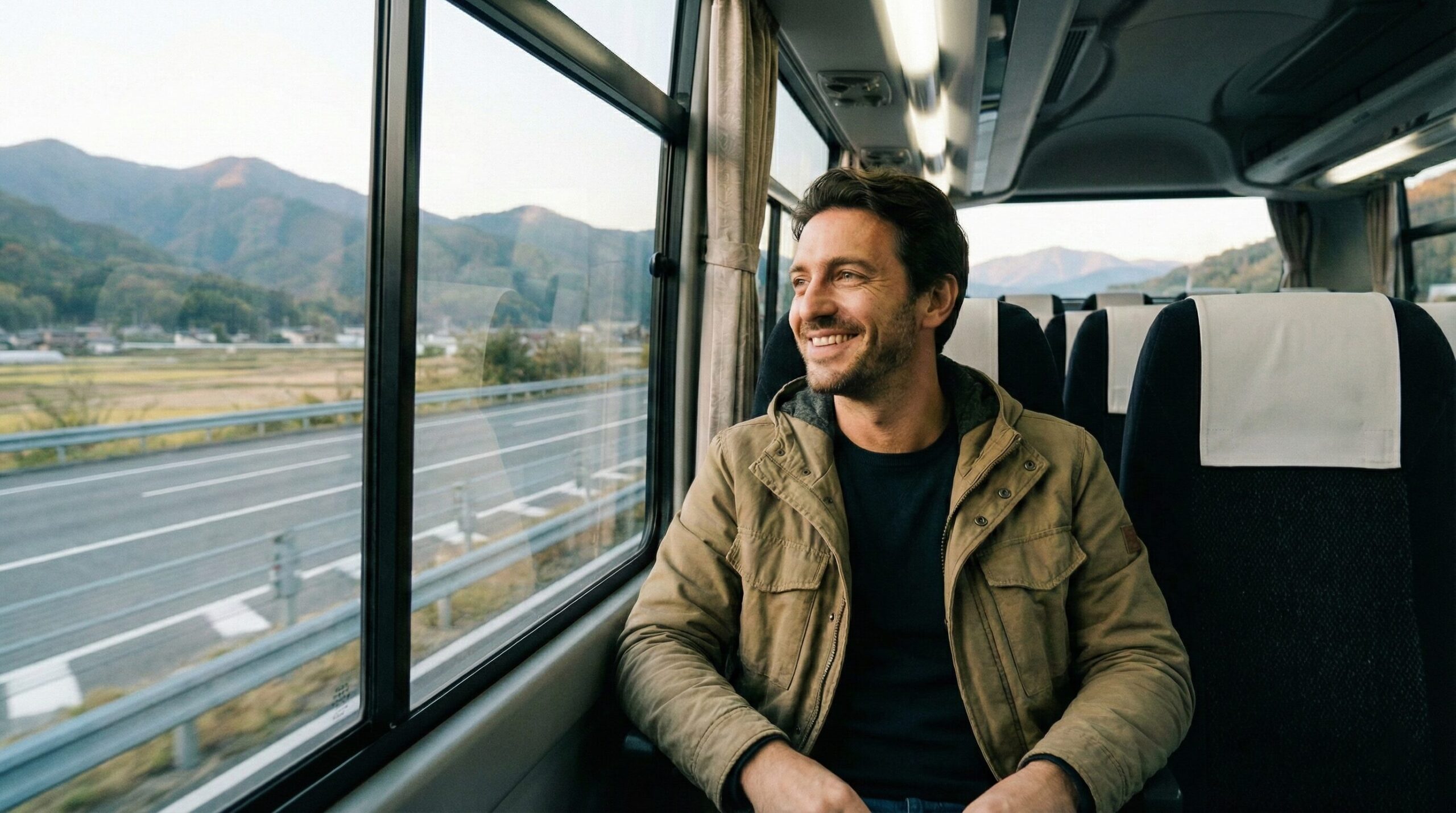
Japan is known for speed. Bullet trains slicing through farmland. Metro lines pulsing underground. Transfers timed down to the minute. But between the tracks and the timetables, there’s another way to move across the country — slower, quieter, closer to the landscape.
Highway buses run along Japan’s arterial expressways, linking Tokyo to Osaka overnight, carrying students from Nagano into Shinjuku at dawn, or gliding past rice fields and service areas while the country wakes up around them. They aren’t glamorous, and they rarely show up on travel postcards. Yet for people who have lived in Japan — students, budget travelers, commuters — highway buses are familiar companions. They offer views the Shinkansen never bothers to show you.
This guide takes a slower look at highway buses, not as a bargain alternative, but as another layer of Japan worth acknowledging. If you’re planning long-distance journeys or wondering how people actually travel here, these Tips for Using Japan’s Highway Buses will help you navigate the system without treating it like a compromise.
Key Details and Breakdown
What a Highway Bus Actually Is
Outside Japan, “bus” often implies short distances and rigid schedules. In Japan, a highway bus is something slightly different — a long-distance coach that sleeps while cities bump in the distance, that stops at service areas filled with regional snacks, and that arrives before morning convenience stores switch from night to breakfast mode. A highway bus has three basic attributes:
- It uses expressways, not surface roads
- It offers reserved seats
- It connects major cities and rural areas without transfers
Most operate day and night, with overnight services popular among students and working travelers who’d rather save on a hotel and wake up somewhere new.
Types of Highway Buses: Comfort Over Categories
There are official classifications — “standard,” “premium,” “overnight” — but none of that matters much once you’re on board. What matters is seat width, legroom, and how the bus handles darkness. A few broad categories:
Standard buses:
- Two seats on each side, no partitions
- Quiet but not private
- Fine for daytime routes under five hours
Premium buses:
- Typically three individual seats in a 1–1–1 layout for maximum privacy
- Footrests, blankets, privacy hoods
- Charging ports, Wi-Fi, sometimes slippers
- Best for overnight routes where sleep matters
Overnight buses:
- Dimmed cabins
- Minimal conversation
- Arrival just after sunrise
- For travelers prioritizing utility over romance
Comfort varies by company, but buses in Japan rarely feel neglected. Even the cheapest seats tend to be clean, air-conditioned, and respectful of silence.
Where Highway Buses Depart
This part sometimes surprises first-time visitors: highway buses don’t usually leave from curbside stops. They leave from terminals — buildings with waiting areas, signage, heated rooms in winter, and convenience stores for last-minute snacks. In Tokyo, the anchor is Busta Shinjuku, a glass-and-steel terminal perched above the station. Buses to Nagano, Takayama, Kyoto, Osaka, and Kanazawa all depart from here. Other hubs include:
- Tokyo Station (Yaesu side)
- Ikebukuro Sunshine Bus Terminal
- Shibuya Mark City
In Kansai, common hubs include:
- Osaka Umeda
- Namba
- Kyoto Station (Hachijo exit)
Terminals feel strangely calm — clusters of travelers sitting with neck pillows and tote bags, waiting for a quiet overnight journey instead of a bullet train’s roar.
Operators: The Names You’ll Encounter
If you spend enough time riding buses in Japan, certain names become familiar:
- JR Bus (the railway’s bus arm)
- Willer Express (English-friendly, with quirky seat designs)
- Keio Bus (linking Tokyo with the mountains)
- Kintetsu Bus (serving Kansai and beyond)
- Airport Limousine Bus (bridging airports to hotels and stations)
People choose based on comfort, timing, and price — not loyalty.
Practical Examples and Recommendations
To understand why someone might choose a highway bus over a train, it helps to look at specific journeys.
Tokyo → Kyoto/Osaka (Overnight Ride)
This is the classic. Hundreds of students, backpackers, and budget-minded travelers do it every night. The logic is simple:
- Board in Shinjuku around 11 PM
- Sleep (or attempt to) through the night
- Wake up near Kyoto or Osaka just after sunrise
It turns a hotel room into a reclining seat and a commute into a dawn arrival. The Shinkansen could do it faster — no question — but it also demands a day. Buses give you the gift of time.
Price range: ¥4,500–¥13,000 depending on seat type Duration: roughly 7–9 hours
Tokyo → Nagano/Matsumoto
Trains require a transfer or a pricier limited express ticket. The bus simply slides into the mountains, stops once at a service area where vending machines blink in the cold, then arrives in a city framed by Alps. Duration: 3.5–4 hours Used by: skiers, hikers, students Why choose it: direct, scenic, cheaper than rail
Osaka → Shirakawa-go
Shirakawa-go — with its steep thatched roofs and mountain shadows — isn’t reachable by train. The bus is the only practical way into the village. Duration: ~5 hours Why choose it: necessity + convenience
The reward is stepping straight off a bus into snow-covered gassho houses — no taxi, no transfers, no confusion.
Sapporo → Hakodate
In Hokkaido, distance behaves differently. Wide landscapes, few trains, and long winters. The bus between Sapporo and Hakodate is slower than the limited express train but cheaper and strangely peaceful. Highway lines cut through farmland and coastline, showing a Hokkaido people rarely see from rail lines. Duration: ~5–6 hours Why choose it: scenery + savings
Booking: How Locals and Travelers Do It
The easiest way to book depends on your familiarity with Japan. Online platforms (English-friendly):
- Willer Express
- Japan Bus Online
- Highwaybus.com
These sites show seat maps, prices, and amenities clearly. The Shinkansen doesn’t let you choose between a “cocoon seat” and a standard recliner — buses do. Ticket counters: At major terminals and train stations, there are staffed windows. An old-school approach that still works well when you need advice or don’t have a Japanese phone number. Convenience stores: Machines at Lawson, FamilyMart, and 7-Eleven print a payment slip. Take this slip to the cashier counter to pay (cash or card) and receive your actual ticket. No fuss.
Onboard Life: What Actually Happens
The bus interior tells you a lot about Japanese travel culture. Conversation is minimal. Phones stay on silent. Curtains remain mostly drawn. Night buses enforce quiet hours gently but firmly. Amenities vary:
- Power outlets or USB ports
- Wi-Fi (sometimes unstable but enough for maps)
- Toilets (common on long-distance routes)
- Footrests and blankets
- Privacy hoods or curtain partitions
No one boards expecting entertainment. The entertainment is often outside — roadside service areas, vending-machine snacks that taste regional, sunrise over farmland as the city approaches.
Rest Stops: A Culture of Convenience
On daytime routes, buses pull into service areas every 2–3 hours. These are not simple gas stations. They are modular worlds of regional soft-serve ice cream, bento boxes, local souvenirs, dog parks, and scenic viewpoints. The break is short — usually 10–15 minutes — just enough time to use the restroom, buy a warm drink, and stretch. At night, stops still happen, but passengers often stay asleep, lulled by engine vibration and passing headlights.
Tips for Travelers
This is where the functional part of Tips for Using Japan’s Highway Buses belongs — a set of ideas that help bus journeys feel intentional rather than improvised.
Before You Ride
Check Your Terminal
Shinjuku alone has multiple departing points. Tokyo Station has bus stops scattered across Yaesu. Kyoto has north and south gates. Missing a terminal by ten minutes means missing the entire journey. Double-check:
- Station exit
- Bus company
- Platform number
Book Early for Peak Seasons
Golden Week, New Year, Obon, and long weekends turn highway buses into arteries for the entire country. Seats fill early — especially premium ones.
Choose the Right Seat Type
A few thousand yen can change your night dramatically. On an overnight bus, the difference between a standard recliner and a private “cocoon” seat feels like the difference between a nap and actual sleep.
Pack for Micro-Comfort
Bring:
- Neck pillow
- Eye mask
- Earplugs
- Warm layers
- Portable charger
- Snacks
Japanese buses are disciplined about temperature control — sometimes too disciplined. A blanket helps.
During the Ride
Store Luggage Wisely
Large suitcases go under the bus. Bring valuables onboard. Cabins are clean, but space is tight.
Respect Quiet Hours
Night buses often dim lights immediately. The absence of noise is communal and expected.
Don’t Miss Rest Stops
When the bus stops, the clock starts. Drivers usually count passengers before departure, but the schedule is strict. If you wander off to sample miso katsu or melon pan, keep one eye on the bus.
After Arrival
Know the Drop-Off Point
Kyoto has two major exits. Osaka has several hubs (Umeda, Namba). Sapporo has multiple stops. The difference can add 30 minutes to your morning.
Leave Margin for Delays
Expressways don’t respect itineraries the way trains do. Traffic, snow, or rain can add time. Don’t schedule reservations too tightly.
Use Lockers
Nearly every major terminal includes coin lockers — useful if you want to explore before checking in.
Conclusion
Japan’s highway buses are not glamorous. They don’t offer speed or spectacle. What they offer instead is perspective — on geography, on how people move, on the quiet continuity between regions. You board in a city of neon and glass. Hours later you wake up as convenience stores roll up their shutters in Osaka, or as mountains open around Nagano, or as snow settles into valleys in Hokkaido. The country unfolds slowly through bus windows — suburbs thinning into farmland, service areas appearing like small islands of light, forests pressing close to the expressway. Learning the right Tips for Using Japan’s Highway Buses doesn’t just save money or time. It unlocks a mode of travel that most tourists skip — not because it’s uncomfortable, but because it isn’t advertised loudly. It belongs to students heading home on holidays, workers transferring between cities, and residents who understand that travel doesn’t always need to be fast to be memorable. If you’re planning a trip to Japan and want to see more than major stations and landmark attractions, consider riding a highway bus at least once. Look out the window. Walk through a service area. Arrive somewhere new just as the city begins its day. Sometimes, the slow routes show you the most.