
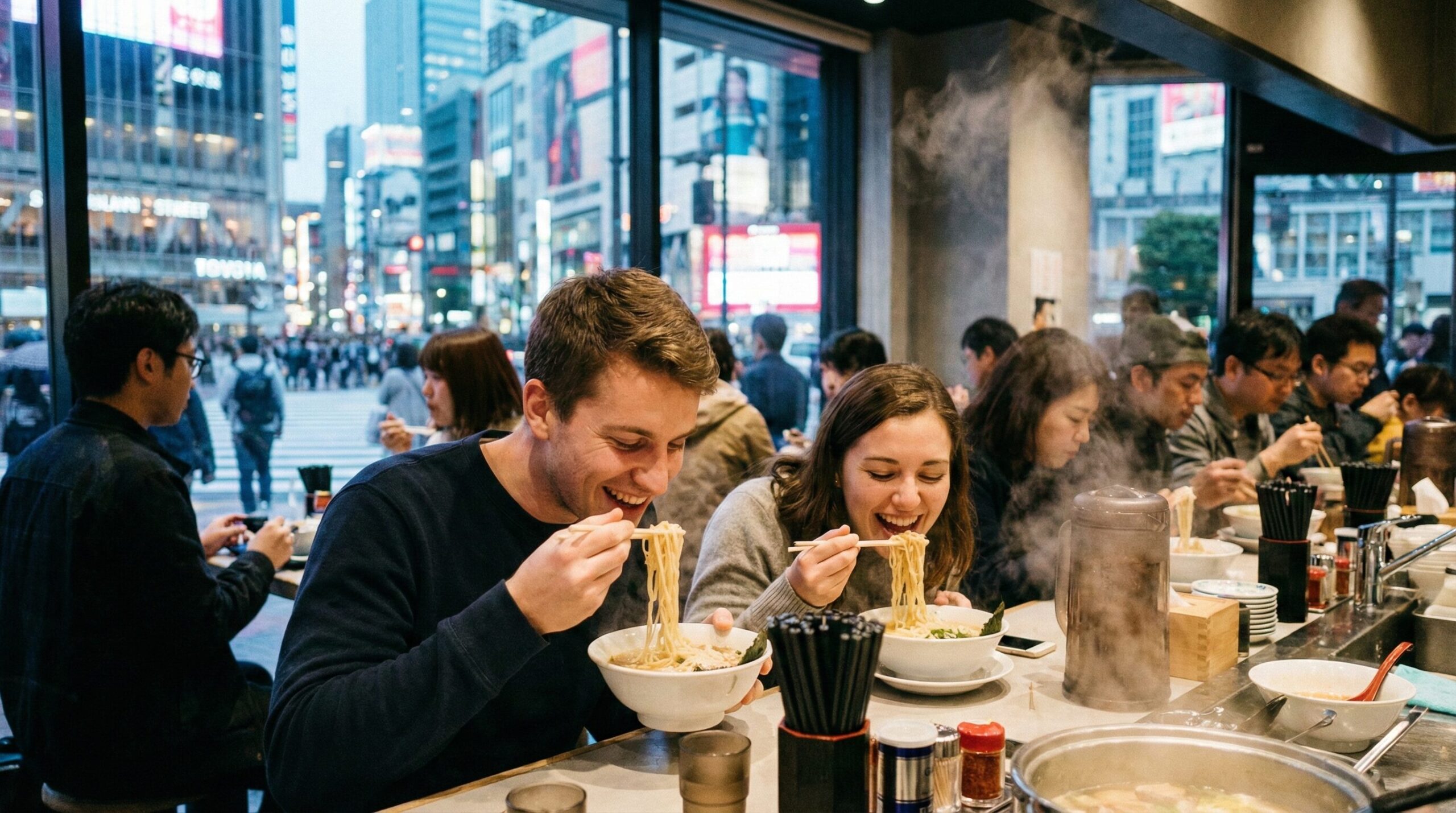
Few foods capture the soul of Tokyo like ramen. More than a quick meal, ramen is a reflection of the city itself—fast-paced yet meticulous, endlessly innovative yet deeply rooted in tradition. In neighborhoods like Shinjuku and Shibuya, ramen shops line backstreets, glow beneath train tracks, and stay open long after midnight, serving locals, office workers, and travelers alike.
This Tokyo Ramen Guide: Best Shops in Shinjuku and Shibuya is not about chasing hype alone. It’s about understanding styles, knowing what to order, and choosing shops that fit your taste, schedule, and travel rhythm. Whether you love rich tonkotsu broth, clean shoyu flavors, or modern interpretations, these two districts offer some of the most rewarding ramen experiences in Japan.
Ramen in Tokyo is also wonderfully democratic. The best bowls are often found in small, no-frills shops with ticket machines and limited seating. Knowing how to navigate these places turns a simple meal into a cultural experience—and that’s exactly what this guide aims to help you do.
Key Details and Breakdown: Understanding Ramen in Shinjuku and Shibuya
Ramen Styles You’ll Encounter
Before choosing a shop, it helps to understand the main ramen styles commonly found in Shinjuku and Shibuya.
- Tonkotsu
Creamy pork-bone broth, rich and intense - Shoyu
Soy sauce–based broth, balanced and aromatic - Shio
Salt-based broth, lighter and cleaner - Tsukemen
Dipping noodles served separately from the broth
Shinjuku tends to lean toward bold, hearty flavors, while Shibuya often favors refined or modern interpretations.
Shinjuku: Ramen That Never Sleeps


Shinjuku is one of Tokyo’s busiest districts, known for nightlife, entertainment, and massive train stations. It’s also one of the best places in the city for late-night ramen.
What Makes Shinjuku Special
- Many shops open until early morning
- Dense concentration of ramen styles
- Casual atmosphere—perfect after a long day
Notable Ramen Shops in Shinjuku
- Menya Musashi
Famous for thick tsukemen noodles and rich broth. A favorite among serious ramen fans. - Ichiran Shinjuku
Known for solo dining booths and customizable tonkotsu ramen—great for first-timers. - Ramen Hayashida
Clean, elegant shoyu ramen using premium chicken broth.
When to Go
- Late evening to midnight for atmosphere
- Avoid peak dinner hours (7–9 p.m.) if you dislike lines
Shibuya: Trendy, Balanced, and Modern


Shibuya represents Tokyo’s youthful, fashion-forward energy. Its ramen scene reflects that spirit—lighter broths, thoughtful presentations, and creative twists.
What Defines Shibuya Ramen
- Cleaner, more balanced flavors
- Stylish interiors and clearer menus
- Shorter waits compared to Shinjuku (in many cases)
Notable Ramen Shops in Shibuya
- Afuri
Famous for yuzu shio ramen—fragrant, refreshing, and approachable. - Usagi
Known for shoyu ramen with depth and seasonal ingredients. - Oreryu Shio Ramen
A solid introduction to shio ramen with English-friendly ordering.
When to Go
- Lunch hours for quieter dining
- Early evening before nightlife crowds
Practical Examples and Recommendations
Example 1: First-Time Ramen Experience in Tokyo
If this is your first ramen experience in Japan:
Recommended area: Shibuya
Why:
- English menus are more common
- Lighter flavors reduce culture shock
- Atmosphere is less rushed
Order a standard bowl before trying extras like extra garlic or spice.
Example 2: Late-Night Ramen After Exploring Tokyo
After sightseeing or nightlife:
Recommended area: Shinjuku
Why:
- Shops stay open late
- Rich broths feel comforting at night
- Easy access from major train lines
Look for shops with vending machines outside—this speeds up ordering.
Example 3: Traveling With Dietary Concerns
Some shops are better suited for travelers with preferences or restrictions.
Look for:
- Clear ingredient explanations
- Chicken or fish-based broths
- Shio or shoyu styles
Shibuya generally offers more flexibility and clearer communication.
How to Order Ramen (Step by Step)
- Find the ticket vending machine at the entrance
- Insert cash (many machines don’t accept cards)
- Select your ramen and toppings
- Hand the ticket to staff
- Sit where directed and wait
Don’t worry if you don’t speak Japanese—this system is designed to be efficient.
Tips for Travelers Exploring Tokyo’s Ramen Scene
Carry Cash
Many excellent ramen shops are cash-only.
- ¥1,000–¥1,500 per bowl is typical
- Bring small bills and coins
Respect Ramen Etiquette
- Eat while the ramen is hot
- Avoid long phone use at the counter
- Slurping is acceptable—and encouraged
Efficiency is appreciated, especially during busy hours.
Don’t Chase Only Famous Shops
Some of the best ramen experiences come from:
- Small neighborhood shops
- Places without English signage
- Spots filled with locals
Trust your senses—steam, smell, and quiet confidence often signal quality.
Pace Yourself
Ramen is filling.
- Limit yourself to one bowl per meal
- Walk between shops
- Stay hydrated
Enjoying ramen is about balance, not excess.
Observe the Neighborhood
Ramen shops reflect their surroundings.
- Shinjuku feels intense and energetic
- Shibuya feels curated and modern
Let the area guide your choice.
Conclusion: Finding Your Perfect Bowl in Tokyo
This Tokyo Ramen Guide: Best Shops in Shinjuku and Shibuya is ultimately about discovery. While specific shops matter, what stays with most travelers is the memory of sitting at a narrow counter, watching steam rise, and tasting a bowl made with quiet dedication.
Shinjuku offers bold flavors and late-night comfort. Shibuya delivers balance, clarity, and modern sensibility. Together, they represent two sides of Tokyo’s ramen culture—both essential, both deeply satisfying.
Ramen is not about luxury or spectacle. It’s about craftsmanship, rhythm, and everyday pleasure. Explore with curiosity, eat with respect, and let each bowl tell you something about the city.
Beyond the stations and neon lights, Tokyo reveals itself one bowl at a time.