
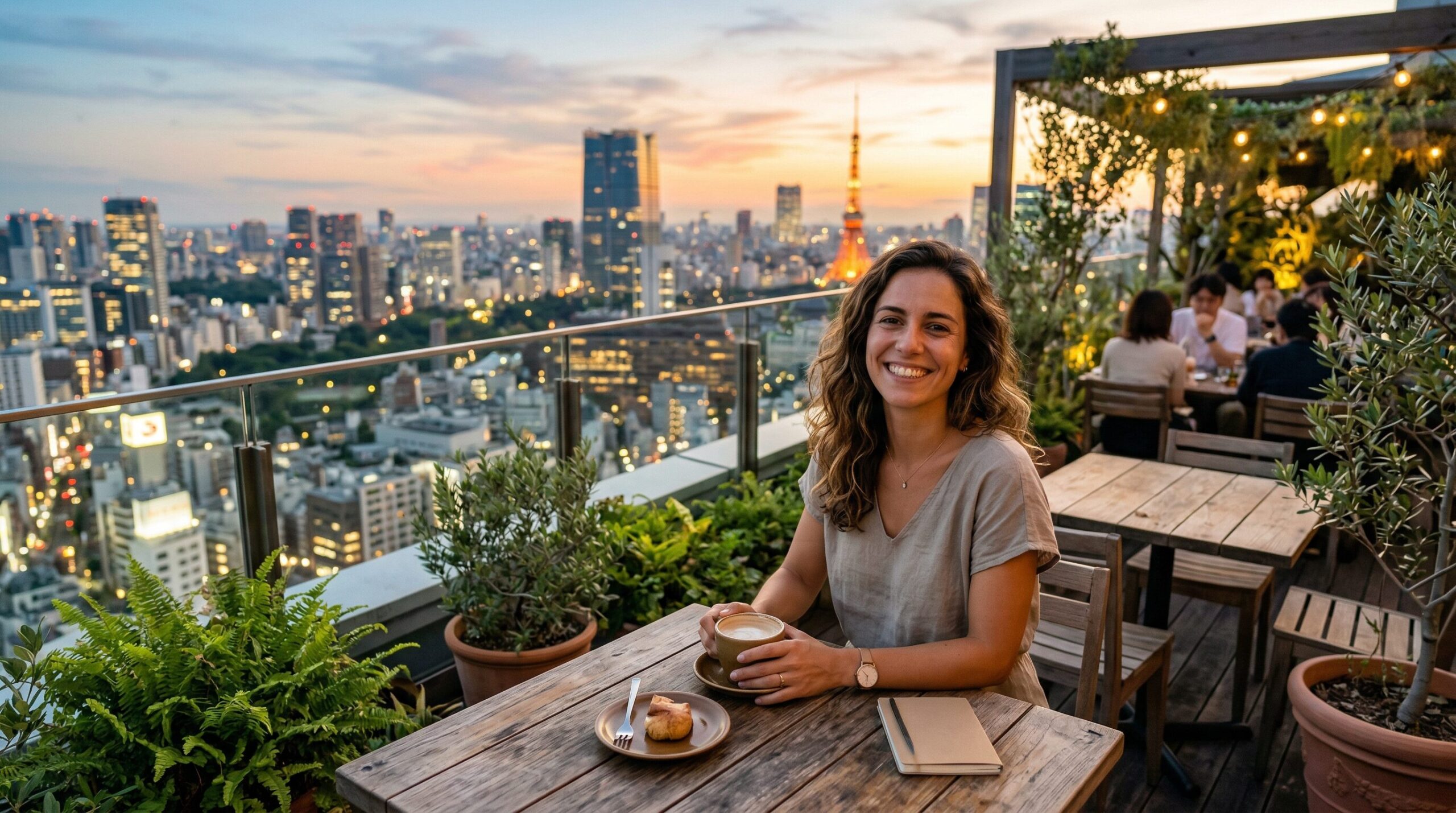
When a traveler first arrives in Tokyo, the immediate instinct is to look straight ahead. The street level of this massive metropolis is a sensory overload of kinetic energy. You are instantly swept into the rhythm of millions of commuters, navigating the labyrinthine corridors of Shinjuku Station, weaving through the vibrant, narrow alleys of Harajuku, or walking the impeccably polished sidewalks of Ginza. The ground level of Tokyo is undeniably thrilling, but it is also relentlessly loud. After several days of navigating this horizontal sprawl, the sheer density of the city can begin to feel suffocating. The mindful traveler eventually craves a moment of quiet reflection, a space to simply sit and process the staggering scale of the Japanese capital. The secret to finding this peace is to stop looking ahead, and begin looking up. Because space is the ultimate premium in Tokyo, the city has evolved vertically. Housed on the top floors of unassuming, incredibly narrow commercial buildings are Tokyo’s hidden rooftop cafes. These elevated sanctuaries offer a radical shift in perspective. They trade the claustrophobia of the sidewalk for the expansive, open air of the skyline. For the traveler willing to step into a cramped elevator and press the highest button, these cafes offer a profound escape. This guide explores how to travel deeper by ascending above the noise, discovering the quiet, open-air corners of the city that the locals fiercely protect.
The Architecture of Altitude: Key Details and Breakdown
To successfully locate and appreciate Tokyo’s hidden rooftop cafes, one must first understand the unique architectural and commercial landscape of the city. Unlike Western cities where cafes generally occupy sprawling ground-floor retail spaces with large patios, Tokyo operates on a different spatial logic. Understanding the anatomy of these vertical spaces helps demystify the experience:
- The ‘Zakkyo-Biru’ Phenomenon: The vast majority of Tokyo’s independent businesses are housed in zakkyo-biru (multi-tenant commercial buildings). These are tall, pencil-thin concrete structures where every single floor houses a different, completely unrelated business. A single building might contain a dental clinic on the second floor, a vintage clothing store on the third, a hidden izakaya on the fourth, and a spectacular, open-air cafe on the roof.
- The Concept of ‘Shakkei’ (Borrowed Scenery) in the Sky: In traditional Japanese garden design, shakkei refers to incorporating the background landscape into the composition of a garden. Rooftop cafes in Tokyo apply this ancient concept to the modern metropolis. By utilizing minimal barriers and glass railings, the towering skyscrapers, the distant silhouette of Mount Fuji, or the glowing red lattice of the Tokyo Tower become the curated backdrop to your coffee cup.
- The Acoustic Shift: The most jarring and beautiful aspect of visiting a rooftop cafe is the acoustic transition. As the elevator doors open on the top floor, the chaotic rumble of traffic, the blaring crosswalk melodies, and the chatter of the crowds instantly fade away. They are replaced by the sound of the high-altitude wind and the quiet, atmospheric music curated by the cafe owner.
Ascending the Metropolis: Practical Examples and Recommendations
Tokyo is vast, and finding these elevated sanctuaries requires looking past the massive, international coffee chains that dominate the ground floor. Here are three distinct examples of Tokyo’s hidden rooftop cafes, each offering a unique atmospheric window into different neighborhoods of the city.
The Bohemian Skyline at A-Bridge (Sangenjaya)
Located just two train stops from the overwhelming crowds of Shibuya, the neighborhood of Sangenjaya (affectionately known as “Sancha”) retains a gritty, deeply local, and artistic charm. It is a labyrinth of narrow drinking alleys and independent boutiques. Hidden at the very top of a weathered, unremarkable concrete building is A-Bridge.
Highlights of an A-Bridge Visit:
- The Unassuming Entrance: Finding A-Bridge is a rite of passage. You must locate a heavily stickered, slightly rusted elevator tucked down a side street. Riding it to the top floor feels like trespassing in an abandoned building, making the reveal of the cafe even more spectacular.
- The Canvas Tent Aesthetic: A-Bridge does not look like a polished, luxury hotel bar. It looks like a bohemian treehouse built by local artists. The outdoor terrace features weathered wooden decking, mismatched vintage furniture, and a massive canvas tent structure that flaps gently in the wind.
- The Sancha View: The terrace offers an unobstructed, sweeping view of the Sangenjaya neighborhood below, with the towering Carrot Tower building anchoring the skyline. It is the perfect place to order a hand-drip coffee, pull out a journal, and watch the sky shift from afternoon blue to the deep, neon-lit purple of a Tokyo twilight.
The River Breeze at Privado (Kuramae)
To experience the historic, slower-paced side of the city, you must travel east to Kuramae. Once a gritty warehouse district along the Sumida River, Kuramae has been quietly transformed by young creatives into Tokyo’s premier artisanal coffee and craft neighborhood. While the ground-level roasteries draw massive crowds, the true locals head up to Privado, an elevated cafe and lounge space that offers unparalleled views of the water.
Highlights of a Kuramae Rooftop Visit:
- The Sumida River Canvas: The defining feature of an East Tokyo rooftop is the water. Sitting on the outdoor terrace here, you have a direct, unimpeded view of the wide Sumida River. You can watch the slow, heavy cargo barges and the sleek, futuristic water buses glide past below.
- The Skytree Silhouette: To the northeast, the massive, silver spire of the Tokyo Skytree dominates the horizon. Viewing this architectural marvel from a quiet, breezy rooftop with a cold iced coffee in hand is infinitely more enjoyable than fighting the crowds at its base.
- The Evening Transition: Because Kuramae is a residential and craft district, the area quiets down significantly after 6:00 PM. As the cafe transitions into the evening, the lighting dims, and the reflection of the illuminated bridges on the dark river creates a deeply romantic, introspective atmosphere.
The Urban Canopy at Omohara Forest (Harajuku)
Harajuku is synonymous with extreme youth culture, fast fashion, and the suffocating foot traffic of Takeshita Street. The sheer volume of people here can drain a traveler’s energy within an hour. However, hidden in plain sight, directly above one of the busiest intersections in the neighborhood, is a remarkable architectural sanctuary. At the top of the Tokyu Plaza Omotesando Harajuku building lies the “Omohara Forest.” While there is a popular coffee chain attached to it, the rooftop space itself functions as a stunning, open-air public cafe terrace.
Highlights of the Omohara Forest:
- Architectural Greenery: The rooftop is designed as an elevated, tiered forest. The wooden decking weaves organically around mature, planted trees, creating a shaded canopy that completely obscures the concrete city below.
- The Amphitheater Seating: The space features staggered, amphitheater-style wooden steps where visitors can sit freely. It is an egalitarian space; you can purchase a specialty coffee from the attached shop and find a quiet corner under a tree to rest your legs.
- The Eye of the Storm: The most profound aspect of Omohara Forest is the contrast. You are sitting in a quiet, green, breezy sanctuary, yet if you walk to the glass edge of the terrace, you can look straight down at the chaotic, dizzying scramble of the Jingumae intersection. It is the ultimate exercise in finding stillness amidst the storm.
Navigating the Heights: Tips for Travelers
Finding and enjoying Tokyo’s hidden rooftop cafes requires a slight adjustment to your standard navigation habits. Because these spaces are physically removed from the street level, they operate under their own specific set of rules and social etiquette.
- Look for the Vertical Directories: When walking through neighborhoods like Shibuya, Nakameguro, or Shimokitazawa, train your eyes to look at the walls next to the entrances of narrow buildings. You will see vertical, illuminated directory boards (kanban) listing the businesses on each floor. Look for the words “Cafe,” “Coffee,” or the abbreviation “RF” (Roof Floor). The best spots rarely have signs on the actual sidewalk.
- Embrace the Elevator Gamble: Do not be deterred if the lobby of the building looks like a gritty office block or if the elevator is tiny and windowless. In Tokyo, the most stunning, beautifully designed interiors are often hidden behind the most unassuming, utilitarian industrial doors. Trust the process and press the top button.
- The “One Order” Rule: In Japan, space is a commodity. When you occupy a seat in a small, independent cafe—especially one with a highly coveted rooftop view—it is a strict cultural rule that every single person in your party must order at least one item (usually a drink). This is known as the wan-oodaa (one order) system. You cannot share a single coffee between two people and sit on the terrace for an hour.
- Chase the “Magic Hour”: The absolute best time to visit a rooftop cafe in Tokyo is roughly 45 minutes before sunset. This allows you to experience the city in the golden daylight, watch the dramatic transition as the sun dips behind the western mountains or the high-rises of Shinjuku, and stay just long enough to see the city’s millions of neon lights flicker on against the night sky.
Conclusion
Japan’s true beauty rarely exists on the surface, and it almost never competes for your attention by shouting. It is found in the deliberate, thoughtful curation of hidden spaces. It is felt in the sudden, shocking quiet of an elevator door opening on the seventh floor, the smell of roasted coffee beans mingling with the high-altitude wind, and the profound peace of looking down at a city of fourteen million people moving silently below you. By making the effort to seek out Tokyo’s hidden rooftop cafes, you do more than just find a place to rest your feet. You actively shift your perspective. You trade the claustrophobic, curated tourist corridors for the expansive, unscripted reality of the Tokyo skyline. It is time to go beyond the ordinary, step off the crowded sidewalks, and discover the deep, resonant, and breathtaking altitude that the locals know best.