
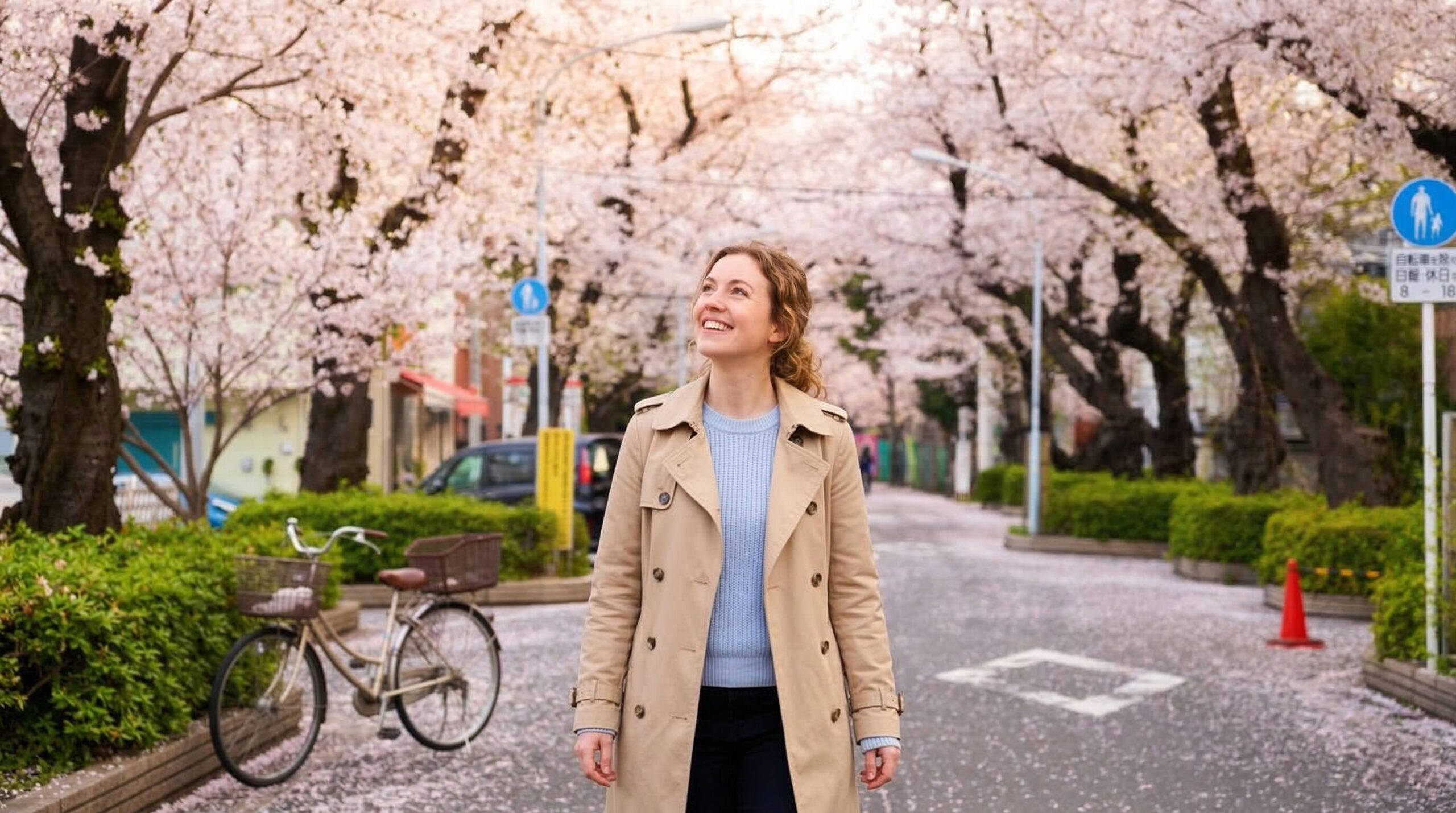
When most travelers think of spring in Japan, the mind immediately conjures images of Tokyo bathed in a sea of pale pink. The cherry blossoms, or sakura, are the country’s most internationally recognized seasonal event.
However, the reality of visiting Tokyo’s famous viewing locations—like Ueno Park, Shinjuku Gyoen, or the Meguro River—often involves navigating shoulder-to-shoulder crowds, fighting for photography angles, and enduring the noise of massive, alcohol-fueled hanami (flower viewing) parties. While these famous spots are undeniably beautiful, the sheer volume of visitors can strip away the quiet, contemplative magic that makes the cherry blossom season so culturally significant. But beyond the illuminated tourist corridors and the tightly packed picnic tarps lies a softer, more intimate city.
The true essence of spring in the capital is often found on the daily commute of a local resident, walking under a single, ancient tree that arcs over a quiet residential street. It is found in the scattered petals resting on the stone steps of a neighborhood shrine.
For the mindful traveler willing to step off the major transit lines, Tokyo’s secret cherry blossom spots offer a chance to experience the season as it was meant to be felt: with quiet reverence. This is an invitation to travel deeper, slow down your pace, and explore the authentic spring landscapes of the real Japan.
The Anatomy of Authentic Hanami: Key Details and Breakdown
To truly appreciate Tokyo’s secret cherry blossom spots, it is essential to understand what hanami means away from the commercialized tourist hubs. In the context of local neighborhoods, flower viewing is not a sprawling party; it is a subtle, daily interaction with nature.
The Japanese appreciation for cherry blossoms is rooted in the concept of mono no aware—a deep, gentle sadness at the transience of things. The blossoms are beautiful precisely because they do not last. They bloom brilliantly for roughly a week before the spring wind scatters them. When you seek out the quieter corners of the city, you engage with this philosophy in several distinct ways:
- The Architecture of Shadows: In local neighborhoods, you view the blossoms framed by everyday life. You see the pale pink petals contrasted against the dark, weathered wood of old residential gates, or reflecting in the quiet, narrow agricultural canals that still snake through parts of the city.
- Solitary Observation: Secret spots afford you the physical space to stand perfectly still. Without the pressure of a crowd pushing you forward, you can listen to the sound of the wind moving through the branches, or watch a single petal detach and float to the pavement.
- The Beauty of ‘Hanafubuki’: The most magical stage of the season is often the end, known as hanafubuki (a cherry blossom blizzard). In busy parks, fallen petals are quickly trampled into mud. In quiet alleyways and temple grounds, they form a pristine, snow-like carpet over moss and cobblestone, creating a secondary landscape that is entirely untouched.
Finding Quiet Petals: Practical Examples and Recommendations
Tokyo is a massive, sprawling metropolis, but it is built upon hundreds of small, interwoven villages. Almost every one of these local wards has its own cherished row of trees. Here are three distinct routes that reward slow, observant exploration.
Route 1: The Timeless Quiet of Yanaka Cemetery
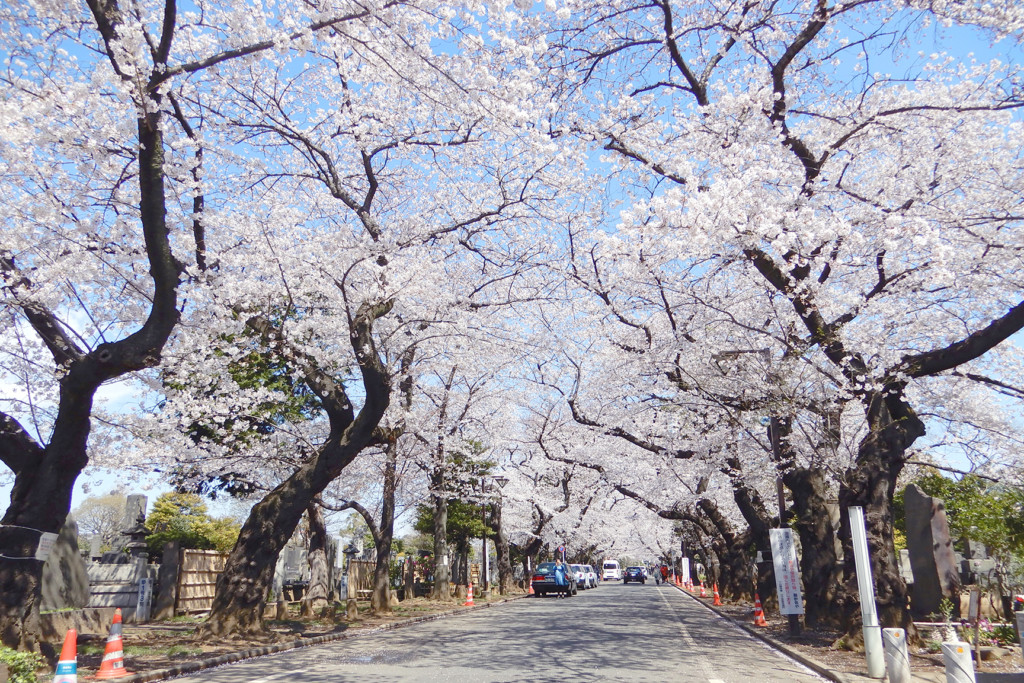
Located in the historic shitamachi (downtown) area near Nippori Station, Yanaka Cemetery is a vast, peaceful expanse that feels entirely removed from the kinetic energy of modern Tokyo. While a cemetery might seem like an unconventional recommendation for a leisure walk, in Japan, these spaces are often treated as tranquil public parks. During spring, the central avenue of the cemetery transforms into a breathtaking tunnel of Somei Yoshino cherry trees.
Highlights of a Yanaka Walk:
- The Sakura Tunnel: The main path is lined with incredibly old, massive trees whose branches interlock overhead. The canopy is so thick it filters the sunlight into a soft, pink hue.
- Respectful Serenity: Because it is a resting place, visitors naturally lower their voices. There are no blue tarps, no loud music, and no food stalls. It is purely an architectural and botanical experience.
- The Surrounding Alleys: After walking the cemetery, wander into the adjacent Yanaka neighborhood. The narrow, winding roji (alleys) are dotted with small temples, many of which have their own spectacular, solitary weeping cherry trees (shidarezakura) hanging over ancient stone walls.
Route 2: Zenpukuji River in Suginami Ward
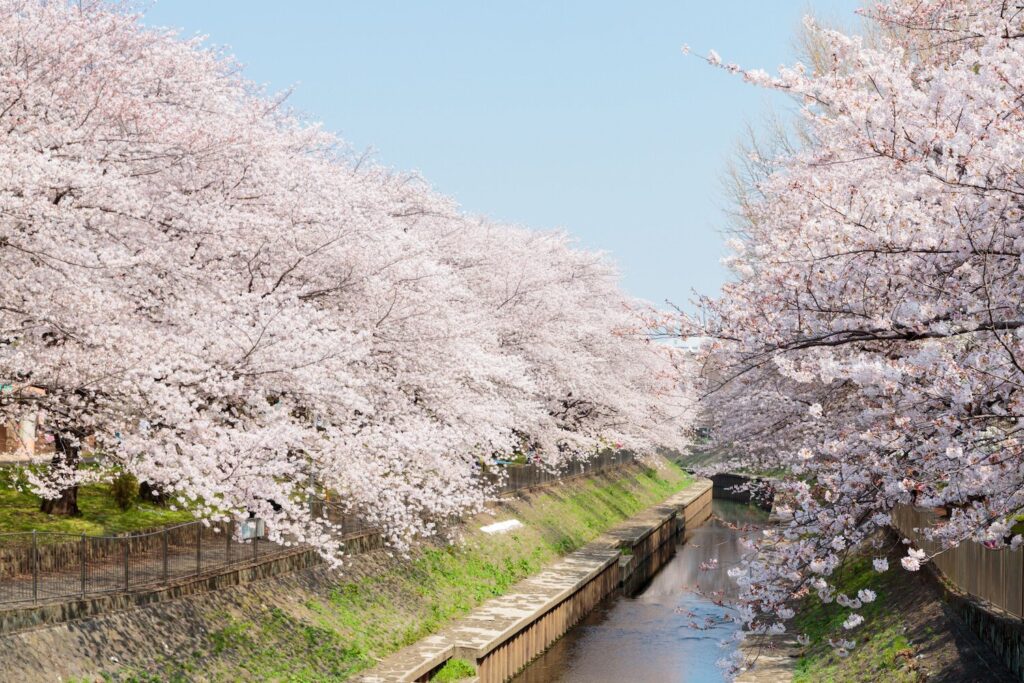
If you want the visual romance of a river lined with cherry blossoms without the overwhelming crowds of the Meguro River, you must travel west into the residential heart of Suginami Ward. The Zenpukuji River is a quiet, meandering waterway favored almost exclusively by locals. This area represents the quintessential suburban Tokyo spring. It is where families walk their dogs, where children ride bicycles along the water, and where elderly residents sit on park benches reading the morning paper.
Highlights of a Zenpukuji Walk:
- Endless Canopies: The paved walking paths on either side of the river are shaded by hundreds of cherry trees for several kilometers. The branches reach out low over the water, creating perfect reflections on clear days.
- Neighborhood Bridges: The river is crossed by numerous small, unpretentious pedestrian bridges. Standing in the center of one of these bridges offers a sweeping, uninterrupted view of the curving riverbanks.
- The Local Economy: Unlike festival sites, there are no temporary food stalls here. Instead, you can support the neighborhood by visiting a local bakery (pan-ya) for a red bean pastry, or stopping at an old kissaten (retro coffee shop) for a hand-drip coffee after your walk.
Route 3: The Spiritual Canopy of Ikegami Honmon-ji
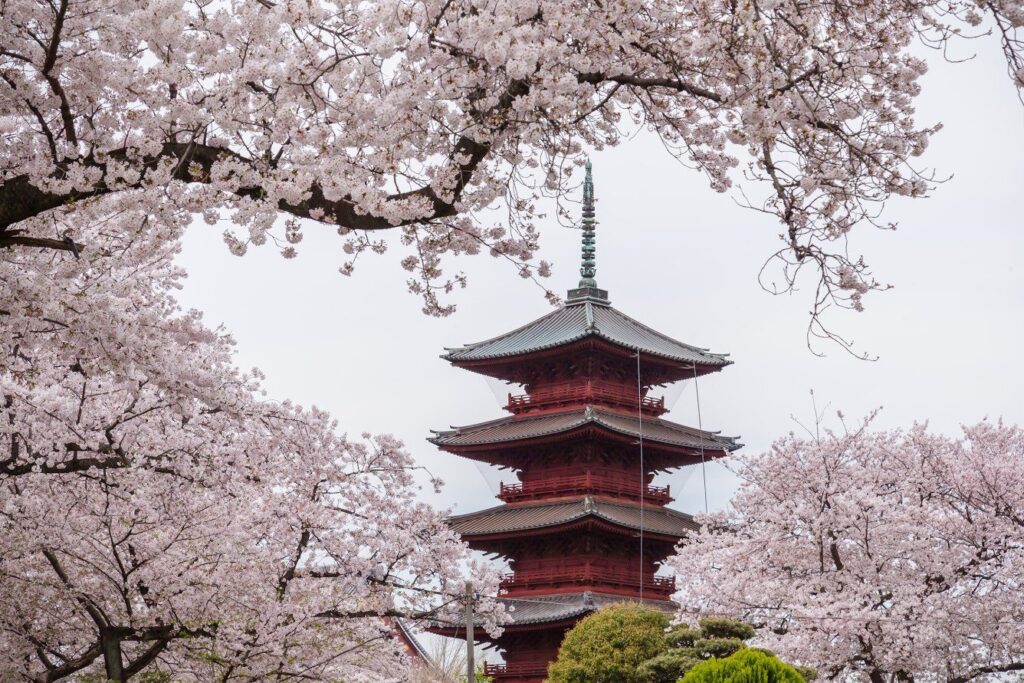
Located in the southern reaches of Tokyo in Ota Ward, Ikegami Honmon-ji is a massive, historically significant Buddhist temple that remains remarkably off the radar for international tourists. Founded in the 13th century, it rests at the top of a steep, forested hill. This is one of the most magnificent Tokyo’s secret cherry blossom spots. The sheer scale of the temple grounds, combined with the elevation, provides an experience that rivals Kyoto, right within the capital.
Highlights of an Ikegami Walk:
- The 96 Steps: The approach to the temple requires climbing a grand stone staircase. At the top, you are greeted by an expansive courtyard surrounded by meticulously maintained cherry trees.
- The Five-Story Pagoda: Built in 1608, the temple’s spectacular five-story red pagoda is the oldest in the Kanto region. Photographing this towering wooden structure framed by delicate pink blossoms is one of the most rewarding visual experiences in the city.
- Evening Tranquility: The temple grounds remain open into the evening. While they do not have the intense, colorful festival lighting of Ueno, the ambient glow of the temple lanterns catching the pale blossoms creates a deeply moody, spiritual atmosphere.
Mindful Spring Travel: Tips for Travelers
When you choose to explore Tokyo’s secret cherry blossom spots, you are stepping out of designated tourist zones and into residential backyards and sacred spaces. To ensure your presence remains respectful and light, keep these practical tips in mind:
- Leave No Trace: In local parks and neighborhood pathways, public trash cans are exceedingly rare. You must carry a small bag with you and take all of your rubbish—from coffee cups to convenience store wrappers—back to your hotel to dispose of it properly.
- Mind the Local Commute: Remember that while you are on holiday, the people around you are going about their daily lives. Do not block narrow sidewalks to set up a camera tripod, and be hyper-aware of passing bicycles on shared paths like the Zenpukuji River.
- Explore Different Varieties: The famous Somei Yoshino trees bloom for only a week, usually in late March. However, if you arrive slightly earlier or later, do not despair. Look for early-blooming Kawazu-zakura (deep pink) in early March, or the late-blooming Yaezakura (multi-layered, fluffy blossoms) that peak in mid-April. Hidden neighborhood parks are often rich with these alternative varieties.
- Enjoy the ‘Yozakura’ (Night Sakura) Quietly: Viewing cherry blossoms at night is a beloved tradition. In residential areas, street lamps provide enough light to see the blossoms beautifully. Take a quiet, post-dinner walk through a local neighborhood, but keep conversation volumes low, as the wooden houses nearby offer very little soundproofing.
Conclusion
Japan’s true beauty often hides in plain sight. It is found in the meticulous sweep of a monk’s broom on a temple courtyard, in the soft greeting of a neighbor on a morning walk, and in the quiet dignity of an old tree blooming over an empty alleyway. By prioritizing Tokyo’s secret cherry blossom spots over the crowded, famous parks, you open yourself up to the city’s genuine pulse. You stop merely looking at a seasonal spectacle and begin to actually feel the rhythm of the Japanese spring. It’s time to go beyond the ordinary, slow your pace, and discover the authentic, quiet Japan that the locals know best.