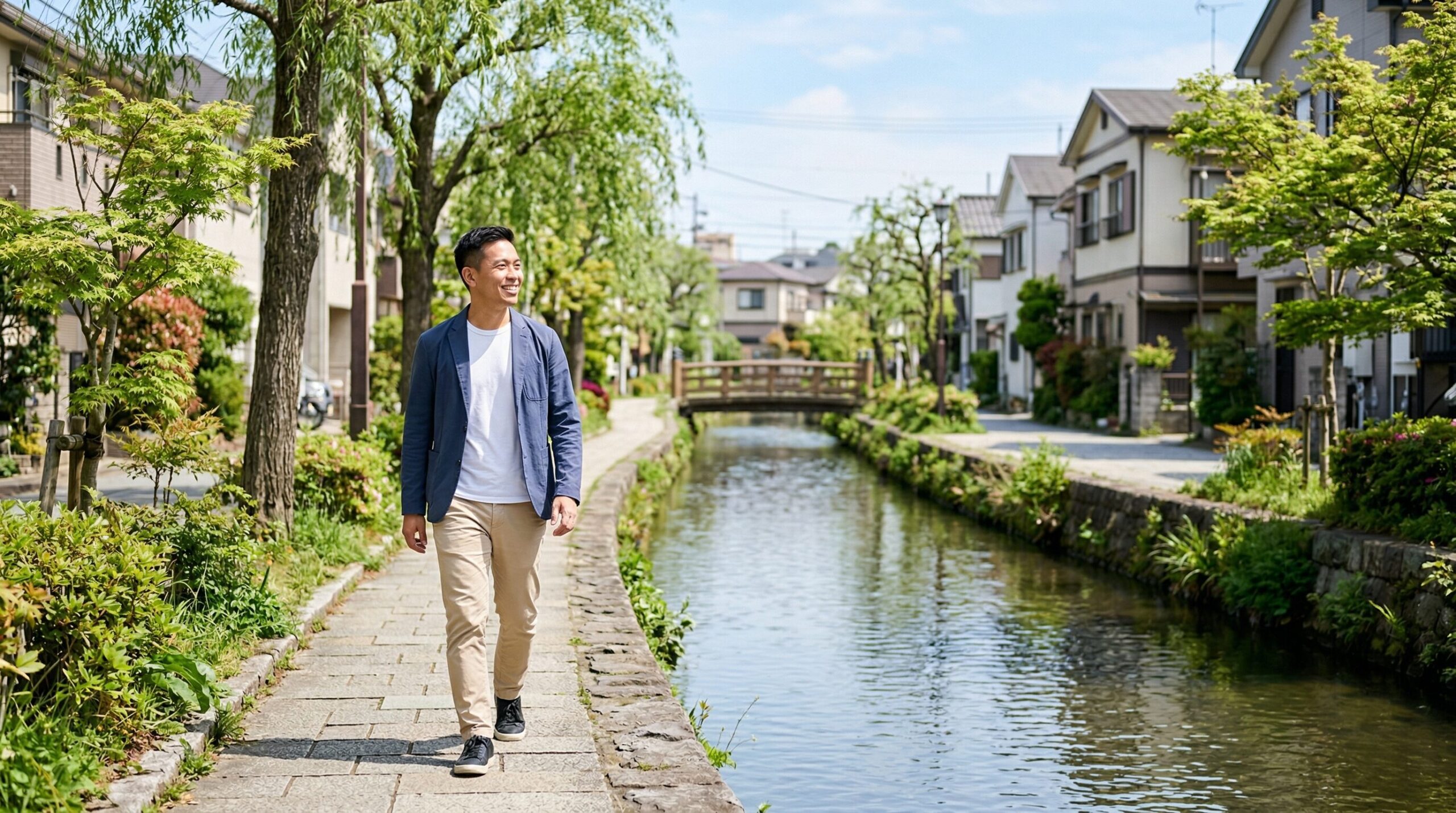
When one visualizes Tokyo, the imagery is almost universally dominated by verticality and density. The towering glass skyscrapers of Shinjuku, the multi-level neon labyrinths of Akihabara, and the impossibly crowded pedestrian scrambles of Shibuya paint a picture of a metropolis built entirely of concrete, steel, and kinetic energy. However, this hyper-modern facade obscures a fundamental geographic and historical truth: Tokyo is, and always has been, a city of water. Before it was the modern capital, Tokyo was known as Edo—a thriving, complex network of canals, rivers, and moats that rivaled Venice in its reliance on aquatic infrastructure. While much of this network was paved over or buried during the rapid modernization and post-war reconstruction of the 20th century, a vast, quiet system of waterways still weaves its way through the city. For the mindful traveler looking to escape the relentless sensory overload of the major tourist hubs, the key to finding peace is simply to follow the water. Tokyo’s secret river walks offer a profound alternative to the crowded main avenues. They are the city’s hidden green arteries, flanked by weeping willows, populated by local wildlife, and lined with quiet, residential neighborhoods that the guidebooks completely ignore. By stepping down onto these pedestrian paths, you physically drop below the sightlines of the urban sprawl, immersing yourself in the slow, enduring rhythm of the real Japan. This guide will help you navigate the best off-the-beaten-path waterways, turning a standard city trip into a deeply restorative journey.
The Anatomy of an Urban Sanctuary: Key Details and Breakdown
To truly appreciate Tokyo’s secret river walks, one must understand how they function within the context of a massive metropolis. These spaces are not untamed wilderness; they are meticulously managed civic sanctuaries designed to offer residents a necessary mental and physical respite from the density of city living. When you seek out these quiet waterfronts, you engage with several unique aspects of Japanese urban design:
- The Concept of ‘Suikei’ (Waterscapes): Just as the Japanese revere shinrin-yoku (forest bathing), there is a deep cultural appreciation for suikei—the calming, restorative presence of water landscapes. Tokyo’s river walks are intentionally landscaped to maximize this effect. The paths are often lined with cherry trees (sakura), zelkovas, and hydrangeas, ensuring that the visual scenery shifts dramatically with each micro-season.
- Separation from the Grid: The genius of a Tokyo river walk lies in its physical separation from the street level. Many of these paths are sunken or separated by thick embankments. When you descend the concrete stairs to the riverside, the roar of automotive traffic instantly becomes a muted hum, replaced by the sound of flowing water and birdsong. It is an immediate, localized acoustic reset.
- The ‘Shitamachi’ and Suburban Divide: The character of a river walk depends entirely on its geography. The rivers in the eastern shitamachi (low city) often feature steep concrete walls, historic bridges, and a gritty, post-war nostalgia. In contrast, the rivers stretching into the western suburbs (like the Tama region) are softer, wilder, and flanked by unpaved paths and natural spring sources.
- Community Corridors: These paths serve as the communal backyards for Tokyo residents. They are fiercely protected, hyper-local spaces. You will not find massive tour groups here. Instead, you will share the path with elderly couples taking their morning stroll, schoolchildren walking home, and local photographers patiently waiting to capture a heron taking flight.
Following the Current: Practical Examples and Recommendations
While rivers like the Sumida are famous for their massive summer fireworks festivals, and the Meguro River is globally renowned for its peak cherry blossom viewing, true serenity requires finding the lesser-known currents. Here are four exceptional routes for experiencing Tokyo’s secret river walks that reward slow, observant exploration.
The Suburban Meander of the Zenpukuji River (Suginami Ward)
If you wish to experience the quiet, residential soul of western Tokyo, the Zenpukuji River is an absolute masterpiece of urban landscaping. Flowing through Suginami Ward, it feels lightyears away from the neon of Shinjuku, despite being only a short train ride away.
Highlights of the Zenpukuji River Walk:
- The Green Corridor: For several kilometers, the river is flanked by the Zenpukuji River Green Park. The pedestrian paths are wide, beautifully paved, and heavily shaded by a massive, mature canopy of cherry trees. During spring, it offers a stunning tunnel of blossoms with only a fraction of the crowds found at Ueno Park or Nakameguro.
- Wildlife Spotting: The water quality here has been painstakingly restored over the decades. Today, the clear, shallow waters are home to massive koi fish, turtles sunning themselves on the concrete embankments, and elegant white egrets hunting in the reeds.
- Neighborhood Integration: The true charm of this walk is how seamlessly it blends into the quiet neighborhood. You can veer off the path at almost any point to find tiny, independent coffee roasteries, local bakeries selling fresh melon pan, and small neighborhood shrines hidden among the residential houses.
The Historic Shadows of the Kanda River (Waseda to Edogawabashi)
The Kanda River is one of Tokyo’s most historically significant waterways, flowing right through the center of the city. While certain stretches are heavily concrete and commercial, the specific segment between the Waseda university district and Edogawabashi station is a deep, quiet, and profoundly historic ravine.
Highlights of the Kanda River Walk:
- The Edogawa Park Stretch: Here, the river runs alongside Edogawa Park. The banks are incredibly steep, and massive trees overhang the water, casting deep, cooling shadows even in the peak of the Japanese summer. It is a moody, romantic, and highly atmospheric walk.
- Historic Bridges and Relics: As you walk, you will pass under a series of beautiful, old bridges. The architecture in this area reflects its history as an old artisan district; historically, this was where Tokyo’s textile dyers (yuzen) would wash their long strips of patterned silk directly in the river current.
- The Chinzan-so Connection: Towards the end of the walk, the path borders the towering walls of the Hotel Chinzanso Tokyo. If you wish to elevate your afternoon, you can step off the river path and enter the hotel’s legendary, historic landscape garden (which is free to enter), featuring a three-story pagoda and a sacred waterfall.
The Industrial Quiet of the Lower Meguro River (Gotanda to Osaki)
When travelers hear “Meguro River,” they immediately think of the upscale, boutique-lined stretch in Nakameguro that becomes impossibly crowded during sakura season. However, if you follow the river south, past Meguro Station and down toward Gotanda and Osaki, the character of the waterway changes entirely.
Highlights of the Lower Meguro Walk:
- The Concrete Aesthetic: This stretch is defined by a raw, industrial-chic aesthetic. The river widens, the luxury boutiques disappear, and the path runs alongside sleek, modern office towers and old brick warehouses. It is a fantastic walk for fans of modern architecture and urban photography.
- The Illumination: Because this area serves a large population of office workers, the river path is beautifully and safely illuminated at night. Taking a walk here after dinner provides a stunning view of the surrounding city lights reflecting perfectly off the dark, slow-moving water.
- The ‘Oasis’ Plazas: The modern urban planning around the Osaki stretch includes several elevated plazas and public seating areas integrated directly into the river embankments. It is an ideal place to grab a craft beer from a local convenience store and sit by the water as the city winds down.
The Crystal Springs of the Nogawa River (Chofu to Kokubunji)
For the traveler who wants to completely immerse themselves in the wilder, suburban fringes of Tokyo, the Nogawa River offers an almost rural experience. Flowing through the western cities of Chofu and Kokubunji, this river is fed directly by the natural groundwater springs that define the region.
Highlights of the Nogawa River Walk:
- The Untamed Banks: Unlike the rigid concrete channels of central Tokyo, the banks of the Nogawa are often left soft and natural. Grasses, wildflowers, and reeds grow wild along the water’s edge, giving the river a gentle, pastoral feel.
- The Jindaiji Detour: This river walk pairs perfectly with a visit to Jindaiji Temple (the second oldest temple in Tokyo). You can walk the quiet river path in the morning, and then cut north to explore the forested temple grounds and eat the region’s famous handmade soba noodles.
- The Source Springs: If you walk far enough west toward Kokubunji, you can actually visit the Tonogayato Gardens or other natural source springs (yusui) that feed the river. Seeing crystal-clear water bubbling up from the earth in the middle of the Tokyo metropolis is a profound reminder of the region’s natural geography.
Mindful Navigation: Tips for Travelers
Stepping off the main roads to explore Tokyo’s secret river walks requires a slight shift in how you navigate and interact with the city. These are deeply local, residential spaces. To ensure your journey is smooth, comfortable, and respectful of the community, keep these practical tips in mind:
- The Golden Rules of Bicycles: Many of Tokyo’s river paths are shared spaces for both pedestrians and bicycles. While Japanese cyclists are generally incredibly polite, you must remain aware of your surroundings. Do not walk spread out across the entire width of the path. Keep to the side of the path, and if you stop to take a photograph, ensure you are not blocking the flow of local commuter traffic.
- The Convenience Store Picnic: River walks rarely feature immediate access to large restaurants or cafes. The local way to enjoy these spaces is to embrace the konbini (convenience store) culture. Before you descend to the river, stop at a 7-Eleven or Lawson. Purchase a few high-quality onigiri (rice balls), a cold bottle of unsweetened green tea, and perhaps a small seasonal dessert. Find a public bench along the water and enjoy a quiet, incredibly affordable local picnic.
- Public Restrooms (The Toilet Landscape): One of the greatest advantages of walking in Tokyo is the municipal infrastructure. Almost all major river paths and adjacent neighborhood parks are equipped with clean, free public restrooms. However, they do not always stock paper towels or hand dryers; it is highly recommended to carry a small, folded hand towel (tenugui) in your pocket, just like the locals do.
- Respect the Silence: The acoustic isolation of a sunken river path is its greatest asset. When walking through deeply residential areas like Suginami or Chofu, treat the space with the same vocal respect you would a library or a temple. Keep conversations at a low volume, and do not play music from external speakers.
- Timing the Seasons: While cherry blossom season (late March to early April) is breathtaking, it is also when these “secret” paths are most likely to be discovered by the masses. For true isolation, consider walking in the early morning of the deep autumn (November), when the zelkova and maple trees turn brilliant shades of gold and red, or during the lush, hyper-green peak of early summer (June).
Conclusion
Japan’s true beauty does not always require an expensive entry ticket, nor does it always reside at the top of a towering observation deck. Often, the most profound moments of travel are completely free, requiring nothing more than a sturdy pair of walking shoes and a willingness to follow the subtle, quiet currents of the city. By dedicating an afternoon to Tokyo’s secret river walks, you actively reject the exhausting, curated rush of the modern tourist itinerary. You choose to travel deeper. You trade the claustrophobic shopping arcades for the open sky, the blaring advertisements for the sound of flowing water, and the massive crowds for a quiet nod from a local resident. It is time to go beyond the ordinary, step off the concrete grid, and discover the deep, resonant, and remarkably peaceful waters that the real Tokyo fiercely protects.