
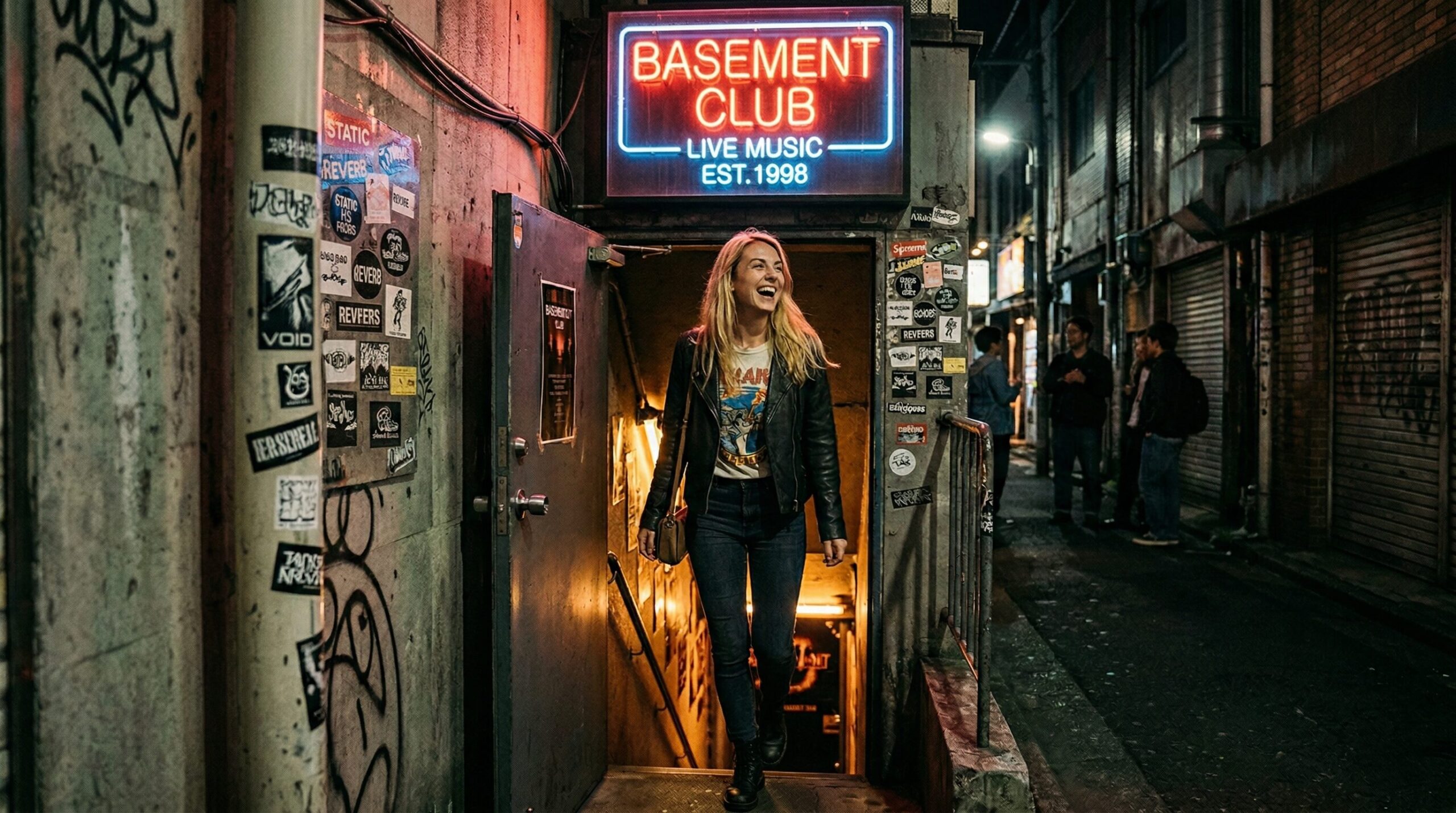
When travelers think of music in Tokyo, the immediate images are often hyper-commercialized: towering video screens in Shibuya blasting polished J-Pop, synchronized idol groups performing in Akihabara, or the massive, glowing domes hosting international superstars. But beneath the neon surface of the city beats a completely different rhythm. Hidden down narrow stairwells, behind heavy, soundproofed doors, and in the basements of unassuming concrete buildings lies Tokyo’s underground music scene. This is a world defined by raw energy, immaculate sound engineering, and a fierce dedication to independent art. In Japan, these small, intimate venues are known as raibu hausu (live houses). They are the lifeblood of the city’s alternative culture, nurturing everything from shoegaze and math-rock to hardcore punk and avant-garde electronic music. For the mindful traveler willing to look past the heavily marketed entertainment districts, stepping into a Tokyo live house offers an unparalleled, visceral experience. It is a chance to witness the intense, unscripted passion of local artists and experience the authentic, gritty subcultures that keep the city’s creative heart beating.
The Anatomy of a Live House: Key Details and Breakdown
To truly appreciate Tokyo’s underground music scene, one must understand how a Japanese live house differs from a standard Western music venue. The ecosystem here is built on a unique set of cultural and economic rules that emphasize extreme quality and relentless dedication.
- The Pursuit of Perfect Sound: Japanese live houses, even the grittiest, graffiti-covered basements, are renowned for their acoustic engineering. The sound systems are often shockingly high-end, and the resident sound engineers are meticulous professionals. You will rarely hear muddy vocals or blown-out bass; the sound is heavy, loud, but flawlessly mixed.
- The Culture of Dedication: The underground scene here is fueled by pure passion rather than instant financial reward. Many bands operate under a noruma (ticket quota) system, meaning they essentially pay the venue to perform if they do not sell enough tickets. When you watch a band play their heart out to a room of thirty people on a Tuesday night, you are witnessing artists who are quite literally paying for the privilege to share their art.
- The Timetable Precision: In true Japanese fashion, the chaos of underground music is heavily organized. A typical night might feature four or five bands. The set times are strictly adhered to, often down to the minute. If a flyer says a band starts at 8:15 PM, the first chord will strike exactly at 8:15 PM.
Where the Music Lives: Practical Examples and Recommendations
Tokyo is a massive sprawl, and the underground scene is geographically decentralized. However, certain neighborhoods have historically cultivated specific sonic identities. Here is where to find the authentic pulse of the city.
The Indie and Alternative Hub of Shimokitazawa
Shimokitazawa (often just called “Shimokita”) is Tokyo’s bohemian quarter. Known globally for its vintage clothing stores, it is also the undisputed epicenter of the city’s indie rock, shoegaze, and alternative guitar scenes.
Highlights of a Shimokitazawa Night:
- Shelter: This is arguably the most famous basement in the neighborhood, operating since 1991. Marked only by a retro neon sign and a dry-erase board at street level, the venue itself is a tiny, no-frills black box. It holds legendary status for hosting rising, cutting-edge rock bands just before they break into the mainstream.
- Basement Bar & Three: Tucked into the same underground complex, these two sister venues offer complementary experiences. Basement Bar is a sweaty, high-energy rock room, while Three caters to a slightly more laid-back crowd with indie, funk, and jazz. The entry is tricky to find, often hidden near a local liquor store and a parking lot, ensuring only those actively looking for the music find it.
- The Post-Show Culture: After the gigs finish (usually around 10:00 PM), the musicians and fans spill out into the neighborhood’s narrow alleys, filling the local izakayas to drink beer, eat yakitori, and discuss the performances late into the night.
The Punk and Grunge Soul of Koenji
If Shimokitazawa is the trendy indie kid, Koenji is its grittier, older punk sibling. Located in western Tokyo, Koenji has a long history of anti-establishment counterculture, cheap rent, and a deeply authentic, retro vibe.
Highlights of a Koenji Night:
- The Spirit of 20000V: For decades, a venue called 20000V was the absolute mecca for Tokyo’s hardcore, noise, and punk scenes. While the original venue was lost to a fire, it relocated to Higashi-Koenji and reopened as “Niman Denatsu” (二万電圧), keeping the heavy, uncompromising spirit of the neighborhood alive.
- UFO Club: This venue is a psychedelic trip back to the 1960s and 70s. With its red walls, retro decor, and dizzying floor patterns, UFO Club is the premier destination for garage rock, psychedelic, and avant-garde bands. The atmosphere is dense, moody, and incredibly cinematic.
- The Sound and the Smoke: Koenji’s live houses are intimately connected to the street level. You can often smell the heavy smoke of the neighborhood’s famous outdoor yakitori stands drifting down the stairs into the venues, creating a uniquely nostalgic, blue-collar atmosphere.
The Heavy History of Shinjuku
Shinjuku is a sensory overload of neon and massive crowds, but its basements harbor some of the oldest and most intense live houses in Japan. This is the historic ground zero for Tokyo’s hardcore, metal, and original 1980s punk movements.
Highlights of a Shinjuku Night:
- Shinjuku Loft: A storied venue with a performing-arts aesthetic—think checkerboard floors and wood-grain walls. It was Tokyo’s most important underground punk venue in the 1980s. Today, it features two stages that often alternate bands, offering an eclectic, thrillingly intimate mix of genres.
- Antiknock: For heavy metal, thrash, and deathcore fans, Antiknock holds near-mythical status. Operating since 1985, this gritty basement is where the city’s heaviest subcultures gather to stage-dive and let loose. It boasts an exquisitely aggressive sound system and cult-status venue merchandise.
- Shinjuku Pit Inn: If rock and metal aren’t your preference, Shinjuku is also home to one of the world’s most respected underground jazz clubs. The Pit Inn has been hosting boundary-pushing domestic and international jazz musicians since the 1960s, offering a seated, intensely focused listening experience.
The Underground Electronic Sanctuaries
Tokyo’s underground scene is not limited to live bands. The city possesses a deep, nuanced electronic and DJ culture that operates far away from the massive, commercial nightclubs of Roppongi.
Highlights of the Electronic Scene:
- Bonobo (Jingumae/Harajuku): This hidden gem is a wildly unique DJ bar. The first floor features a tiny, intimate dance floor focused on deep house, disco, and chill electronic sets. The second floor, however, is a traditional Japanese tatami mat room where patrons remove their shoes, sit on the floor, and socialize. It attracts a diverse crowd of local skaters, artists, and music purists.
- Ruby Room (Shibuya): A long-standing pillar of the Shibuya underground, this compact venue doubles as a DJ bar and a live room. It is famously welcoming to both locals and travelers, offering everything from underground techno sets to open-mic nights, creating a vital intersection for the city’s international and domestic creative classes.
Mindful Listening: Tips for Travelers
Navigating Tokyo’s underground music scene requires understanding a few specific local customs. To ensure you blend in and respect the venue, keep these practical tips in mind:
- The Drink Coin System: When you pay your entry fee at the door (usually between 2,000 and 3,500 yen), you will almost always be charged an additional 600 or 700 yen for a “Drink Ticket” (a small plastic coin or paper stub). This is mandatory. You exchange this ticket at the bar for your first drink, which can be beer, a cocktail, or even just iced tea.
- Buying Tickets: For underground shows, you rarely need to buy physical tickets weeks in advance. Instead, most venues operate on a “Torioki” (ticket reservation) system. You reserve your spot in advance via a band’s social media, and when you walk down the stairs to the desk, you simply tell them your name and which band you came to see to get the cheaper advance ticket price.
- Mind Your Volume: Between bands, the venues are highly social, but during a performance, Japanese audiences are famously respectful and attentive. They do not talk over the music. If the band is playing a quiet, atmospheric song, the room will be dead silent. Mirror this respect.
- Protect Your Hearing: Because the sound systems in these small concrete basements are incredibly powerful, the volume can be overwhelming. Pack a pair of high-fidelity earplugs. They will allow you to hear the immaculate mix without risking hearing damage.
- Early Starts and Early Finishes: Unlike Western cities where the headliner might not take the stage until midnight, Tokyo’s live houses operate on a strict schedule to ensure everyone catches the last train home. Shows often start at 6:30 PM or 7:00 PM, and the entire event is usually finished by 10:00 PM.
Conclusion
Japan’s true beauty often lies in its hidden depths, far removed from the polished, heavily translated tourist brochures. It is found in the physical vibration of a bass guitar in a tiny concrete room, the synchronized headbanging of a dedicated crowd, and the quiet nod of respect between a musician and the venue’s sound engineer. By venturing into Tokyo’s underground music scene, you move past the superficial image of the city and connect with its raw, creative pulse. You choose to support independent art and experience the authentic, unscripted emotion of local artists. It is time to go beyond the ordinary, step down the unassuming basement stairs, and let the real, unfiltered sound of Tokyo wash over you.