
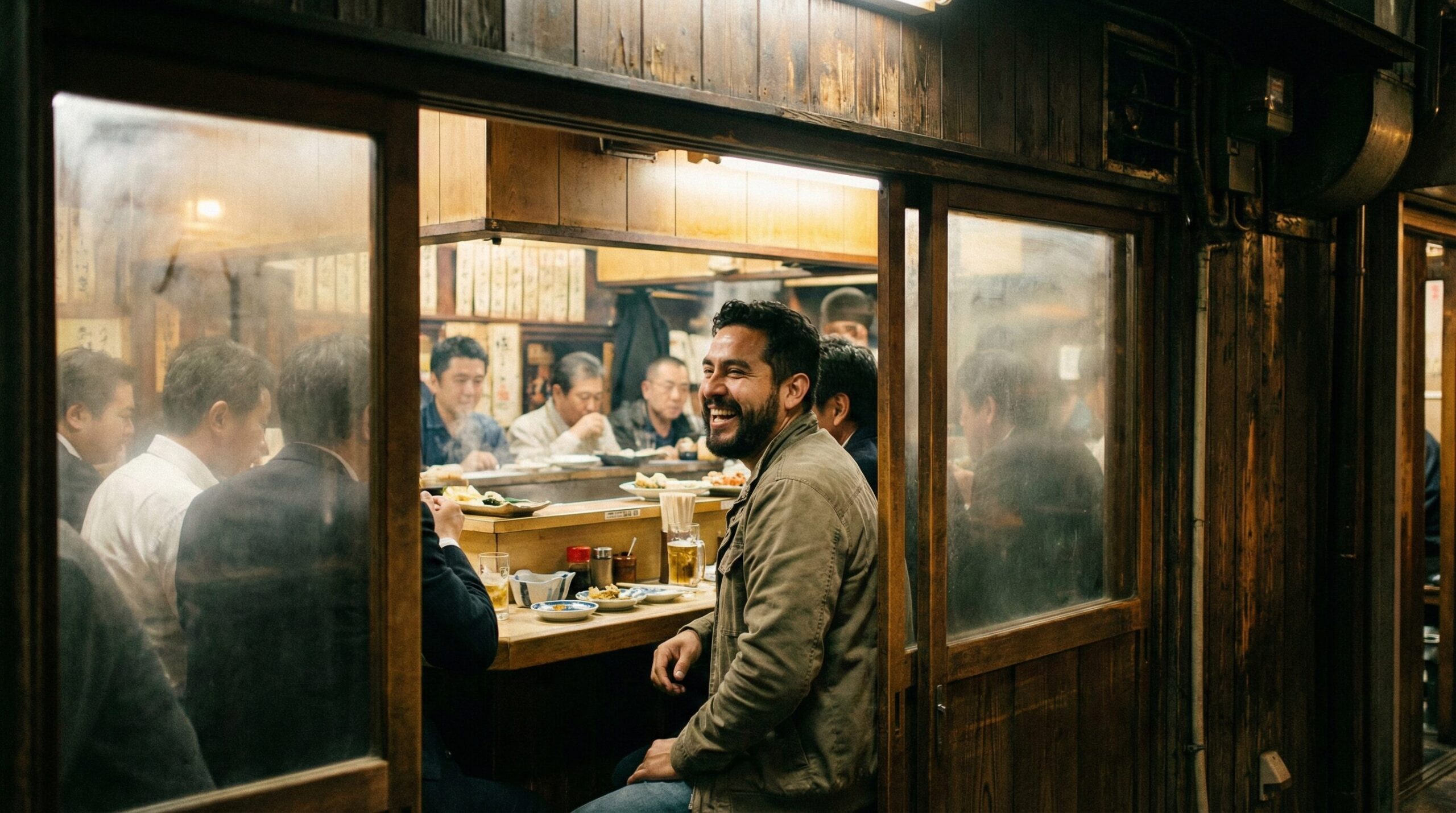
When most travelers think of Kyoto, daylight images dominate the mind. Golden pavilions reflecting on tranquil ponds. Vermilion gates winding up forested mountains. Pristine rock gardens raked to absolute perfection. But when the sun dips behind the Arashiyama mountains and the temple gates lock for the night, a different city awakens. It is a quieter Kyoto. It is a city defined not by grand monuments, but by the soft, warm glow of red paper lanterns swaying in narrow alleys. This is the realm of Kyoto’s backstreet izakayas.
An izakaya is often described simply as a Japanese pub. However, that translation strips away its cultural weight. It is a communal dining room, a neighborhood sanctuary, and the beating heart of local culinary life. While the main avenues like Shijo-dori offer massive, multi-story chain restaurants with iPad menus, the true soul of the city lies hidden. It hides down cobblestone pathways so narrow you have to walk single file. It hides behind sliding wooden doors unmarked by English signs.
Finding Kyoto’s backstreet izakayas is not about ticking a box on a sightseeing itinerary. It is about crossing a threshold. It is about shedding the role of a tourist and stepping into the rhythm of local life. Here, you are not just tasting food. You are partaking in an authentic, centuries-old tradition of winding down. Let’s venture beyond the superficial sightseeing and explore what makes these hidden gems the ultimate experience for the seasoned traveler.
Key Details: The Anatomy of Kyoto’s Backstreet Izakayas
To truly appreciate Kyoto’s backstreet izakayas, you must understand how they are built, what they serve, and why they feel so profoundly intimate. They operate on a different frequency than bars in Tokyo or Osaka. They are steeped in the city’s unique history and agricultural heritage.
The Architecture of Intimacy
Many of Kyoto’s most atmospheric izakayas are housed in converted machiya—traditional wooden townhouses. These structures were historically taxed based on their street frontage. As a result, Kyoto merchants built their homes incredibly narrow at the front, but stretching far back into the block. This architectural style, affectionately called unagi no nedoko (an eel’s bed), dictates the modern izakaya experience. You slide open the lattice door and are usually greeted by a long, narrow counter made of polished cypress. There are perhaps only eight or ten seats. The master of the house (the taisho) works just inches away from the patrons. This spatial constraint forces a beautiful kind of intimacy. Conversations naturally bleed together. The barrier between chef and diner dissolves.
The Culinary Philosophy: Obanzai and Kyoyasai
Kyoto’s backstreet izakayas are deeply connected to the seasons. While you will easily find standard izakaya fare like sashimi and fried chicken (karaage), the defining feature of a true Kyoto tavern is obanzai. Obanzai refers to traditional, home-style Kyoto cooking. It relies heavily on Kyoyasai—heirloom vegetables cultivated in Kyoto prefecture for centuries.
- The Approach: Obanzai dishes are typically simmered, lightly dressed, or pickled. The flavors are subtle, relying on high-quality dashi (stock) rather than heavy sauces.
- The Presentation: You will often see large ceramic bowls filled with these daily specials lined up along the wooden counter. You simply point to what looks good.
- The Staples: Expect to see dishes like kamo-nasu (round Kyoto eggplant) glazed with miso, yuba (delicate tofu skin) served with a dash of soy, or simmered daikon radish that melts in your mouth.
The Drink: Fushimi Sake
You cannot discuss Kyoto’s backstreet izakayas without mentioning sake. Kyoto’s Fushimi district is one of Japan’s most prestigious sake-brewing regions, blessed with incredibly soft, pristine groundwater. This soft water produces sake that is characteristically elegant, smooth, and slightly sweet. It pairs flawlessly with the delicate flavors of obanzai. A great backstreet izakaya will offer a curated rotation of local Fushimi brews, poured generously until they overflow into a square wooden box (masu) resting beneath the glass.
Practical Examples and Recommendations: Where the Locals Gather
If you walk down the famous Pontocho alley, you will find beautiful aesthetics, but you will also find menus entirely in English, premium pricing, and crowds of fellow travelers. To find the authentic Kyoto’s backstreet izakayas, you must adjust your compass. Here are the types of areas and establishments that offer a deeper dive into the local culture.
Shijo-Omiya: The Working Class Haven
West of the city center lies Shijo-Omiya. It lacks the weeping willows and geisha intrigue of Gion, but it more than makes up for it in raw, unfiltered authenticity. The alleys here are a maze of tiny, smoke-filled, standing-only bars (tachinomi) and counter-seating izakayas.
- The Vibe: Energetic, loud, and incredibly welcoming. You will stand shoulder-to-shoulder with local salarymen, artists, and university professors.
- What to Look For: Keep an eye out for yakitori (grilled chicken skewer) joints where an older master tends a charcoal grill with silent, rhythmic precision. The menu might just be wooden plaques on the wall. The smoky aroma of rendered chicken fat hitting white-hot binchotan charcoal is your guiding star.
Deep Kiyamachi: Beyond the Main Strip
Kiyamachi-dori runs parallel to the Kamo River. While the southern end is packed with noisy nightclubs and student bars, heading far north (towards Kyoto City Hall) or ducking into the perpendicular side alleys reveals a treasure trove of sophisticated, quiet izakayas.
- The Vibe: Refined but relaxed. These are places for slow sipping and quiet conversation. Jazz often plays softly in the background.
- What to Look For: Look for establishments with a single, unadorned white lantern outside. Inside, you might find a sake sommelier who curates flights of unfiltered, unpasteurized (namazake) seasonal sakes, paired thoughtfully with small plates of seared bonito or seasonal vegetable tempura.
The Niche Specialists
The beauty of Kyoto’s backstreet izakayas is specialization. Rather than trying to cook everything, many masters dedicate their lives to perfecting one thing.
- The Oden Master: Down a quiet alley in the Nakagyo ward, you might find an izakaya that only serves oden (a traditional winter hotpot). A copper vat bubbles gently in the center of the counter, filled with deep amber dashi. Diners select skewers of boiled eggs, fish cakes, and konjac.
- The Tempura Counter: Another hidden gem might seat only six people, serving nothing but seasonal tempura. The chef watches your eating pace, dropping a single, perfectly fried piece of local lotus root or an unspooled sea eel onto your paper napkin exactly as you finish your previous bite.
Tips for Travelers: Navigating the Hidden Alleys
Stepping into a local, untranslated environment can feel intimidating. However, Kyoto’s backstreet izakayas are incredibly rewarding if you approach them with the right mindset. Here is how to navigate these intimate spaces smoothly.
Embrace the “Otoshi”
When you sit down, you will almost immediately be served a small dish of food you did not order. This is the otoshi. It is a customary seating charge (usually between 300 to 600 yen) that doubles as an appetizer to enjoy with your first drink. Do not refuse it. It is standard practice across Japan and a sign that you are in a proper local establishment. Often, a chef’s otoshi is a showcase of their skill—a perfectly dressed bite of seasonal greens or a rich piece of simmered pork.
Learn the Golden Phrases
You do not need to be fluent in Japanese, but a few key phrases will instantly earn you the respect and warmth of the chef and the regulars.
- “Osusume wa nan desu ka?” (What do you recommend?) – This is the ultimate skeleton key. If the menu is handwritten on the wall in unreadable calligraphy, put your faith in the master.
- “Toriaezu nama de.” (I’ll start with a draft beer, for now.) – The universal opening line of a Japanese evening. It buys you time to settle in and look around.
- “Gochisosama deshita.” (Thank you for the meal.) – Say this clearly and with a slight bow as you leave. It is the highest compliment you can pay.
Read the Room
Intimate spaces require spatial awareness. If the izakaya is a tiny six-seater, do not spread your coats and bags across empty stools. Speak at a low, conversational volume. These establishments are places of respite for locals unwinding after a long day. Match the energy of the room. If it is a boisterous standing bar, feel free to laugh and chat with your neighbors. If it is a quiet, jazz-infused sake bar, keep your voice gentle.
Cash is Still King
While Japan is rapidly modernizing its payment systems, many of Kyoto’s backstreet izakayas—especially the older, family-run ones—operate strictly on a cash-only basis. Always ensure you have enough Yen in your wallet before venturing into the alleys.
Be Open to Spontaneity
The best backstreet experiences are never planned. If you peek through a slightly open door and see a warm glow, smiling faces, and an empty stool, take a deep breath and walk in. If a dish arrives that you cannot quite identify, try it anyway. The joy of this kind of travel is surrendering control and allowing the city to show you what it has to offer.
Conclusion: Beyond the Ordinary
Kyoto’s true beauty often hides in plain sight. It is waiting just a few streets away from the main tourist arteries, tucked behind a sliding wooden door. Exploring Kyoto’s backstreet izakayas is not merely about finding a good meal; it is about finding the pulse of the city.
It is the taste of sweet winter daikon grown just miles away. It is the warmth of locally brewed Fushimi sake on a crisp autumn night. It is the shared nod with the local salaryman sitting next to you, and the quiet pride of the chef wiping down the cypress counter. These are the moments that linger long after the photographs of temples have faded. It’s time to go beyond the ordinary, wander the quiet alleys, and see the Japan that locals know best. Travel deeper. Explore the real Japan.