
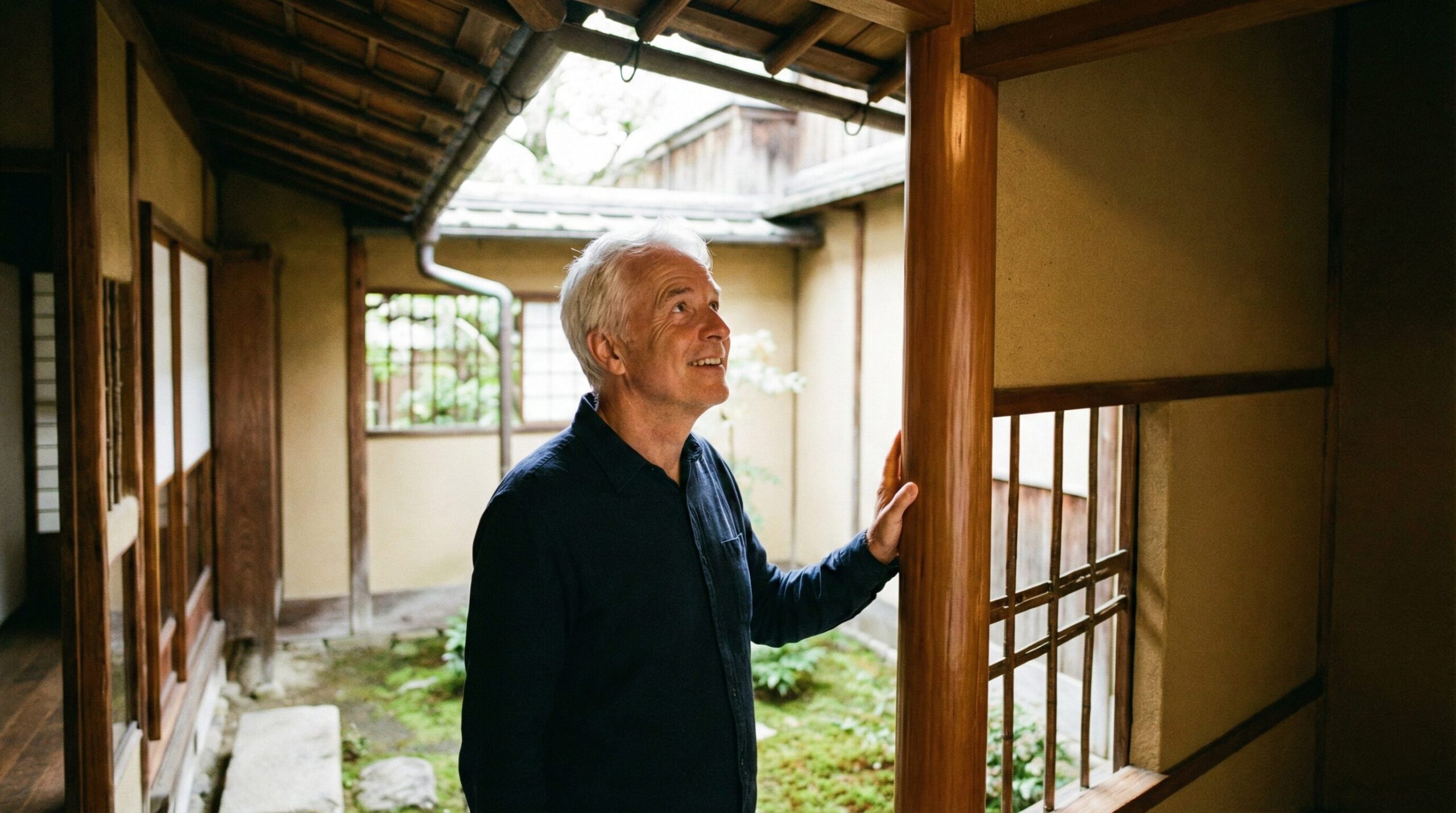
When most travelers arrive at Kyoto Station, they are greeted by a soaring canopy of glass and steel. The main thoroughfares are lined with concrete hotels, department stores, and the relentless hum of modern city life. It is easy, at first glance, to wonder where the ancient capital went.
But if you step off the main avenues, walk a few blocks east or west, and turn down a narrow, unmarked alleyway, the concrete suddenly gives way to dark, weathered wood.
The air changes here. It smells faintly of damp earth, old timber, and roasting green tea. The roar of traffic fades into the quiet rustle of leaves and the soft murmur of neighborhood life. You have entered the domain of Kyoto’s hidden machiya houses.
A machiya is, quite simply, a traditional Japanese townhouse. For centuries, these wooden structures functioned as both the homes and the workplaces of Kyoto’s merchants and artisans. Today, they stand as breathtaking architectural survivors. In a rapidly modernizing nation, they are tangible links to a bygone era. Staying in or visiting one of Kyoto’s hidden machiya houses is not a standard tourism experience.
It is not about ticking off a famous landmark on a sightseeing map. It is about total immersion. It is about listening to the quiet creak of centuries-old floorboards, watching the morning light filter through rice-paper screens, and feeling the precise, deliberate craftsmanship of Edo-period Japan.
Let us step beyond the superficial layers of the city and explore the profound beauty, the architectural ingenuity, and the cultural weight of these historic homes.
Key Details and Breakdown: The Anatomy of a Machiya
To truly appreciate Kyoto’s hidden machiya houses, one must understand how they are built. They are masterclasses in sustainable, natural architecture, designed long before the advent of electricity or air conditioning. They breathe, they flex, and they adapt to the extreme seasons of the Kyoto basin.
The Layout: Unagi no Nedoko (The Eel’s Bed)
The most defining characteristic of a Kyoto machiya is its unique footprint.
- The Ingenious Design: Historically, it is a common myth that merchants built their homes incredibly narrow at the front—sometimes only four or five meters wide—to minimize their tax burden. In reality, this layout allowed as many shops as possible to share the valuable street frontage for business. However, the property would stretch remarkably deep into the city block, sometimes extending up to forty meters back.
- The Journey Inward: This layout earned the affectionate nickname unagi no nedoko, or “an eel’s bed.” Walking through a machiya is a linear journey. You pass through the public shopfront (mise-no-ma), into the private living quarters (naka-no-ma), and eventually reach the deeply secluded back rooms (oku-no-ma) reserved for the family head or honored guests.
The Lungs of the House: Tsuboniwa
Because these homes were built long and narrow, packed tightly against neighboring houses on both sides, bringing in natural light and fresh air was a monumental challenge. The solution was the tsuboniwa—the internal courtyard garden.
- The Function: A tsuboniwa acts as a natural chimney. As the sun heats the roof, hot air rises, pulling cool air from the shaded, damp courtyard through the open sliding doors of the house. It is a brilliant, zero-energy cooling system.
- The Aesthetic: These courtyards are small, sometimes no larger than a few square meters, yet they are meticulously landscaped. A stone lantern (toro), a hollowed stone water basin (tsukubai), a maple tree, and a patch of deep green moss create a private, tranquil universe that changes beautifully with the four seasons.
The Public Face: Koushi (Wooden Latticework)
The street-facing facade of a machiya is defined by its koushi, elegant wooden lattice panels.
- Privacy and Light: The koushi allows those inside to look out onto the street without being seen, while simultaneously letting filtered sunlight and breezes enter the front rooms.
- The Language of Wood: Historically, the specific style, thickness, and spacing of the lattice functioned as a visual business card. A heavy, robust lattice indicated a merchant selling heavy goods like timber or sake. A delicate, fine lattice indicated a shop selling silk, thread, or paper.
The Materials: Earth, Wood, and Paper
A genuine machiya contains almost no metal nails. It is constructed entirely of natural materials that can return to the earth.
- The Structure: A framework of thick pine and cedar beams is held together by complex, interlocking joinery. This flexibility allows the house to sway and absorb the shock of earthquakes rather than cracking.
- The Walls: The walls (tsuchikabe) are made from woven bamboo coated in layers of clay, mud, and straw. They naturally absorb humidity during Kyoto’s notoriously muggy summers and release it during the dry winters.
Practical Examples and Recommendations: Where to Find the Hidden Gems
While thousands of machiya have been demolished to make way for parking lots and apartment blocks, a dedicated preservation movement has saved many of the finest examples. Finding Kyoto’s hidden machiya houses requires venturing into specific, quieter neighborhoods.
The Nishijin District: The Echo of the Looms
Located in the northwestern part of the city, Nishijin is Kyoto’s historic textile district. It is far removed from the bustling crowds of Gion or Higashiyama.
- The Atmosphere: As you walk through the narrow streets of Nishijin, you can still hear the rhythmic clacking of traditional wooden looms echoing from behind lattice doors. This area has one of the highest concentrations of surviving machiya.
- The Experience: Many of these former weavers’ homes have been carefully converted into quiet cafes, independent bookstores, and bespoke craft galleries. Stop by a machiya cafe here, sit near the tsuboniwa, and sip a bowl of matcha while listening to the rain fall on the clay tile roof.
Deep Nakagyo: Hidden in Plain Sight
The Nakagyo ward forms the central belly of Kyoto. While the main streets are thoroughly modernized, the grid of secondary streets hides spectacular architectural treasures.
- The Atmosphere: This was the merchant heart of the city. The machiya here tend to be larger and more prosperous.
- The Experience: Look for machiya that have been repurposed into high-end restaurants, sake bars, or boutique shops selling lacquerware and handmade paper (washi). These businesses honor the original architecture, often leaving the massive, soot-blackened ceiling beams exposed for guests to admire.
The Ultimate Immersion: A Machiya Stay (Kyomachiya)
To truly understand a machiya, you must sleep in one. A growing number of organizations are meticulously restoring these townhouses and offering them as private vacation rentals.
- The Contrast with Hotels: In a standard hotel, you are insulated from the city. In a machiya, you live in symbiosis with it. You hear the temple bells ring at dawn. You feel the distinct chill of the wooden corridors and the contrasting warmth of the tatami mats.
- What to Look For: Seek out rental companies that prioritize authentic restoration over cheap modernization. Look for properties that retain their original mud walls, their tsuboniwa courtyards, and their deep wooden baths (hinoki buro), while seamlessly integrating modern plumbing and discreet climate control for comfort.
Tips for Travelers: Respecting the Architecture of the Past
Kyoto’s hidden machiya houses are fragile. They are composed of paper, wood, and earth. When you visit or stay in one of these historic structures, you are taking on a quiet responsibility. Here is how to navigate a machiya with the respect it commands.
The Gentle Touch
Modern homes are built to withstand heavy impacts; machiya are not. The shoji (sliding paper screens) and fusuma (opaque sliding doors) are delicate.
- The Practice: Never pull a sliding door by the wooden frame; always use the recessed metal catch (hikite). Slide the doors slowly and gently. A slammed door in a machiya will shake the entire house and can tear the delicate paper screens.
Luggage and the Wooden Floors
The dark, polished wooden floors (itamae) in the hallways of a machiya have often been burnished by generations of footsteps.
- The Practice: Never roll a hard-wheeled suitcase across these wooden floors or the tatami mats. It will leave deep, permanent gouges in the historic wood. Always lift your luggage and carry it to your room, or use the luggage mats provided by the host.
Adapting to the Temperature
There is a famous quote from classical Japanese literature: “A house should be built with summer in mind.” They are designed to catch breezes and stay cool in the sweltering August heat. Consequently, they can be remarkably cold in the winter.
- The Practice: If you visit between December and March, embrace the local methods of staying warm. Spend your evenings sitting under the kotatsu (a low wooden table covered by a heavy blanket with a heater underneath). Wear the provided thick padded jackets (hanten) over your loungewear. It is a distinctly cozy, authentic Japanese winter experience.
The Guardian on the Roof: Shoki-san
As you wander the alleys looking at machiya facades, look up at the small, tiled roofs above the first-floor entrances.
- The Detail: You will often spot a small, fiercely scowling clay statue of a bearded man holding a sword. This is Shoki-san, a mythical guardian deity imported from Chinese folklore. Locals place him on their roofs to ward off evil spirits and protect the home from fires and illness. Spotting these individual, hand-crafted statues is a rewarding game for the observant traveler.
Sound Travels
Because machiya are built from wood and paper, they offer virtually no soundproofing. Furthermore, they are located in densely packed residential neighborhoods, not commercial hotel zones.
- The Practice: Be highly conscious of your volume, especially after 8:00 PM. Voices, loud laughter, and heavy footsteps will travel easily through the walls to the neighboring houses. Treat the space with the same quiet reverence you would offer a library or a temple.
Conclusion: The Quiet Soul of the City
Japan’s true beauty often hides in plain sight. It is easy to be blinded by the neon signs and the grand, golden pavilions, but the real Kyoto does not shout for your attention. It waits quietly in the shadows of the wooden lattice.
Kyoto’s hidden machiya houses are more than just old buildings. They are a philosophy of living rendered in wood and earth. They teach us about living in harmony with the seasons, about finding vast beauty in confined spaces, and about preserving the craftsmanship of the past. When you step inside a machiya, slide the paper screen shut behind you, and sit quietly by the edge of the courtyard garden, you finally hear the true pulse of the ancient capital. It’s time to go beyond the ordinary—and see the Japan locals know best. Travel deeper. Explore the real Japan.