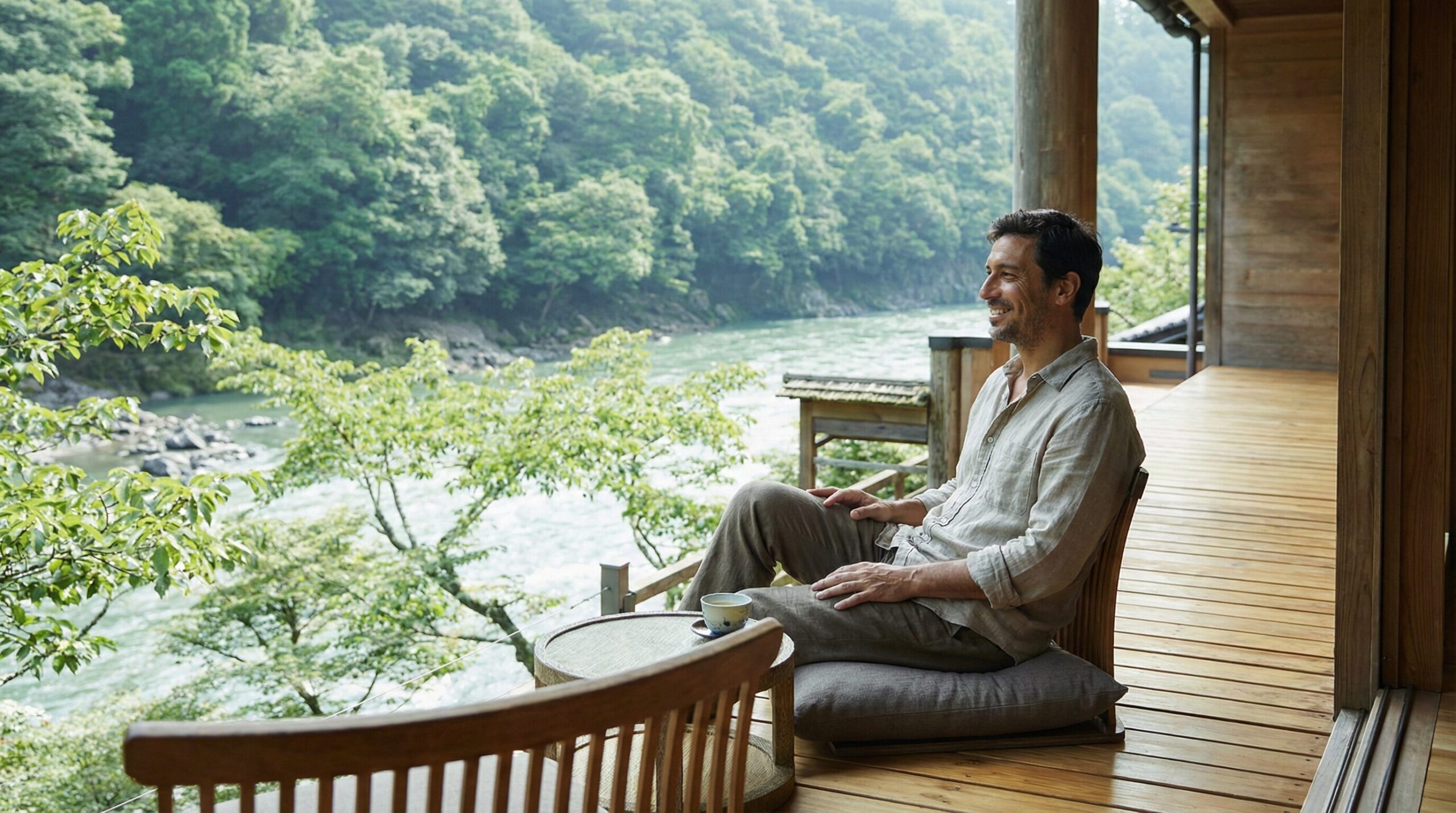
When most travelers think of Arashiyama, they picture the towering green stalks of the famous Bamboo Grove or the bustling streets leading up to the Togetsukyo Bridge. During the day, this western outskirt of Kyoto is a hive of activity, drawing visitors from across the globe who come to capture a piece of its historic charm. But there is another Arashiyama. A quieter, more profound version of this ancient district that only reveals itself after the day-trippers have returned to the city center. To truly understand the magic of this area, you must look to the water.
For over a millennium, Japanese nobility retreated to the banks of the Hozu and Katsura rivers to write poetry, observe the changing seasons, and find solace in nature. Today, that legacy of refined tranquility lives on behind the wooden gates of the area’s most exclusive inns. Securing a luxury ryokan with river views in Arashiyama is not just about finding a place to sleep; it is about immersing yourself in a living piece of Kyoto’s cultural heritage. Here, the gentle sound of flowing water replaces the hum of traffic, and meticulous omotenashi (Japanese hospitality) anticipates your every need. If you are ready to step away from superficial sightseeing and experience the deep, restorative stillness of the real Japan, this guide will help you navigate the ultimate riverside retreat.
The Anatomy of a Riverside Retreat: Key Details and Breakdown
Staying in a luxury ryokan in Arashiyama is a masterclass in subtlety. The beauty of these establishments lies not in opulent displays of wealth, but in their harmonious integration with the surrounding environment.
The Concept of Shakkei (Borrowed Scenery)
A true luxury ryokan with river views in Arashiyama does not simply look out onto the water; it incorporates the river and the forested mountains into its very design. This traditional architectural technique is known as shakkei, or “borrowed scenery.” When you slide open the shoji (paper screens) of your room, the framing of the window is intentionally designed to make the jade-green waters of the Katsura River and the seasonal foliage of Mount Arashiyama feel like an extension of your private tatami space. You are not just observing nature; you are placed entirely within it.
The Rhythm of the River
The geography of Arashiyama dictates the pace of life here. The river, which changes names from Hozugawa in the upper gorge to Katsuragawa as it widens near the bridge, is the lifeblood of the valley.
- Morning: The river is often draped in a thick, ethereal mist. Watching the fog slowly lift off the water while sipping warm roasted green tea in your room is a profoundly meditative experience.
- Afternoon: You might see traditional wooden flat-bottomed boats being expertly navigated down the rapids, carrying on a transportation tradition that dates back centuries.
- Evening: As darkness falls, the area becomes startlingly quiet. The rhythmic, rushing sound of the river becomes a natural lullaby, uninterrupted by city noise.
Hyper-Local Kaiseki Dining
A significant portion of your stay revolves around the evening meal. Kaiseki-ryori is a multi-course, highly ritualized dining experience that reflects the exact time and place you are eating. In an Arashiyama riverside ryokan, expect menus heavily influenced by the local terroir: sweetfish (ayu) caught from the very river outside your window in summer, Kyoto heirloom vegetables (kyo-yasai), and delicate seasonal foraged mountain greens.
Practical Examples and Recommendations: Where to Stay
Choosing the right luxury ryokan with river views in Arashiyama depends on what kind of experience you are seeking—whether it is complete isolation, historic prestige, or a blend of traditional aesthetics and modern comfort.
Hoshinoya Kyoto: The Pinnacle of Seclusion
If your goal is to completely disconnect from the modern world, Hoshinoya Kyoto offers an unparalleled arrival experience.
- The Experience: While the property is inaccessible by car from the main tourist area, guests typically arrive via a traditional wooden boat from a private dock near the Togetsukyo Bridge, though a scenic walking path is also available.
- The Vibe: Set in a century-old riverside mansion once owned by a wealthy merchant, the rooms combine classic Kyoto craftsmanship—such as kyo-karakami (woodblock-printed wallpaper)—with plush, modern low-level seating. Every single room offers unobstructed views of the Oigawa River (the local name for this stretch of water).
- Best For: Travelers seeking absolute privacy, romantic getaways, and a flawless fusion of heritage and contemporary luxury.
Suiran, a Luxury Collection Hotel: Tradition Meets Modernity
For those who appreciate the aesthetic of a traditional ryokan but prefer the amenities and familiar comforts of a western luxury hotel, Suiran is the perfect bridge.
- The Experience: Located right on the banks of the Katsura River, Suiran is built on the grounds of a former imperial villa. It offers a slightly more accessible location while still feeling tucked away from the crowds.
- The Vibe: Many rooms feature private, open-air hot spring baths (rotenburo) overlooking peaceful private Japanese gardens to ensure utmost privacy. You can soak in mineral-rich waters in this serene setting. The on-site restaurant, housed in a restored 19th-century summer house, is spectacular.
- Best For: First-time ryokan guests, Marriott loyalists, and those who want private onsen facilities alongside western-style beds.
Arashiyama Benkei: The Classic Kyoto Inn
If you want to step back in time and experience a classic, unadulterated Kyoto ryokan, Benkei is a local institution.
- The Experience: Originally a country estate for a noble family, Benkei offers the quintessential ryokan experience. Meals are served privately in your room by a dedicated nakai-san (room attendant) who anticipates your needs with graceful precision.
- The Vibe: The architecture is purely traditional. Think the smell of fresh tatami mats, intricate woodwork, and sprawling, meticulously maintained Japanese gardens. Their riverside rooms offer a front-row seat to the seasonal changes of Arashiyama mountain.
- Best For: Culinary enthusiasts focused on traditional kaiseki, and travelers seeking a deeply authentic, old-world Japanese atmosphere.
Actionable Tips for Travelers
Staying at a high-end ryokan is an investment of both time and money. To ensure you respect the culture and maximize your experience, keep these practical tips in mind.
Shift Your Concept of “Sightseeing”
The most common mistake foreign travelers make when booking a luxury ryokan is treating it like a normal hotel—a place to drop their bags before rushing out to see temples.
- The Ryokan IS the Destination: Plan to arrive precisely at the check-in time (usually 3:00 PM) and do not leave the property until check-out the next morning (usually 10:00 AM or 11:00 AM).
- Embrace the Pace: Change into your provided yukata (light cotton kimono) immediately. Sit by the window, listen to the river, read a book, take multiple baths, and allow yourself to simply exist in the space.
Timing Your Visit for the Best Views
Arashiyama is a destination dramatically defined by its four seasons, and the river view changes completely depending on when you visit.
- November (Autumn): The most popular and expensive time to visit. The mountainside erupts in fiery reds and golds. Book at least six months to a year in advance.
- Early April (Spring): Cherry blossoms line the riverbanks. It is breathtaking, but similarly crowded and requires long-term advance booking.
- Winter and Summer: Do not discount the off-seasons. A rainy, misty June day turns the gorge into a moody, emerald-green ink painting. January brings stark, quiet beauty, and occasionally, a delicate dusting of snow over the river rocks.
Navigating Dietary Restrictions
Because kaiseki dining is central to the experience and relies heavily on dashi (fish broth) and seasonal seafood, accommodating dietary restrictions can be complex.
- Communicate Early: If you are vegetarian, vegan, or have severe allergies, you must inform the ryokan at the exact time of booking. Do not wait until you arrive. High-end ryokans take immense pride in their food and need days to prepare appropriate, equally luxurious alternative menus.
Understanding Bathing Etiquette
If your room does not have a private bath, you will be using the communal public baths (daiyokujo).
- The Rules: Tattoos are traditionally prohibited in public baths in Japan, though luxury properties aimed at international guests (like Suiran) are sometimes more lenient or offer tattoo cover-up stickers. Always wash and rinse your body thoroughly at the shower stations before stepping into the soaking tub. The bath is for relaxing, not cleaning.
Conclusion
Japan’s true beauty often hides in plain sight, waiting for those willing to slow down and look closely. While thousands of visitors march through Arashiyama’s bamboo paths every day, only a handful ever experience the profound tranquility of watching the morning mist roll down the Katsura River from the privacy of a tatami room. Booking a luxury ryokan with river views in Arashiyama allows you to step out of the current of mass tourism and into a timeless, quiet sanctuary. It is here, listening to the water over a cup of tea, that you stop merely looking at Japan, and finally begin to feel it. It’s time to go beyond the ordinary—and see the Japan locals know best.