When most travelers think of Kyoto, the mind immediately jumps to its monumental heritage: the golden reflection of Kinkaku-ji, the thousands of vermilion gates at Fushimi Inari, or the vast wooden stage of Kiyomizu-dera. These sites are undeniably breathtaking. Yet, the reality of visiting them often involves navigating dense crowds, following raised flags of tour guides, and struggling to find a moment of quiet reflection.
However, there is a different Kyoto that exists just beyond the edges of the heavy foot traffic. It is a city that reveals itself only at dawn, when the streets are empty save for a monk sweeping the temple steps, or at dusk, when the deep, resonant toll of a bronze bell echoes through the hills. To truly experience the spiritual weight and historical gravity of Japan’s ancient capital, one must change their proximity to it.
Choosing to stay in a luxury ryokan near Kyoto’s temples is not simply about booking premium accommodation. It is a strategic decision to synchronize your internal clock with the rhythm of the city’s sacred spaces. It allows you to inhabit the quiet margins of the day, offering a gateway into a deeply authentic, profoundly serene Kyoto that most day-trippers never get to see.
For the mindful traveler looking to escape the superficial sightseeing loop, stepping into a temple-adjacent traditional inn offers a masterclass in Japanese aesthetics, mindfulness, and slow travel.
The Anatomy of Temple-Side Serenity: Key Details and Breakdown
What elevates a traditional inn located in the historic preservation districts of Kyoto above a standard luxury hotel? A dedicated luxury ryokan near Kyoto’s temples is designed to act as a seamless extension of the sacred grounds it neighbors. The boundary between the religious sanctuary and the private guest room is intentionally blurred. Here is a breakdown of the core architectural and philosophical elements that define these extraordinary spaces.
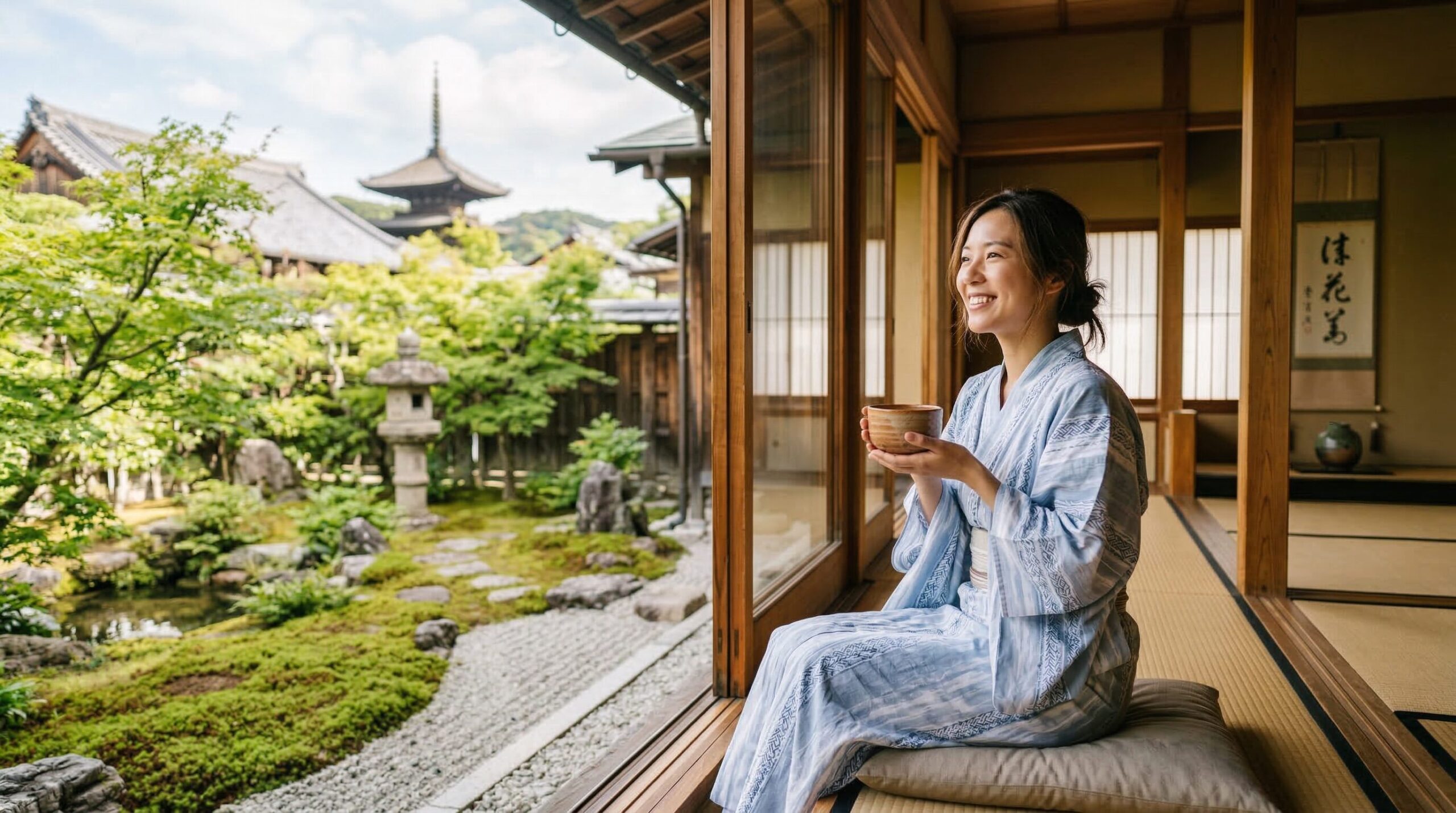
- The Principle of ‘Shakkei’ (Borrowed Scenery): In Kyoto, space is a premium. High-end ryokans masterfully employ shakkei, an ancient landscaping technique where the background landscape—such as the pagoda of a nearby temple or the forested slopes of the Higashiyama mountains—is visually incorporated into the ryokan’s own private garden. You are not just looking at a garden; you are looking at a curated view of history.
- Architectural Silence: These properties are often built using the sukiya-zukuri architectural style, originally developed for traditional tea houses. It prioritizes natural materials: unvarnished cedar, textured clay walls, and fragrant tatami mats. The design is deliberately understated, utilizing paper shoji screens to diffuse harsh light into a soft, contemplative glow. The architecture is designed to quiet the mind before you even step outside.
- Culinary Reverence: Dining in these establishments is a profound experience. While many offer standard high-end kaiseki (multi-course meals), ryokans closely associated with Zen temples often weave elements of shojin ryori (Buddhist vegetarian cuisine) into their menus. You might be served locally made yuba (tofu skin), seasonal mountain vegetables, and delicate clear broths that reflect the austere, mindful eating practices of the neighboring monks.
Sacred Margins: Practical Examples and Recommendations
Kyoto is surrounded by mountains on three sides, and the most prestigious temples are nestled into these foothills. To experience this level of restoration, you must seek out the specific neighborhoods where the density of heritage sites meets residential quiet. Here are three distinct areas where finding a luxury ryokan near Kyoto’s temples rewards slow, observant exploration.
Route 1: The Shadows of Higashiyama
The eastern mountains of Kyoto (Higashiyama) hold the highest concentration of famous temples, stretching from Kiyomizu-dera in the south to Ginkaku-ji (the Silver Pavilion) in the north. During the day, the preserved streets of Nineizaka and Sanneizaka are packed with visitors. But at night, the area transforms entirely.
Staying in a luxury ryokan tucked into these sloping streets offers an unparalleled temporal advantage.
Highlights of a Higashiyama Stay:
- The Pre-Dawn Walk: When you wake at 5:30 AM, you can walk out of your ryokan and stroll up to Kiyomizu-dera before the ticket gates even open. The stone-paved streets are entirely yours, illuminated only by the soft glow of traditional street lanterns.
- The Soundscape: In the early morning and late evening, the ambient noise of the city fades, allowing you to hear the massive temple bells from Chion-in or Kodai-ji echoing directly through the wooden walls of your room.
- Evening Exclusivity: Many temples in this area, such as Kodai-ji, offer special nighttime illuminations during autumn and spring. Staying mere steps away means you can wait until the tour buses depart, enjoying a quiet, moonlit stroll through the illuminated bamboo groves and Zen rock gardens.
Route 2: The Zen Enclave of Nanzen-ji
Further north along the eastern foothills lies Nanzen-ji, one of the most important Zen Buddhist temples in the world. The area surrounding it is characterized by massive, centuries-old pine trees, quiet residential estates, and a historic red-brick aqueduct. A luxury ryokan near Kyoto’s temples in the Nanzen-ji precinct often feels more like a private, aristocratic estate than a commercial inn.
Highlights of a Nanzen-ji Stay:
- Water Elements: The ryokans in this specific neighborhood often draw water from the nearby Lake Biwa Canal. Their inner courtyard gardens feature elaborate, gently flowing streams and koi ponds that provide a constant, soothing auditory backdrop.
- Yudofu Tradition: Nanzen-ji is famous for yudofu (simmered tofu). The luxury inns here elevate this humble monastic dish into a high-art culinary experience, served in private tatami rooms overlooking meticulously raked gravel gardens.
- Access to the Philosopher’s Path: You are perfectly positioned at the southern starting point of the Philosopher’s Path. You can begin a slow, meditative walk along the cherry-tree-lined canal early in the morning, arriving at Ginkaku-ji just as its gates open.
Route 3: The Forested Slopes of Arashiyama
When travelers head west to Arashiyama, almost all of them go to photograph the towering green stalks of the bamboo grove and the scenic Togetsukyo Bridge. However, once the sun dips below the Arashiyama mountains, the day-trippers vanish, and the true, moody atmosphere of the district emerges. Choosing a ryokan hidden further up the Katsura River or nestled in the Okusaga area, away from the main train station, places you adjacent to deeply historic, less-frequented temples like Jojakko-ji and the moss-covered Gio-ji.
Highlights of an Arashiyama Stay:
- River and Mountain Isolation: The premium ryokans here are often accessed by a private boat ride up the river or situated on steep, forested hillsides. The physical separation from the town creates an atmosphere of total isolation.
- Morning Temple Meditation: Many inns in this area have established relationships with local Zen temples. Guests can often arrange to participate in early morning zazen (seated meditation) sessions with the monks, walking from their room to the temple hall in the crisp morning air.
- Seasonal Mastery: Arashiyama is famous for its dramatic seasonal shifts—from the blinding green maples of early summer to the fiery reds of autumn. The architecture of the ryokans here acts as a viewing pavilion, framing nature’s changes with absolute precision.
Mindful Preparation: Tips for Travelers
To extract the maximum benefit from your stay at a temple-side ryokan, a shift in your standard travel mindset is required. You are entering a space where the rhythm is dictated by tradition, not convenience.
- Embrace the Early Schedule: Ryokan life aligns with the sun and the neighboring temples. Dinner is usually served promptly between 6:00 PM and 7:00 PM. Breakfast is equally early. Resist the urge to stay out late in the modern downtown; instead, retire early so you can wake before dawn to explore the empty temple grounds nearby.
- Understand the Art of the Bath: While these ryokans may not have the volcanic mineral springs of Hokkaido or Kyushu, their bathing facilities are magnificent. Often crafted from fragrant cypress (hinoki), the baths are designed to warm the core and quiet the mind after a long day of walking. Bathe in silence, taking time to observe the small private garden typically situated just outside the bathhouse window.
- Respect the Residential Boundaries: The alleys connecting your luxury inn to the grand temples are often residential. While it is wonderful to explore, remember that the beautiful wooden machiya houses are private homes. Keep your voice low, avoid intrusive photography into private windows, and tread lightly on the stone paths.
- Leave the Itinerary Behind: When you book a stay of this caliber, the ryokan itself is the destination. Do not pack your schedule with rushed sightseeing. Spend the hours between breakfast and checkout sitting on the engawa (wooden veranda) of your room, sipping green tea, and watching the shadows move slowly across the garden.
Conclusion
Japan’s true beauty often hides in plain sight, far removed from the crowded intersections and the glare of camera flashes. It reveals itself in the subtle scent of incense drifting over a wooden wall, in the meticulous care a shop owner takes in sweeping the pavement, and in the profound, heavy silence of an empty temple courtyard at dawn. Choosing to stay at a luxury ryokan near Kyoto’s temples is an investment in time and perspective. By slowing your pace and engaging with the ancient rhythms of the city’s sacred spaces, you move beyond the ordinary tourist experience. You stop merely looking at the history of Japan, and begin to actually feel it—returning home not just with photographs of famous buildings, but with a restored body and a deeply quieted mind.