
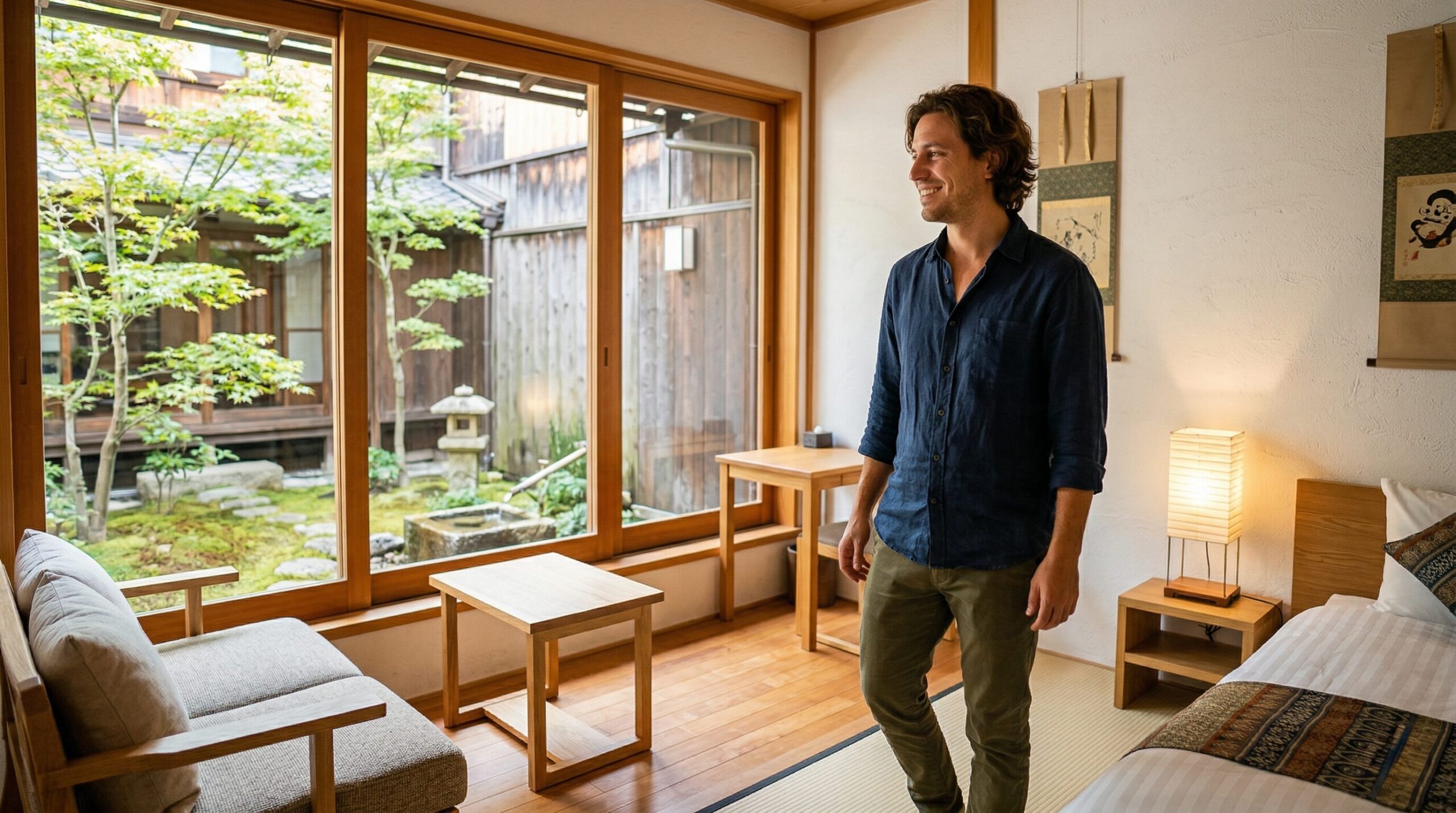
When mapping out a journey to Japan’s ancient capital, accommodation often dictates the rhythm of the trip. The standard advice for budget-conscious visitors is to default to a “business hotel”—those hyper-efficient, uniformly beige towers clustered heavily around Kyoto Station. While undeniably practical, these spaces offer little in the way of cultural connection. They are designed for transit: you check in, you sleep, and you leave. But for the mindful traveler, a room should be more than just a dry place to store luggage. It should offer a sense of place.
Fortunately, the best budget hotels in Kyoto have evolved dramatically over the last decade. A new wave of independent hoteliers and creative hospitality groups has actively rejected the sterile corporate model. Instead, they are championing adaptive reuse, community-driven design, and deep neighborhood integration. Finding an affordable stay no longer requires sacrificing aesthetics, history, or authenticity. By looking past the standard international chains, you can uncover accommodations that actively enrich your understanding of the city. This guide explores how to travel deeper on a budget, highlighting spaces where traditional architecture, local coffee culture, and genuine Japanese hospitality intersect gracefully—without breaking the bank.
The Anatomy of Kyoto’s New Budget Aesthetics
What separates a truly great budget hotel from a cheap place to sleep? In Kyoto, it comes down to intentionality. The city has strict zoning and building regulations designed to preserve its historic skyline. This limitation has forced budget hoteliers to become incredibly creative with existing spaces. When you seek out the best budget hotels in Kyoto, you will notice three distinct architectural and philosophical trends:
- Adaptive Reuse: Rather than building new, cheap structures, the best budget stays are housed in repurposed buildings. You might sleep in a beautifully converted Taisho-era bank, an old kimono textile factory, or a meticulously restored wooden machiya (townhouse).
- The “Living Room” Concept: To keep room prices low, individual guest rooms are often kept small and minimalist. In exchange, these hotels invest heavily in expansive, beautifully designed communal spaces. The ground floor often operates as a neighborhood cafe or craft beer bar, blurring the line between hotel guests and local Kyoto residents.
- Micro-Local Focus: Traditional concierges hand you a printed map of the city’s top ten crowded tourist sites. The new wave of budget hotels focuses entirely on the micro-neighborhood. They guide you to the tiny, unmarked bakery down the street, the local sento (public bath), and the quietest nearby shrine.
Route 1: UNKNOWN KYOTO (The Heritage Restoration in Gojo)
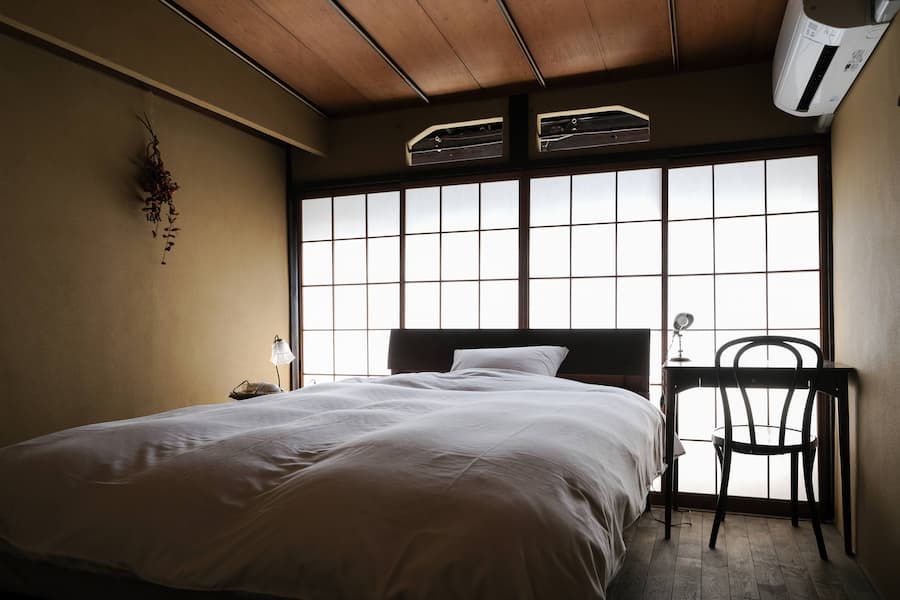
Located just south of the bustling Shijo-Kawaramachi area, the Gojo neighborhood retains a gritty, deeply local charm. Hidden down a narrow, unassuming alley here is UNKNOWN KYOTO. This property is a masterclass in historical preservation on a budget. The building itself is a beautifully restored, century-old machiya that once operated as a tea house and brothel in the pre-war era. Rather than stripping away this complex history, the architects preserved the original dark wooden beams, the intricate lattice windows, and the central courtyard garden, transforming it into a hybrid guesthouse, co-working space, and restaurant.
Highlights of UNKNOWN KYOTO:
- Architectural Honesty: The private rooms are incredibly simple, featuring tatami mats and crisp, white futons. The luxury here is the atmosphere. You fall asleep to the smell of old cedar and wake up to the soft light filtering through traditional paper shoji screens.
- The Co-Working Cafe: The lounge area is a hub for local creatives and remote workers. Sitting here with a hand-drip coffee offers a quiet, observational window into the daily lives of Kyoto’s young professionals.
- Sin -Dining&Bar-: The on-site restaurant serves exceptional, deeply comforting local fare. You don’t need to navigate the city for a good meal; you can sit at the wooden counter, order a craft sake, and eat alongside neighborhood regulars.
Route 2: OMO5 Kyoto Sanjo (The Neighborhood Navigator)
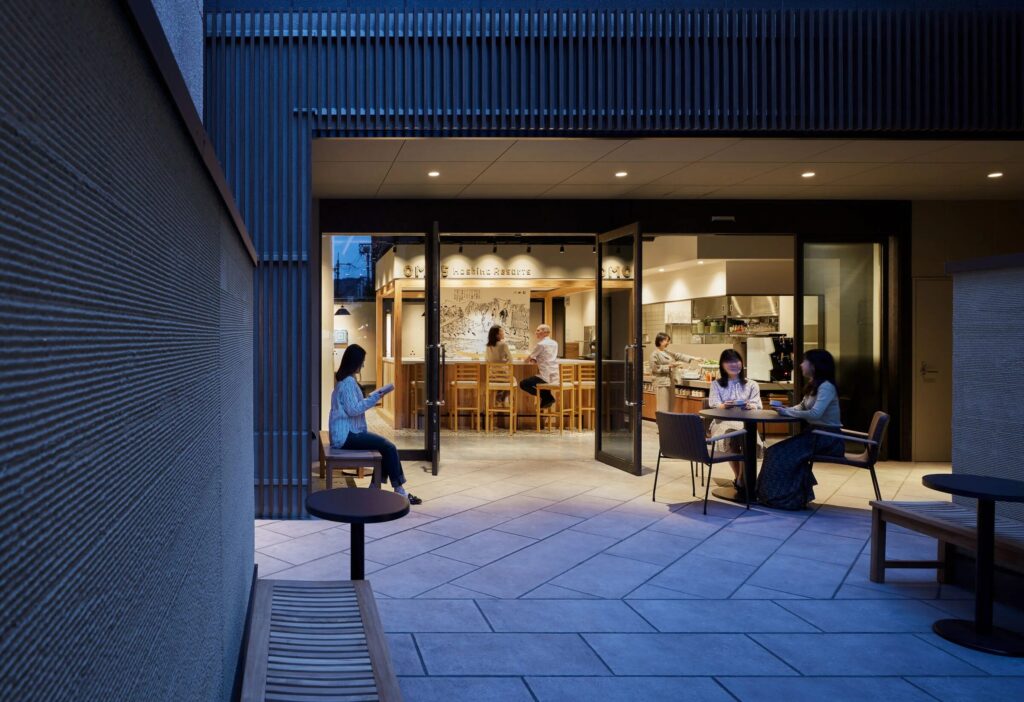
The Hoshino Resorts group is famous worldwide for its ultra-luxury Hoshinoya properties. However, they recently launched the “OMO” brand—a series of boutique, budget-friendly hotels designed specifically to connect travelers with local city culture. OMO5 Kyoto Sanjo is situated right in the heart of the city’s historic merchant district. The hotel itself is modern, playful, and incredibly comfortable, but the true value lies in its philosophy of neighborhood immersion. It is built on the premise that the entire Sanjo area is your resort.
Highlights of OMO5 Kyoto Sanjo:
- The Go-KINJO Map: In the lobby, you will find a massive, hand-drawn map updated daily by the staff. It ignores major tourist traps and instead highlights the neighborhood’s best obscure record stores, retro kissaten (old-school coffee shops), and tiny artisan workshops.
- OMO Rangers: The hotel offers free or incredibly cheap guided walking tours led by staff members called “OMO Rangers.” They might take you on a morning walk to learn how local merchants sweep their storefronts, or guide you through the maze of the nearby Takase River alleys at dusk.
- Smart Space Design: The rooms utilize vertical space brilliantly. You might find a comfortable lounge sofa tucked underneath a raised, lofted bed, providing the functionality of a suite within the footprint of a standard budget room.
Route 3: The Rinn Hotel Group (The Accessible Machiya)
For decades, staying in a traditional Kyoto machiya was an experience reserved exclusively for the wealthy. These wooden townhouses were either private residences or converted into high-end luxury inns. The Rinn hotel group changed this landscape by quietly buying up abandoned or dilapidated machiya across Kyoto’s residential wards and restoring them. They offer a vast network of accommodations, ranging from standard boutique hotels to private, entire-townhouse rentals, bringing traditional architecture into the budget and mid-range tier.
Highlights of a Rinn Machiya Stay:
- Residential Isolation: Because these properties are scattered across quiet residential neighborhoods—far from the train station—you are forced to commute like a local. You walk the same narrow streets and shop at the same local grocers as the people who have lived there for generations.
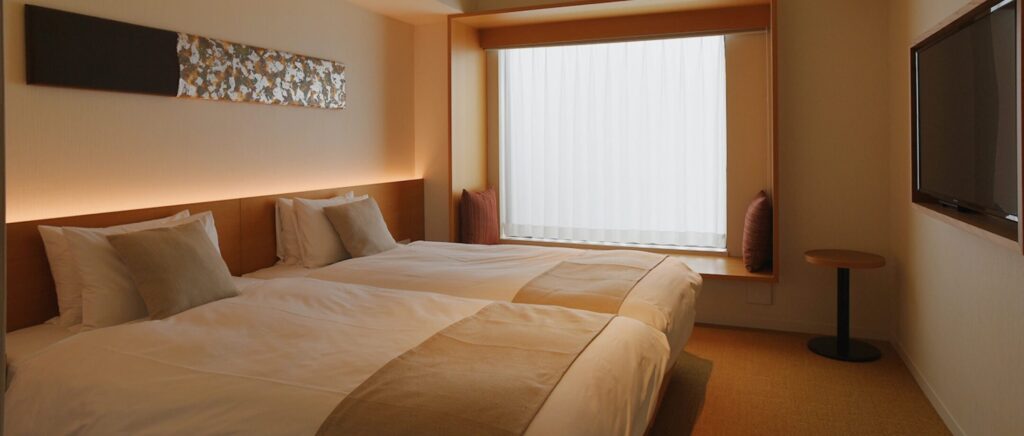
- Modern Traditionalism: A Rinn property usually maintains the classic wooden exterior, the heavy clay walls, and the inner tsuboniwa (courtyard garden). However, the interiors are subtly modernized with floor heating, high-tech plumbing, and premium Western-style mattresses set on raised wooden platforms.
- The Value of Space: If you are traveling as a family or a group of three to four, renting a budget-tier Rinn machiya is often cheaper per person than booking multiple cramped rooms in a standard business hotel. It affords you a private living room to decompress after a long day of walking.
Mindful Booking: Tips for Travelers
Securing one of the best budget hotels in Kyoto requires a bit of strategic planning. These boutique properties have fewer rooms than massive corporate chains and rely heavily on word-of-mouth. Keep these practical tips in mind to maximize your budget and your experience:
- Embrace the Shared Bath (With Caveats): Many historic, restored properties (like UNKNOWN KYOTO) keep costs low by offering private bedrooms but shared bathroom facilities. Do not let this deter you. In Japan, shared facilities are maintained to an astonishingly high standard of cleanliness. Embrace it as part of the authentic guesthouse experience.
- Utilize ‘Takuhaibin’ (Luggage Forwarding): Budget boutique hotels and machiyas often have tiny lobbies and no elevators. Dragging a massive suitcase up a narrow, wooden Taisho-era staircase is a miserable experience. Pack a small overnight bag, and use Japan’s brilliant luggage forwarding service (Takuhaibin) to send your large suitcases directly from the airport or your previous city to the hotel.
- Book the Shoulder Seasons: Kyoto’s hotel prices operate on extreme dynamic pricing. A budget room that costs $60 USD in mid-February can easily skyrocket to $250 USD during the peak cherry blossom weeks of April. To truly travel on a budget, aim for the quiet shoulder seasons: late May (before the rainy season), or the crisp, quiet weeks of early December.
- Read the Room Dimensions: Japanese hotel rooms are notoriously small. When booking a budget room, pay close attention to the square meterage and the bed type. A “Semi-Double” bed is essentially a slightly wider twin bed, which can be uncomfortably tight for two adults. If space is a priority, look for a “Hollywood Twin” setup.
Conclusion
Japan’s true beauty often hides in the quiet, unassuming corners of its cities. It is found in the meticulous care a barista takes to pour a cup of coffee in a hotel lobby, in the smooth, worn texture of an old wooden staircase, and in the quiet greeting of a neighborhood shopkeeper as you step out of your guesthouse in the morning. By choosing to stay in the best budget hotels in Kyoto, you do more than save money. You actively reject the sterile, mass-produced version of tourism. You choose to support local preservation efforts, engage with the creative communities that give the city its modern pulse, and sleep within the actual historical fabric of the ancient capital. It is time to go beyond the ordinary, rethink what budget travel means, and discover the deep, resonant, and stylish Japan that the locals know best.