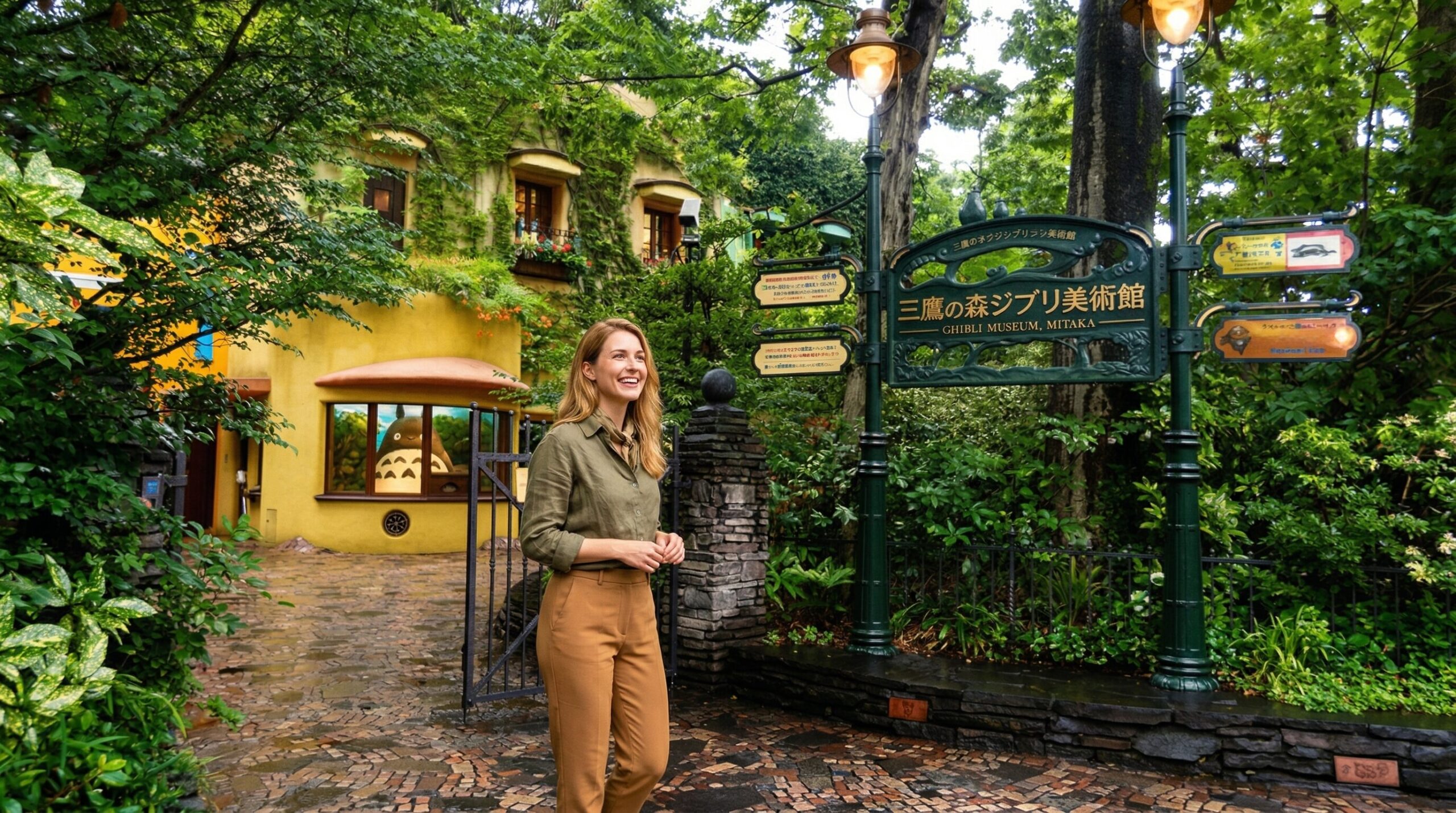
For millions of travelers, the animated films of Studio Ghibli serve as the first enchanting introduction to Japanese culture. The lush, hand-painted landscapes, the quiet reverence for nature, and the deep nostalgia embedded in films like My Neighbor Totoro, Spirited Away, and Whisper of the Heart create an overwhelming desire to step inside those beautifully realized worlds. Naturally, when these fans plan a trip to the capital, their first instinct is to secure tickets to the famous Ghibli Museum in Mitaka. However, as any seasoned traveler knows, acquiring those museum tickets requires navigating a notoriously difficult, first-come-first-served booking system one month in advance. Often, visitors arrive in the country empty-handed, assuming their chance to experience the magic of Hayao Miyazaki’s imagination is lost. But to travel deeper into the city is to realize that the studio’s magic cannot be contained within a single building. The true genius of Studio Ghibli lies in its ability to elevate the ordinary. Miyazaki and his team drew their inspiration directly from the quiet suburbs, historic architecture, and hidden groves of the Kanto region. Scattered across the metropolis are Tokyo’s secret Ghibli spots—locations that either directly inspired the films or quietly celebrate their legacy away from the massive tourist crowds. By stepping off the heavily curated tourist trails and seeking out these hidden gems, you do more than just hunt for anime references. You explore the real Japan. You discover the quiet, residential sanctuaries, the preserved architectural history, and the subtle, everyday beauty that inspired some of the greatest animated films of our time.
The Anatomy of Animation: Key Details and Breakdown
To truly appreciate Tokyo’s secret Ghibli spots, one must first understand the visual philosophy of the studio itself. Unlike Western animation, which often relies on highly stylized, fantastical environments, Studio Ghibli grounds its fantasy in meticulous, almost obsessive realism. When you seek out these real-world locations, you are engaging with the core tenets of Ghibli’s environmental storytelling:
- The Beauty of the Mundane: Miyazaki frequently emphasizes that magic exists in the everyday. A rusted train crossing, a steep concrete staircase in a quiet suburb, or a tangled camphor tree in a neighborhood park are treated with the same artistic reverence as a soaring magical castle. Visiting these spots forces you to slow down and observe the quiet details of Japanese urban planning.
- Showa-Era Nostalgia: Much of the studio’s aesthetic is heavily rooted in a longing for the Showa era (1926–1989), a time before the hyper-modernization of the bubble economy. The secret spots that inspired the artists are often architectural time capsules—fading shopping streets, old wooden bathhouses, and post-war storefronts that have survived the wrecking ball of progress.
- The Geography of Tama: While central Tokyo (Shinjuku, Shibuya) represents the future, the western suburbs—specifically the Tama region—represent the studio’s heartland. Studio Ghibli’s actual production headquarters is located in Koganei, a quiet western suburb. Naturally, the animators drew heavily from their immediate surroundings, making the western fringes of the city a goldmine for location hunters.
Real-World Magic: Practical Examples and Recommendations
To find these hidden gems, you must be willing to navigate local commuter trains and walk through deeply residential neighborhoods. Here are four essential routes that uncover the best of Tokyo’s secret Ghibli spots, allowing you to step directly into the frame.
The Hills of Seiseki-Sakuragaoka (Whisper of the Heart)
Released in 1995, Whisper of the Heart is unique among Ghibli films because it is set in a highly specific, real-world location: the quiet, hilly suburb of Seiseki-Sakuragaoka in Tama City, western Tokyo. For fans of the film, stepping off the train here is a profoundly surreal experience; it feels exactly like walking into the movie.
Highlights of the Seiseki-Sakuragaoka Walk:
- The Irohazaka Slopes: The film’s protagonist, Shizuku, famously trudges up impossibly steep, winding roads to reach the antique shop. These roads are real. The Irohazaka winding slopes offer stunning, elevated views of the Tama River and the sprawling Tokyo suburbs below, perfectly mirroring the film’s iconic panoramas.
- The Keio Line Station: The journey begins at Seiseki-Sakuragaoka Station. The local community has fully embraced its cinematic legacy. You will find a miniature replica of the “Earth Shop” (the antique store from the film) outside the station, which serves as a unique mailbox where fans leave letters. Furthermore, the train departure melody played on the platforms is the film’s theme song, “Country Roads.”
- The Secret Shrines and Stairs: As you navigate the quiet residential hills, you will encounter the exact concrete staircases and the small, quiet Konpira Shrine where Shizuku’s classmate Sugimura confesses his feelings. It is a masterclass in how anime captures the specific, nostalgic atmosphere of Japanese suburban life.
Edo-Tokyo Open Air Architectural Museum (Spirited Away)
While the massive Ghibli Park in Aichi Prefecture features a recreation of the world of Spirited Away, the actual architectural DNA of the film was sourced right here in Tokyo. Located in Koganei Park (very close to the actual Studio Ghibli headquarters), the Edo-Tokyo Open Air Architectural Museum is a sprawling park where historically significant buildings from across Tokyo have been relocated and preserved. Miyazaki famously spent hours here sketching during the pre-production of his Oscar-winning masterpiece.
Highlights of the Architectural Museum:
- The Boiler Room Inspiration (Takei Sanshodo): Inside the park, you will find an immaculately preserved Meiji-era stationery store called Takei Sanshodo. One wall is completely lined from floor to ceiling with hundreds of tiny, wooden drawers used for storing calligraphy brushes. This specific wall is widely acknowledged as the direct visual inspiration for Kamaji’s sprawling, multi-drawer boiler room in the spirit bathhouse.
- The Bathhouse Architecture (Kodakara-yu): While the film’s bathhouse (Aburaya) is a fantastical amalgamation of several buildings, the classic, curved karahafu roof and the sprawling tile work were heavily inspired by Kodakara-yu, a beautifully preserved 1929 public bathhouse located within the museum park. You can walk through the empty, echoing tile rooms and trace the origins of the film’s aesthetic.
- The Mysterious Yellow Train: In the center of the park sits a vintage, bright yellow streetcar (the Toei Type 7500). Stepping inside the quiet, wood-paneled carriage immediately evokes the melancholic, silent train journey that Chihiro takes across the flooded tracks to visit Zeniba.
Shiro-Hige’s Cream Puff Factory (My Neighbor Totoro)
For a more culinary approach to Ghibli hunting, you must travel to the trendy, bohemian neighborhood of Shimokitazawa, and then walk slightly west into the quiet, affluent residential area of Daita. Hidden at the end of a narrow, leafy path sits Shiro-Hige’s Cream Puff Factory.
Highlights of Shiro-Hige’s Factory:
- The Official Seal of Approval: This is not a bootleg fan cafe. Shiro-Hige is the only bakery in the world officially licensed by Studio Ghibli to bake and sell cream puffs in the exact shape of Totoro. The bakery is actually owned by a relative of Hayao Miyazaki, ensuring absolute quality and adherence to the studio’s aesthetic standards.
- The Edible Art: The cream puffs are astonishingly detailed, featuring tiny chocolate eyes and leaf hats. The flavors change seasonally—featuring classic custard, strawberry, matcha, and even chestnut in the autumn. Identifying the flavor requires checking the specific type of hat or leaf resting on Totoro’s head.
- The Forest Atmosphere: The building itself looks like it was pulled from a fairy tale. It is a two-story, European-style brick house covered in creeping green vines, surrounded by trees. The second floor operates as a small cafe where you can eat your pastries accompanied by Ghibli art on the walls, making it a perfect, quiet retreat from the city.
The NI-Tele Really BIG Clock (Howl’s Moving Castle)
If you cannot escape the central business districts of Tokyo, there is a spectacular piece of Ghibli magic hidden in plain sight among the towering glass skyscrapers of Shiodome. Attached to the side of the Nippon Television (Nittele) Tower is the “NI-Tele Really BIG Clock.”
Highlights of the Shiodome Clock:
- Designed by Miyazaki: This is not merely a clock inspired by Ghibli; it was designed by Hayao Miyazaki himself. Measuring 18 meters wide and 12 meters high, it is a staggering piece of copper and steel steampunk architecture. With its sprawling mechanical legs, spinning gears, and Victorian aesthetic, it looks as though it detached itself directly from Howl’s Moving Castle.
- The Mechanical Show: The clock is not static. Several times a day (usually around noon, 3:00 PM, 6:00 PM, and 8:00 PM, though schedules vary by season), the clock comes to life. For three minutes, the mechanical blacksmiths strike their anvils, cannons raise and fire, and the massive hands spin to a whimsical, melancholic instrumental soundtrack.
- The Urban Contrast: The visual impact of this clock is magnified by its surroundings. Seeing this rusted, whimsical, analog masterpiece bolted to the side of an ultra-modern, sterile glass skyscraper is a profound visual metaphor for Ghibli’s overarching themes of industrialism versus imagination.
Mindful Exploration: Tips for Travelers
When you bypass standard tourist attractions to explore Tokyo’s secret Ghibli spots, you are often stepping into quiet, active residential neighborhoods or preserved historical zones. To ensure your journey is seamless and respectful, keep these practical tips in mind:
- Respect the Residential Boundary: Neighborhoods like Seiseki-Sakuragaoka and Daita are not theme parks; they are places where people live, sleep, and work. When walking the hills to find the Whisper of the Heart stairs, keep your voices low. Never trespass onto private property or point your camera into someone’s garden or living room window just to get a better photo.
- Reserve the Cream Puffs: Shiro-Hige’s Cream Puff Factory is incredibly popular among locals and domestic travelers. The Totoro cream puffs regularly sell out by early afternoon. To guarantee you do not leave empty-handed, call ahead (or have your hotel concierge call) to reserve your specific pastries for pickup, or arrive exactly when the bakery opens.
- Timing the Architectural Museum: The Edo-Tokyo Open Air Architectural Museum is vast, requiring at least three to four hours to fully explore. However, it is located in the western suburbs and is entirely outdoors. Avoid visiting during the peak heat of the Japanese summer mid-day, and note that the museum generally closes early (around 4:30 PM to 5:30 PM depending on the season) and is closed on Mondays.
- Manage Your Expectations: Remember that real-world locations inspired the feeling of the films; they are not 1:1 replicas. The joy of visiting these spots is not in finding an exact carbon copy of a scene, but in recognizing the subtle curvature of a roof, the specific angle of a staircase, or the atmospheric quiet that the animators translated into their art.
Conclusion
Japan’s true magic is rarely found by waiting in long lines for highly publicized, sold-out attractions. It is not confined behind the glass of a museum display case. The profound, enduring genius of Studio Ghibli is that it teaches its audience to look at the ordinary world and see the extraordinary potential hidden within it. By taking the time to seek out Tokyo’s secret Ghibli spots, you actively participate in this philosophy. You choose to travel deeper. You trade the convenience of the city center for the quiet beauty of the Tama hills, the rusted history of a preserved bathhouse, and the meticulous craft of a neighborhood bakery. It is time to go beyond the ordinary, step into the real-world frames of your favorite films, and discover the enchanting, unscripted reality of Japan that the locals know best.