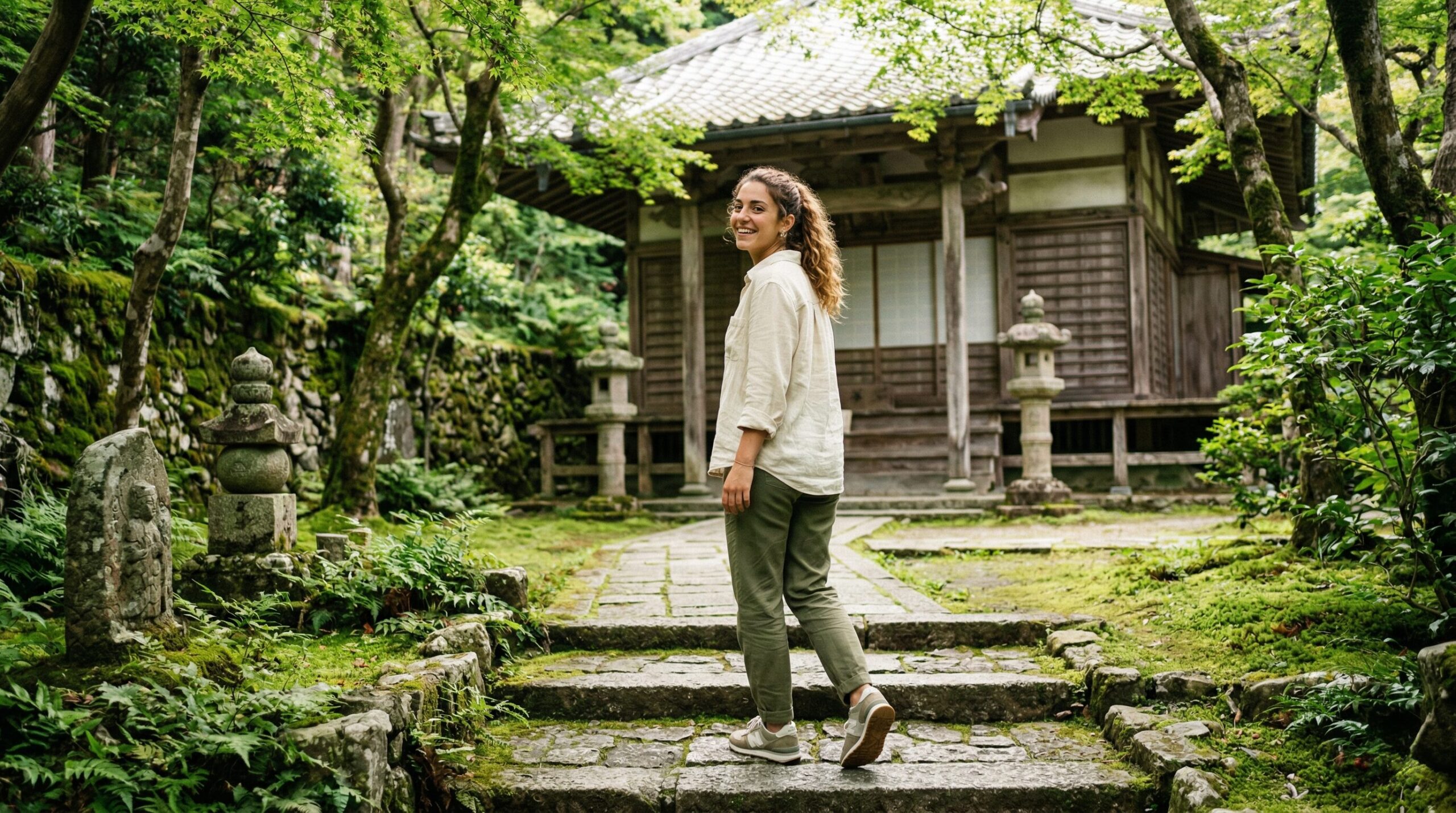
Kyoto is the undisputed custodian of traditional Japanese culture. For over a millennium, it served as the imperial capital, accumulating a staggering wealth of temples, shrines, palaces, and gardens. Because of this monumental legacy, the city draws millions of domestic and international travelers every year.
However, this global reverence creates a modern dilemma: the most famous monuments—like the Golden Pavilion (Kinkaku-ji), the towering wooden stage of Kiyomizu-dera, and the thousands of vermilion gates at Fushimi Inari—are often suffocated by immense, slow-moving crowds. While these UNESCO World Heritage sites are undeniably spectacular, fighting through a forest of selfie sticks and tour flags often shatters the spiritual and historical illusion travelers cross oceans to find.
The true essence of ancient Japan was not built for mass consumption; it was built for quiet contemplation, intimate ceremonies, and solitary reflection. To recapture this authentic atmosphere, the mindful traveler must look beyond the glossy covers of standard guidebooks. Scattered across the city’s forested peripheries, tucked behind unassuming neighborhood walls, and hidden at the top of steep, mossy staircases are the hidden historical sites in Kyoto.
These secluded architectural and spiritual wonders offer a profound alternative to the main tourist corridors. By seeking out these quiet remnants of the Heian, Kamakura, Edo, and Meiji periods, you trade the noise of modern tourism for the resonant silence of history. This guide will help you navigate the ancient capital’s lesser-known paths, uncovering the sanctuaries where the real Kyoto still breathes.
The Architecture of Seclusion: Key Details and Breakdown
Why do some incredible monuments remain completely overrun while others, often just a few streets away, sit in pristine silence? Understanding the geography and philosophy of hidden historical sites in Kyoto is the first step to mastering an off-the-beaten-path itinerary. When you seek out these quiet corners, you are engaging with specific cultural and historical dynamics:
- The Geography of ‘Rakuhoku’ and ‘Rakusai’: Kyoto is a basin surrounded by mountains on three sides. The most famous tourist sites are generally clustered in the easily accessible eastern (Higashiyama) and central districts. The hidden gems are often located in the northern (Rakuhoku) or far western (Rakusai) mountainous fringes. Historically, these areas were reserved for ascetic monks, exiled aristocrats, or retiring samurai who actively sought isolation from the political drama of the imperial court.
- The Aesthetics of Wabi-Sabi: Western tourists are often drawn to grandeur—massive golden structures or towering pagodas. However, the deepest Japanese aesthetic is wabi-sabi, which finds profound beauty in the transient, the impermanent, and the imperfect. Hidden sites often embody this. They are defined by faded wood, creeping moss, and rustic, thatched roofs rather than brilliant vermilion paint and gold leaf.
- Lack of Monumental Marketing: Many of Kyoto’s quietest temples belong to smaller, less wealthy Buddhist sects. They do not have the massive marketing budgets or the sprawling bus parking lots of the major temples. Their survival relies on local parishioners and word-of-mouth among architecture and history enthusiasts.
- Intimate Scale: Hidden historical sites were usually designed as private villas or small hermitages, not as massive public cathedrals. Because the physical footprint is smaller, the experience is inherently more intimate. You are not standing in a massive courtyard; you are sitting on the wooden veranda of a private home, looking out at a garden designed for an audience of one.
Echoes of the Capital: Practical Examples and Recommendations
To find these quiet sanctuaries, you must be willing to utilize local buses, rent a bicycle, or embark on long walks through deeply residential neighborhoods. Here are four exceptional hidden historical sites in Kyoto that reward the observant and patient traveler.
Otagi Nenbutsu-ji: The Temple of 1,200 Faces (Arashiyama)
The Arashiyama district is globally famous for its bamboo grove and the Togetsukyo Bridge. During peak season, the crowds here are suffocating. However, if you continue walking north for about 45 minutes, past the famous Tenryu-ji temple and deep into the Sagano area, the crowds entirely vanish. Here, nestled in a forested ravine, sits Otagi Nenbutsu-ji.
Highlights of Otagi Nenbutsu-ji:
- The Rakan Statues: This temple is home to 1,200 stone statues of rakan (disciples of Buddha). Unlike the solemn, identical statues found at other temples, these were carved by ordinary citizens in the 1980s under the guidance of the head priest. Every single statue is unique and whimsical. Some are laughing, some are drinking sake, some are holding cats, and others are cradling portable cassette players.
- The Mossy Patina: Because the temple is located in a damp, forested ravine, the statues are covered in a thick, vibrant layer of green moss. It gives the temple an ancient, mystical atmosphere, as if the stone figures grew organically out of the earth.
- The Sounds of Nature: Free from the noise of tour buses, the only sounds here are the chirping of mountain birds and the ringing of the temple’s low, resonant bell, which visitors are allowed to gently strike.
Shisen-do: The Samurai’s Retreat (Ichijoji)
Located in the Rakuhoku (northern Kyoto) area, Ichijoji is a neighborhood known more for its incredible ramen shops than its historical monuments. However, hidden on a hillside here is Shisen-do, built in 1641 by Ishikawa Jozan, a former samurai general who served Tokugawa Ieyasu before abandoning the sword to become a scholar and poet.
Highlights of Shisen-do:
- The Poetry Hall: Shisen-do literally translates to “Hall of the Poetry Immortals.” The main room features portraits of thirty-six great Chinese poets, commissioned by Jozan himself. Sitting on the tatami mats in this room, looking out at the meticulously manicured garden, is an exercise in absolute tranquility.
- The Sound of the Shishi-Odoshi: Jozan is credited with inventing the shishi-odoshi (deer scarer)—a bamboo pipe that slowly fills with water, tips over to empty, and makes a sharp “clack” against a stone as it returns to its original position. The rhythmic, haunting sound of the bamboo echoing through the quiet garden was designed to highlight the profound silence that follows it.
- The Satsuki Azaleas: If you visit in late May, the garden’s spherical azalea bushes bloom in a spectacular explosion of pink and white, perfectly framed by the stark, minimalist architecture of the hermitage.
Murin-an: The Meiji Statesman’s Garden (Okazaki)
While hidden gems are often located in the mountainous fringes, exceptions exist even in the east. The Okazaki area is home to massive institutions like the Kyoto National Museum of Modern Art and the sprawling Heian Shrine, but it also hides a stunning, intimate piece of Meiji-era (1868–1912) political history. Murin-an is a private villa and garden built by Aritomo Yamagata, a twice-serving Prime Minister of Japan.
Highlights of Murin-an:
- A New Era of Garden Design: Murin-an represents a radical shift in Japanese garden aesthetics. Moving away from the highly stylized, symbolic rock gardens of Zen Buddhism, this garden embraces a naturalistic, open, and flowing design. It heavily utilizes shakkei (borrowed scenery), incorporating the distant Higashiyama mountains directly into the garden’s visual composition.
- The Water Network: The garden features a shallow, crystal-clear stream that pulls water from the nearby Lake Biwa Canal. The sound of this fast-flowing water creates an incredibly relaxing, cooling atmosphere, particularly during the humid Kyoto summer.
- The Secret Western Building: Hidden at the back of the property is a small, two-story brick building built in the Western style. This was a secure meeting place where Yamagata and other high-ranking political figures held top-secret meetings regarding the looming Russo-Japanese War. Standing in this quiet room offers a surreal glimpse into the geopolitics of the early 20th century.
Gio-ji: The Tragic Moss Temple (Sagano)
For a deeply poetic and historically tragic experience, return to the far edges of the Sagano district to find Gio-ji. This incredibly small, modest temple is surrounded by a towering grove of maple trees and a thick carpet of vibrant moss.
Highlights of Gio-ji:
- The Tale of the Heike: Gio-ji’s history is tied to the Heike Monogatari (The Tale of the Heike), a classic Japanese epic. The temple is named after Gio, a beautiful dancer who won the heart of the powerful military leader Taira no Kiyomori. When he discarded her for another dancer, the heartbroken Gio retreated to this remote, thatched-roof hermitage to become a Buddhist nun, eventually joined by the very woman who replaced her.
- The Moss Garden: The grounds are breathtakingly beautiful, covered entirely in dozens of varieties of lush, damp moss. Sunlight filtering through the thick maple canopy above creates a dappled, ethereal lighting effect on the green floor below.
- The Yoshino Window: Inside the small thatched-roof hermitage is a large, circular window known as the “Yoshino Window” (or the Rainbow Window). Depending on the season and the time of day, the sunlight reflecting through the vibrant foliage outside casts beautiful, multi-colored hues across the room, earning it the nickname ‘Rainbow Window’ and inviting quiet reflection on the impermanence of power and beauty.
Mindful Navigation: Tips for Travelers
Stepping off the beaten path to explore hidden historical sites in Kyoto requires a different logistical approach than visiting the major monuments. These locations are quiet because they are intentionally difficult to reach. To ensure your journey is seamless and respectful, keep these practical tips in mind:
- Embrace the Local Bus Network: While the Kyoto subway system is fast and efficient, it does not reach the mountainous fringes of the city. To access areas like Rakuhoku or deep Sagano, you must become comfortable with the local bus network. Purchase a digital IC card (like Suica or ICOCA) to tap on and off easily. Google Maps provides highly accurate, up-to-the-minute bus schedules in English.
- The Golden Rule of Footwear: Many of these hidden sites are preserved private villas or fragile historic temples. You will be required to remove your shoes repeatedly to enter the wooden structures. Never visit a Kyoto temple barefoot. Always wear clean, high-quality socks. Furthermore, wear comfortable walking shoes that are easy to slip on and off, as you will be doing it a dozen times a day.
- Silence is Mandatory, Photography is Secondary: In massive tourist hubs, noise and constant photography are reluctantly tolerated. In a hidden hermitage like Shisen-do, silence is practically sacred. Keep conversations to an absolute whisper. Pay close attention to “No Photography” signs, which are often strictly enforced inside the buildings to protect delicate painted screens from light damage and to preserve the contemplative atmosphere for other guests.
- The Cash Economy of the Outskirts: While central Kyoto restaurants and hotels accept international credit cards, the tiny, independent temples on the outskirts of the city do not. You will need physical yen to pay the modest entrance fees (usually between 400 and 600 yen), purchase incense, or buy a goshuin (temple stamp).
- Seek the “Magic Hours”: Even hidden sites can see a minor influx of visitors during the peak of the day. To experience absolute solitude, aim to arrive the moment the temple gates open (usually around 8:30 AM or 9:00 AM) or roughly an hour before closing.
Conclusion
Japan’s ancient capital cannot be fully understood from the viewing platform of its most famous monuments. True historical immersion requires stepping away from the gift shops, silencing the noise of the modern world, and allowing the quiet gravity of the past to take hold.
By dedicating your itinerary to exploring the hidden historical sites in Kyoto, you elevate your journey from standard sightseeing to profound cultural discovery. You trade the monumental for the intimate. You discover that the real beauty of Kyoto is not painted in brilliant gold, but is found in the slow creep of moss across a stone, the rhythmic clack of bamboo in an empty garden, and the enduring silence of a centuries-old wooden veranda.
It is time to go beyond the ordinary, embrace the unpaved paths, and discover the quiet, breathtaking history that the real Kyoto so fiercely protects.