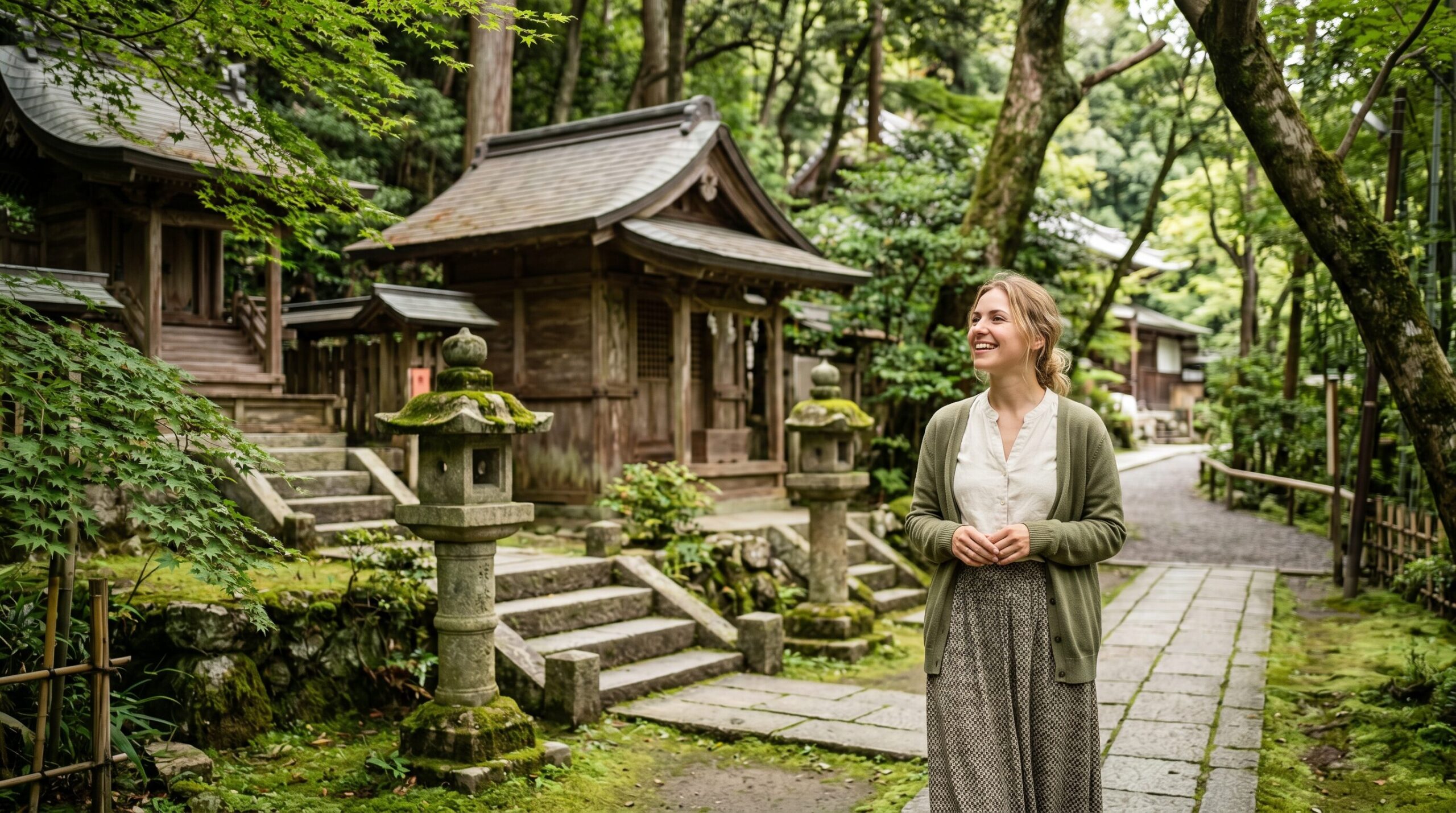
When an international traveler envisions the ancient capital of Kyoto, the imagery that immediately springs to mind is almost entirely sourced from a single, legendary district: Higashiyama. Nestled against the sloping eastern mountains of the city, this area is the undisputed epicenter of traditional Japanese aesthetics. It is a world of preserved wooden machiya houses, geisha hurrying down cobblestone alleys, and the towering, iconic silhouette of the Yasaka Pagoda. However, because it represents the absolute peak of Kyoto’s cultural allure, Higashiyama is also the epicenter of global mass tourism. On any given afternoon, the famous sloped streets of Ninenzaka and Sannenzaka, and the grand approach to Kiyomizu-dera Temple, are engulfed by a suffocating sea of tour groups, smartphone cameras, and rented kimonos. The chaotic, elbow-to-elbow crush of the crowds completely shatters the spiritual illusion and contemplative silence that visitors cross oceans to experience. But there is a profound secret to navigating this ancient district. The true spiritual heartbeat of Kyoto does not reside on the heavily paved, commercialized main avenues. It lives in the quiet, shadowed margins. Just a few streets away from the gridlock, tucked behind residential walls, hidden at the top of steep, overgrown staircases, and resting quietly beneath the canopy of ancient camphor trees, are the hidden shrines in Higashiyama. Seeking out these secluded Shinto sanctuaries is the ultimate way to reclaim your itinerary. By deliberately stepping off the beaten path, you trade the noise of modern tourism for the resonant, enduring silence of the real Japan. This comprehensive guide will navigate you through the winding backstreets of the eastern mountains, uncovering the pristine, forgotten spiritual sites where the ancient gods of Kyoto still quietly reside.
The Spiritual Geography: Key Details and Breakdown
To successfully uncover the hidden shrines in Higashiyama, one must first understand the spiritual and geographical layout of the eastern mountains. In ancient Japanese cosmology, mountains are not merely geological formations; they are the sacred dwelling places of the kami (Shinto deities). When you explore the quiet corners of this district, you are engaging with these core architectural and historical concepts:
- The Boundary of the Sacred: Higashiyama literally translates to “Eastern Mountains.” Historically, the foothills where the city grid meets the ascending forest were considered the boundary line between the mundane human world and the sacred realm of the gods. The hidden shrines located on these slopes were built exactly on this spiritual threshold, acting as gateways to the divine.
- Shinto vs. Buddhism: While Kyoto is famous for its massive, imposing Buddhist temples (like Kiyomizu-dera or Chion-in), Shinto shrines (Jinja or Jingu) represent Japan’s indigenous, animistic faith. Shrines are visually distinguished by the presence of a torii gate at the entrance, signifying the transition from the profane to the sacred. The architecture is often simpler, prioritizing natural, unpainted wood, thatched roofs, and integration with the surrounding nature.
- The Neighborhood Guardians (Ujigami): Many of the most peaceful shrines in Higashiyama are not massive national monuments. They are ujigami—local guardian shrines dedicated to protecting a highly specific neighborhood or a particular guild of artisans. Because they serve the local community rather than international tourists, they lack the sprawling bus parking lots and remain blissfully empty.
- The Concept of ‘Kegare’ and Purification: Shinto places a massive emphasis on physical and spiritual purity. The hidden shrines of Higashiyama are almost always built near natural water sources flowing down from the mountains, providing pristine water for the chozuya (purification pavilions) where visitors wash their hands and mouths before approaching the deity.
Sanctuaries in the Shadows: Practical Examples and Recommendations
Abandoning the main tourist corridors requires a willingness to get lost in the labyrinthine residential streets of the eastern wards. The effort is immediately rewarded by stunning, uncrowded architecture and fascinating local folklore. Here are four exceptional routes to explore the finest hidden shrines in Higashiyama.
The Protector of Travelers – Awata Shrine
Located just north of the bustling Shoren-in Temple and the famous Keage Incline, Awata Shrine sits quietly on a steep hill overlooking the city. Despite its proximity to major tourist hubs, it is frequently bypassed by the crowds, offering a serene and deeply historic retreat.
Highlights of Awata Shrine:
- The Guardian of the Tokaido: Historically, Awata Shrine was positioned near the starting point of the Tokaido and Nakasendo—the two great highways connecting Kyoto to Edo (modern-day Tokyo). For centuries, travelers, samurai, and merchants would stop at this specific shrine to pray for safe passage before embarking on their grueling, dangerous journeys. Visiting this shrine today is a profound, poetic gesture for the modern global traveler.
- The Master Swordsmiths: The Awataguchi area of Higashiyama was historically home to Kyoto’s most elite master swordsmiths, who forged blades for the Emperor and high-ranking shoguns. The shrine is deeply connected to this metalworking heritage, and you will find a small sub-shrine on the grounds dedicated to the patron deity of blacksmiths. It has recently become a quiet pilgrimage site for fans of Japanese sword history and related pop culture.
- The Elevated Panorama: Reaching the main hall requires climbing a steep, quiet stone staircase flanked by dense greenery. The reward at the top is a peaceful, elevated terrace that offers a beautiful, unobstructed, and entirely private view looking back over the rooftops of Kyoto toward the distant western mountains.
The Art of Severing Ties – Yasui Konpiragu
While slightly more well-known than others on this list, Yasui Konpiragu remains geographically hidden, tucked down a narrow side street between the chaotic Gion district and the sprawling grounds of Kennin-ji Temple. It is a shrine dedicated to a highly specific, intense, and fascinating spiritual practice.
Highlights of Yasui Konpiragu:
- Enkiri and Enmuchi: Yasui Konpiragu is globally famous as a “power spot” for enkiri (severing bad relationships) and enmuchi (initiating good ones). The shrine is dedicated to Emperor Sutoku, who was exiled and forced to abandon his beloved, leading to the belief that the deity here will mercifully cut the ties of any toxic relationship—be it a bad romance, an illness, a terrible boss, or a destructive habit.
- The Power Stone Monument: The visual centerpiece of the shrine is a massive, boulder-like monument that is almost entirely obscured by thousands of white paper amulets (katashiro). The stone has a small, circular hole carved through its center.
- The Physical Ritual: To perform the ritual, you purchase a paper amulet, write down the specific relationship or habit you wish to sever, and the new connection you wish to make. You then physically crawl through the dark hole in the stone from front to back (to cut the bad tie), and then crawl back through from back to front (to bind the good tie), before pasting your paper onto the monument. It is a visceral, unforgettable physical manifestation of prayer.
The Geisha’s Guardian – Tatsumi Daimyojin
To find one of the most culturally significant hidden shrines in Higashiyama, you must explore the Shirakawa area of Gion. While the surrounding cobblestone streets and willow trees are heavily photographed, the tiny, unstaffed shrine sitting quietly at the neighborhood’s main intersection is frequently overlooked by visitors unaware of its purpose.
Highlights of Tatsumi Daimyojin:
- The Micro-Shrine Architecture: Tatsumi Daimyojin is incredibly small, consisting of little more than a simple wooden box, a small offering box, and a vermilion torii gate nestled against the Shirakawa River. It is a perfect example of how Shinto seamlessly integrates into the tight urban fabric of Kyoto’s historic districts.
- The Protector of the Arts: This tiny shrine is the spiritual anchor of the Gion geisha district. It is dedicated to the patron deity of the traditional performing arts. Local geiko (geisha) and maiko (apprentices) stop at this specific shrine to pray for success, skill in their dancing and shamisen playing, and protection from misfortune.
- The Tanuki of Gion: According to local folklore, the shrine was originally built to appease a mischievous raccoon dog (tanuki) that lived in the area and enjoyed tricking pedestrians into walking into the river. Today, if you visit early in the morning or late at night, you might silently witness an elegant, kimono-clad maiko bowing her head in prayer before disappearing into a nearby teahouse.
The Warlord’s Mausoleum – Toyokuni Shrine
Located in the southern stretch of Higashiyama, adjacent to the Kyoto National Museum, Toyokuni Shrine (also known as Hokoku Shrine) is a massive, quiet complex with a deeply complicated and fascinating political history.
Highlights of Toyokuni Shrine:
- The Deification of Hideyoshi: This shrine is dedicated to Toyotomi Hideyoshi, the legendary 16th-century warlord who unified Japan. After his death, he was actually deified and enshrined here as a Shinto god (Hokoku Daimyojin). However, when the rival Tokugawa clan took power shortly after, they systematically destroyed the original massive shrine to erase his legacy, keeping the area in ruins for centuries until it was rebuilt in the late 19th century.
- The Karamon Gate: The entrance to the inner sanctuary features an absolutely breathtaking Karamon (Chinese-style gate). This gate is a registered National Treasure and is said to be a surviving remnant of Hideyoshi’s magnificent, lost Fushimi Castle. The intricate, masterfully carved wooden details of cranes and mythical beasts stand in stark contrast to the profound silence of the vast, empty gravel courtyard.
- The Gourd Ema: Hideyoshi famously used a golden gourd as his battle standard. The wooden prayer plaques (ema) sold at the shrine are uniquely shaped like gourds. Writing your wish on a gourd and hanging it in the quiet, shaded courtyard of a deified warlord offers a distinct, historically rich alternative to the crowded shrines of the city center.
Mindful Worship: Tips for Travelers
Stepping off the heavily trafficked tourist paths to explore the hidden shrines in Higashiyama requires a fundamental understanding of Shinto etiquette. Because these locations are often unstaffed, deeply local, and profoundly quiet, maintaining proper decorum ensures a seamless and respectful experience.
- The Etiquette of the Torii Gate: A torii gate marks the division between the secular world and the sacred grounds of the gods. It is customary to pause and execute a small, respectful bow before walking through the gate. Furthermore, the exact center of the stone path (sei-chu) is considered the pathway reserved for the deity. Mindful travelers should walk slightly to the left or right side of the path.
- The Purification Ritual (Chozu): Before approaching the main hall to pray, you must physically and spiritually purify yourself at the chozuya (water pavilion). Take the bamboo ladle with your right hand, scoop water, and pour a little over your left hand. Switch the ladle to your left hand and wash your right. Switch back, pour a small amount of water into your cupped left hand, and use it to gently rinse your mouth (spit the water into the drainage area below the basin, do not swallow it). Finally, hold the ladle vertically so the remaining water washes down the handle before placing it back.
- The Five-Yen Coin: When you approach the main offering box (saisen-bako), the tradition is to toss in a coin, ring the bell (to get the deity’s attention), bow twice deeply, clap your hands twice loudly, pray silently, and then bow deeply one final time. If possible, always use a 5-yen coin (go-en). In Japanese, the word for 5-yen sounds identical to the word for “good connection” or “destiny,” making it the luckiest coin to offer the gods.
- Respecting the Silence and Shadows: The hidden shrines of Kyoto are defined by their atmosphere. If you are traveling with companions, keep your voices to an absolute whisper. Pay strict attention to “No Photography” signs, which are often placed near the inner sanctuaries. Do not point your camera directly into the dark, open doors of the main hall, as this is considered highly disrespectful to the enshrined deity.
Conclusion
The true magic of Japan’s ancient capital cannot be fully realized while fighting for shoulder space on a crowded, commercialized street. The profound, enduring soul of Kyoto lives in the quiet margins of the map, guarded by ancient camphor trees, sustained by local neighborhood devotion, and wrapped in the smoke of burning incense. By dedicating time in your itinerary to explore the hidden shrines in Higashiyama, you actively reject the superficial, exhausting nature of modern mass tourism. You choose to travel deeper. You trade the monumental for the intimate, discovering that the most breathtaking spiritual experiences are often found while standing completely alone in a moss-covered courtyard, listening to the wind move through the bamboo. It is time to step off the paved tourist corridors, embrace the quiet, winding alleyways of the eastern mountains, and discover the resonant, beautiful silence that the real Kyoto so fiercely protects.