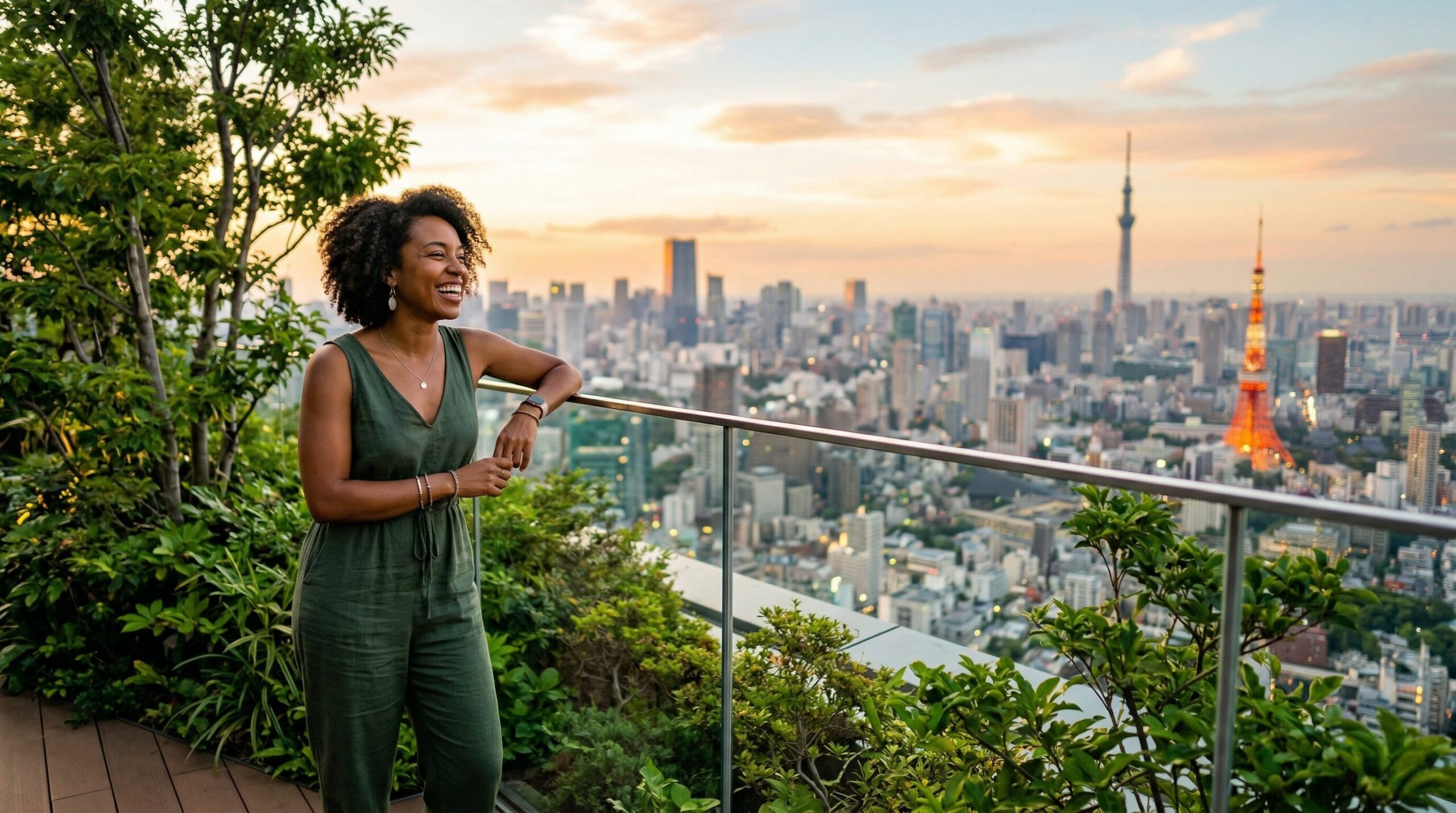
To comprehend the sheer scale of Japan’s capital, one must eventually leave the street level and ascend. From the ground, Tokyo is a labyrinth of narrow alleys, neon-lit avenues, and dense commercial blocks that obscure the horizon. It is only when you rise hundreds of meters into the air that the true, staggering magnitude of this megalopolis reveals itself—a seemingly endless ocean of concrete and glass rolling outward until it meets the mountains or the sea. Naturally, millions of visitors seek out this perspective every year. They purchase expensive timed tickets for the Tokyo Skytree, queue for hours to stand on the glass floors of Tokyo Tower, or jostle for elbow room against the glass barriers of Shibuya Sky. While these iconic landmarks offer undeniably spectacular panoramas, they also offer a highly commercialized, exhausting, and claustrophobic experience. For the mindful traveler engaged in niche urban exploration, the standard tourist towers are merely the tip of the architectural iceberg. Woven seamlessly into the fabric of the city’s civic centers, office towers, and local ward offices are Tokyo’s secret observation decks. These elevated sanctuaries offer the same breathtaking altitudes as their famous counterparts, but with a profound, defining difference: silence. Often free to enter and fiercely protected by local photographers, seeking out these hidden vantage points allows you to travel deeper, slow your pace, and gaze out over the world’s largest city in absolute, unhurried peace.
The Architecture of the Skyline: Key Details and Breakdown
To successfully locate and appreciate Tokyo’s secret observation decks, it is essential to understand how the city is politically and architecturally structured. Tokyo is not a single city with one central downtown; it is a sprawling conglomerate of 23 distinct special wards, each functioning almost like an independent city with its own massive civic infrastructure. When you begin to hunt for these alternative views, you are tapping into a specific set of urban design principles:
- The Civic Duty of Space: Many of the best hidden decks are located inside local government buildings (ward offices). In Japan, there is a strong civic philosophy that the best views of the ward should belong to the taxpayers, not just corporate executives. Therefore, the top floors of these massive administrative buildings are frequently dedicated as free, public viewing lounges.
- The Multi-Centric Skyline: Because Tokyo lacks a single geographical center, the skyline looks radically different depending on where you stand. A view from the eastern Bay Area focuses on water and futuristic bridges, while a view from the western wards focuses on dense residential sprawl terminating at the foot of the Japanese Alps. Exploring different hidden decks provides a complete, 360-degree understanding of the city’s geography.
- The Absence of Commercialism: When you visit a massive tourist tower, you are funneled through gift shops, forced to endure aggressive upselling for professional photos, and subjected to loud background music. Secret observation decks are generally quiet, utilitarian spaces. You will share the space with local residents reading newspapers, students studying, and serious landscape photographers waiting for the perfect light.
Ascending the Wards: Practical Examples and Recommendations
Abandoning the major tourist towers requires venturing into neighborhoods that rarely make the standard English-language itineraries. Here are four exceptional, off-the-beaten-path locations that represent the absolute best of Tokyo’s secret observation decks.
The Bohemian Altitude of Carrot Tower (Sangenjaya)
Just two stops from the relentless chaos of Shibuya on the Den-en-toshi Line lies the neighborhood of Sangenjaya. Known affectionately as “Sancha,” it is a deeply bohemian, working-class district famous for its narrow drinking alleys and indie music scene. Towering awkwardly above this low-rise, retro neighborhood is the bright orange Carrot Tower.
Highlights of the Carrot Tower Observation Deck:
- The 26th-Floor Sanctuary: Completely free to the public, the 26th floor features a quiet, spacious viewing area known as the Sky Carrot. It offers a stunning, unobstructed view looking west across the vast residential sprawl of Setagaya Ward and Kanagawa Prefecture.
- The Sunset and Fuji: Because the viewing windows face west, this is one of the premier locations in Tokyo to watch the sunset. On clear winter days, the silhouette of Mount Fuji looms massively on the horizon, glowing fiery orange and deep purple as the sun dips below the mountains.
- Local Pacing: The deck features a very reasonably priced local cafe and comfortable seating. Unlike Shibuya Sky, where security guards actively push you along to make room for the next timed ticket holder, you can buy a coffee here and sit for three hours reading a book while the city transitions from day to night.
The Photographer’s Dream at Bunkyo Civic Center (Kasuga)
Located in the central-northern part of the city, near the Tokyo Dome, the Bunkyo Civic Center is a massive, slightly brutalist government building. Its 25th-floor observation lounge is legendary among Japanese landscape photographers but remains relatively unknown to international tourists.
Highlights of the Bunkyo Civic Center Deck:
- The Slanted Windows: The architecture of this specific deck is brilliant. The massive viewing windows are slanted outward at an upward angle. This specific design choice completely eliminates the glare and reflection of interior lights, making it an absolute paradise for nighttime city photography.
- The Iconic Composition: The view looking west from Bunkyo offers what is arguably the single most iconic, compressed composition in Tokyo. You can capture the towering skyscrapers of Shinjuku clustered perfectly together, with the majestic snow-capped peak of Mount Fuji rising directly behind them.
- The Urban Rollercoaster: Looking down from the eastern windows, you get a surreal, bird’s-eye view of the Tokyo Dome City amusement park, watching the neon-lit rollercoaster weave through the dense urban buildings below.
The Trainspotter’s Haven at Hokutopia (Kita Ward)
To experience the northern edge of the capital, you must travel to Oji Station in Kita Ward. Here, the 17th floor of the Hokutopia cultural center offers an observation deck that provides a radically different perspective than the central skyscrapers.
Highlights of the Hokutopia Observation Deck:
- The Shinkansen Veins: Hokutopia is positioned directly above a major arterial junction of the Japanese railway system. Looking down, you can watch the sleek, futuristic Shinkansen (bullet trains) sliding silently out of Tokyo, heading north toward Tohoku and Hokkaido. It is a mesmerizing, kinetic view of the country’s world-class infrastructure.
- The Asukayama Contrast: Right next to the tower sits Asukayama Park, one of Tokyo’s oldest and most historically significant public parks (especially during cherry blossom season). The view offers a beautiful contrast between the ancient, forested hill of the park and the sprawling concrete of the northern wards.
- Complete Solitude: Of all the Tokyo’s secret observation decks, Hokutopia is arguably the quietest. You will likely share the 17th floor with only one or two local residents, offering a profound, meditative silence as you look out over the northern sprawl.
The Bay Area Glitz of Caretta Shiodome (Minato Ward)
For travelers who want to experience the sleek, high-end corporate atmosphere of the central business districts without paying an entry fee, Caretta Shiodome is the perfect destination. Located near Shinbashi and the historic Hamarikyu Gardens, this towering commercial and office complex hides a spectacular free viewing space on its 46th and 47th floors.
Highlights of the Caretta Shiodome Sky View:
- The Glass Elevator Ride: The experience begins before you even reach the deck. You access the top floors via a transparent, non-stop glass elevator that shoots up the exterior of the building, offering a thrilling, high-speed ascent with dizzying views.
- The Odaiba Panorama: While many decks focus on the inland mountains, Caretta Shiodome looks out over Tokyo Bay. You are treated to sweeping views of the Odaiba waterfront, the intricate looping highways, and the colorful illumination of the Rainbow Bridge.
- A Prelude to Fine Dining: The 46th floor is also home to several high-end restaurants. While the viewing corridor itself is free, it is the perfect place to watch the city light up before stepping into a restaurant for a premium sushi or teppanyaki dinner overlooking the bay.
Elevated Etiquette: Tips for Travelers
Visiting these civic and corporate spaces requires a slightly different approach than visiting a dedicated tourist attraction like the Tokyo Tower. To ensure you navigate these Tokyo’s secret observation decks respectfully and successfully, keep these practical tips in mind:
- The Tripod Ban: This is the most crucial rule for photographers. Almost all free, indoor observation decks in Tokyo strictly prohibit the use of tripods. Because these are public corridors and civic spaces, tripods are considered a tripping hazard and a nuisance. You must practice shooting handheld or find a stable ledge to rest your camera on.
- The ‘Ninja’ Reflector: Because you cannot use a tripod, and indoor lights reflect heavily on the thick safety glass, serious photographers bring a “ninja reflector” (a black, collapsible silicone cone that fits over the camera lens and presses flush against the glass) or simply use a dark jacket to block out the ambient room light and capture perfectly clear night shots.
- Respecting the Operating Hours: Because many of these decks are located inside municipal government buildings (like Bunkyo or Hokutopia), their operating hours are tied to civic schedules. While some stay open late (8:30 PM or 9:00 PM), they often close entirely on specific national holidays, local election days, or the New Year period. Always verify the opening hours on the official ward website before making the trek.
- Quiet Contemplation: These are not spaces for loud group celebrations. They are often utilized by locals seeking a moment of peace away from their tiny apartments or stressful offices. Keep your voice low, do not sit on the floor, and avoid eating or drinking unless you are in a specifically designated cafe zone.
Conclusion
The true beauty of Japan’s capital is not found by following the largest crowds or paying the highest admission fees. The magic of Tokyo lies in its staggering complexity and its ability to hide moments of profound, breathtaking stillness right in the center of the world’s most populous metropolitan area. By dedicating time in your itinerary to seek out Tokyo’s secret observation decks, you actively reject the packaged, exhausting nature of mass tourism. You choose to travel deeper. You elevate yourself above the noise, the neon, and the traffic, trading a claustrophobic tourist trap for the quiet dignity of a local civic center. From the sweeping, sunset views of Mount Fuji in Sangenjaya to the glowing, futuristic bridges of the Bay Area, it is time to go beyond the ordinary, press the button for the top floor, and discover the sweeping, silent skyline that the real Tokyo fiercely protects.