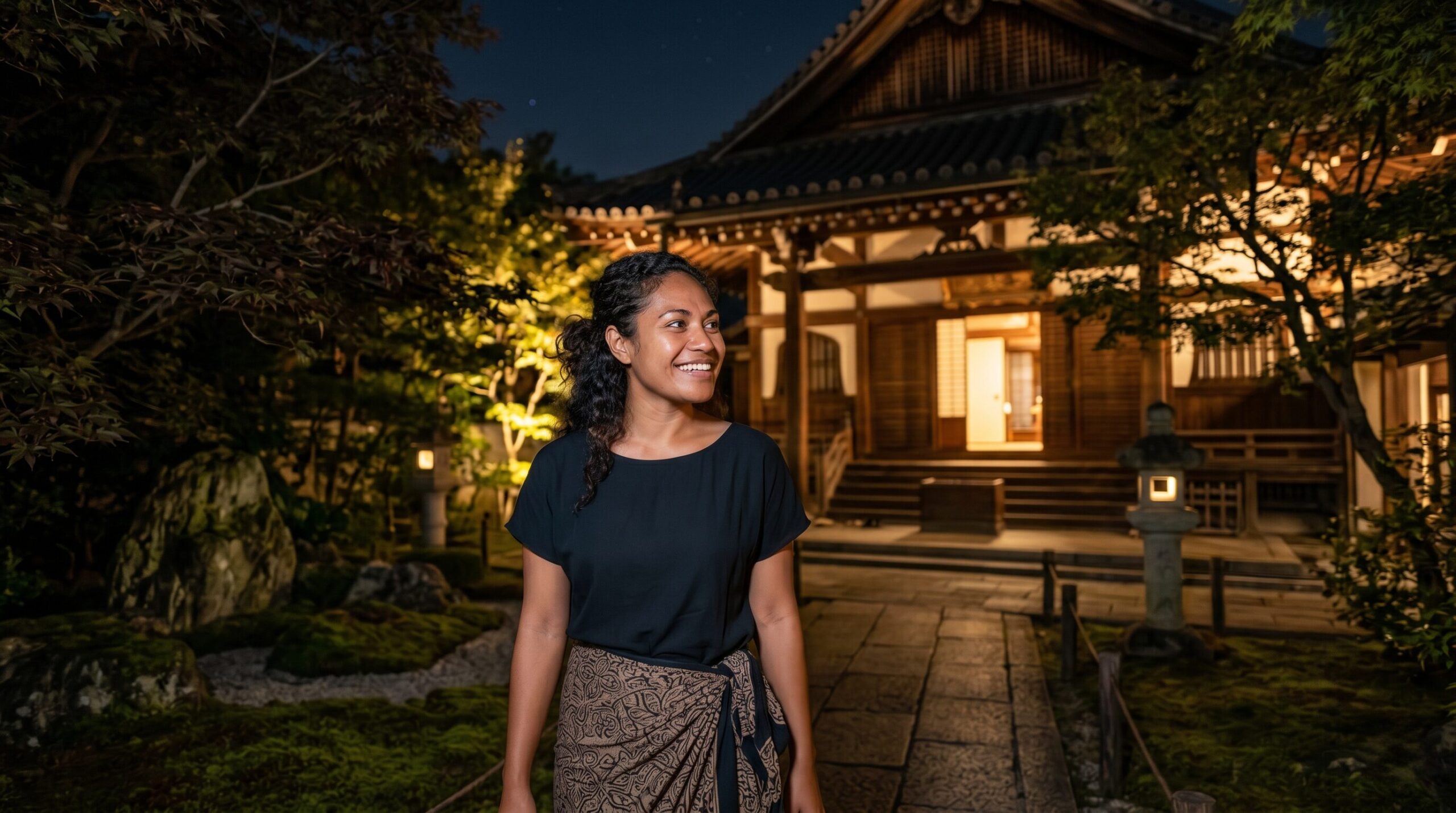
Daytime in Kyoto is a beautiful, albeit chaotic, symphony. Millions of travelers from around the globe flock to the ancient capital, filling the narrow streets of Higashiyama and pressing shoulder-to-shoulder along the wooden verandas of Kiyomizu-dera. The sunlight catches the gold leaf of Kinkaku-ji, and the bamboo stalks of Arashiyama sway above a sea of cameras.
But when the sun dips below the surrounding mountains and the day-trippers board their bullet trains back to Tokyo or Osaka, a profound shift occurs. The city breathes out. The streets empty. The lantern light flickers to life against sliding paper doors.
This is when the true magic of the city reveals itself. For those willing to venture out after dark, exploring Kyoto’s secret temples at night offers a glimpse into a world untouched by the frantic pace of modern tourism. It is an invitation to step back in time, to experience the spiritual weight of these sacred spaces exactly as they were meant to be felt: in deep, resonant silence.
Key Details and Breakdown: The Aesthetics of Shadows
To appreciate the nighttime temple experience, one must understand the Japanese aesthetic concept of yugen. Often translated as a “profound, mysterious sense of the beauty of the universe,” yugen is about what is hidden rather than what is fully revealed.
During the day, a temple garden is a visual feast. At night, it becomes a canvas of shadows.
- The Power of Illumination: Nighttime viewings (light-ups) are carefully curated. Lighting designers use soft, warm tones to highlight the texture of ancient moss, the rugged face of a decorative stone, or the brilliant red of autumn maple leaves against a pitch-black sky.
- Sensory Amplification: Deprived of overwhelming visual stimuli, your other senses sharpen. You notice the sharp scent of sandalwood incense lingering in the cool night air. You hear the rhythmic clack of a bamboo shishi-odoshi (water feature) echoing through an empty courtyard. You feel the chill of the polished wooden floorboards through your socks.
- Intimacy and Solitude: Many of the most famous temples close their gates by 5:00 PM. The temples that open their doors for evening hours—especially the lesser-known sub-temples—offer a rare, intimate environment. It transforms sightseeing into a meditative experience.
Practical Examples and Recommendations: Where to Go
While major sites like Kodai-ji host famous seasonal illuminations, finding Kyoto’s secret temples at night requires looking slightly off the main tourist corridors. Here are a few places where you can experience this nocturnal serenity.
Shoren-in Monzeki: A Sea of Azure
Tucked away at the foot of the Higashiyama mountains, Shoren-in is a temple of high imperial lineage. While stunning by day, its occasional nighttime illuminations are otherworldly.
- The Experience: As you enter the main hall, you look out over a traditional strolling garden. Suddenly, the mossy ground is illuminated by a thousand pinpoint blue LEDs, meant to represent the universe and the deity Fudo Myoo.
- The Authentic Angle: The blue light creates a surreal, dreamlike atmosphere that contrasts sharply with the massive, 800-year-old camphor trees guarding the entrance, which are bathed in warm, golden light. It is a quiet, contemplative space where you can sit on the tatami mats for as long as you like, simply watching the light play across the garden.
Entoku-in: The Hidden Zen Garden
Located just steps away from the bustling Ninenzaka slope, Entoku-in is a small sub-temple often bypassed by crowds heading to its larger neighbor, Kodai-ji.
- The Experience: Entoku-in features two distinct dry landscape (karesansui) gardens. During special evening hours in autumn and spring, these gardens are softly lit.
- The Authentic Angle: The southern garden here is a masterpiece of rock arrangement. At night, the stark shadows cast by the jagged stones across the raked white gravel emphasize the rugged, mountainous landscape they are meant to represent. Because it is smaller, it feels like a private viewing.
Bishamon-do: The Mountain Retreat
Far from the city center, in the Yamashina district, lies Bishamon-do. It is a temple that rewards those willing to make the journey.
- The Experience: Known for its steep stone staircase covered in fallen maple leaves during autumn, Bishamon-do occasionally hosts very limited evening viewings.
- The Authentic Angle: This is as far from “superficial sightseeing” as you can get. The mountain air is crisp, the surrounding forest is pitch black, and the temple buildings glow warmly in the dark. It feels like a secret sanctuary, offering a genuine connection to the ascetic practices of mountain monks.
Tips for Travelers: Navigating the Night
Visiting Kyoto’s secret temples at night requires a slightly different approach than daytime exploration.
- Check the Seasonal Schedules: Nighttime viewings are not a year-round guarantee. They are mostly tied to specific seasons, particularly the spring cherry blossoms (late March to early April) and the autumn foliage (mid-November to early December). Always verify dates on official temple websites or local tourism boards before setting out.
- Dress for the Kyoto Basin: Kyoto is situated in a valley, meaning it suffers from extreme temperature shifts. Autumn and spring nights can be shockingly cold. Since you will be required to remove your shoes before entering temple buildings, wear thick, warm socks.
- Photography Etiquette: The low light is tempting for photographers, but remember that these are places of worship. Tripods are universally banned during nighttime events due to tripping hazards and space constraints. Turn off your flash. Better yet, lower the camera and simply observe the atmosphere with your own eyes.
- Embrace the Silence: Japanese culture places a high value on reading the room (kuuki wo yomu). Keep your voice to a whisper. Let the silence be part of the experience.
- Transportation: While buses run late, they can become infrequent after 9:00 PM. Taxis are reliable, but mapping out the nearest subway or train station ahead of time will save you the stress of navigating dark, unfamiliar streets.
Conclusion
To say you have seen Kyoto only in the bright light of day is to say you have only read half of its story. The ancient capital reveals its true character when the crowds disperse and the evening shadows lengthen.
Seeking out Kyoto’s secret temples at night is not simply about avoiding tourists. It is about actively choosing a different way to travel. It is a choice to slow down, to sit quietly on a wooden veranda, and to watch the moonlight filter through the pine trees. In these quiet, illuminated spaces, the boundary between the past and the present fades away. You are no longer just a spectator in a foreign land; you are experiencing the deep, resonant heartbeat of the real Japan.