
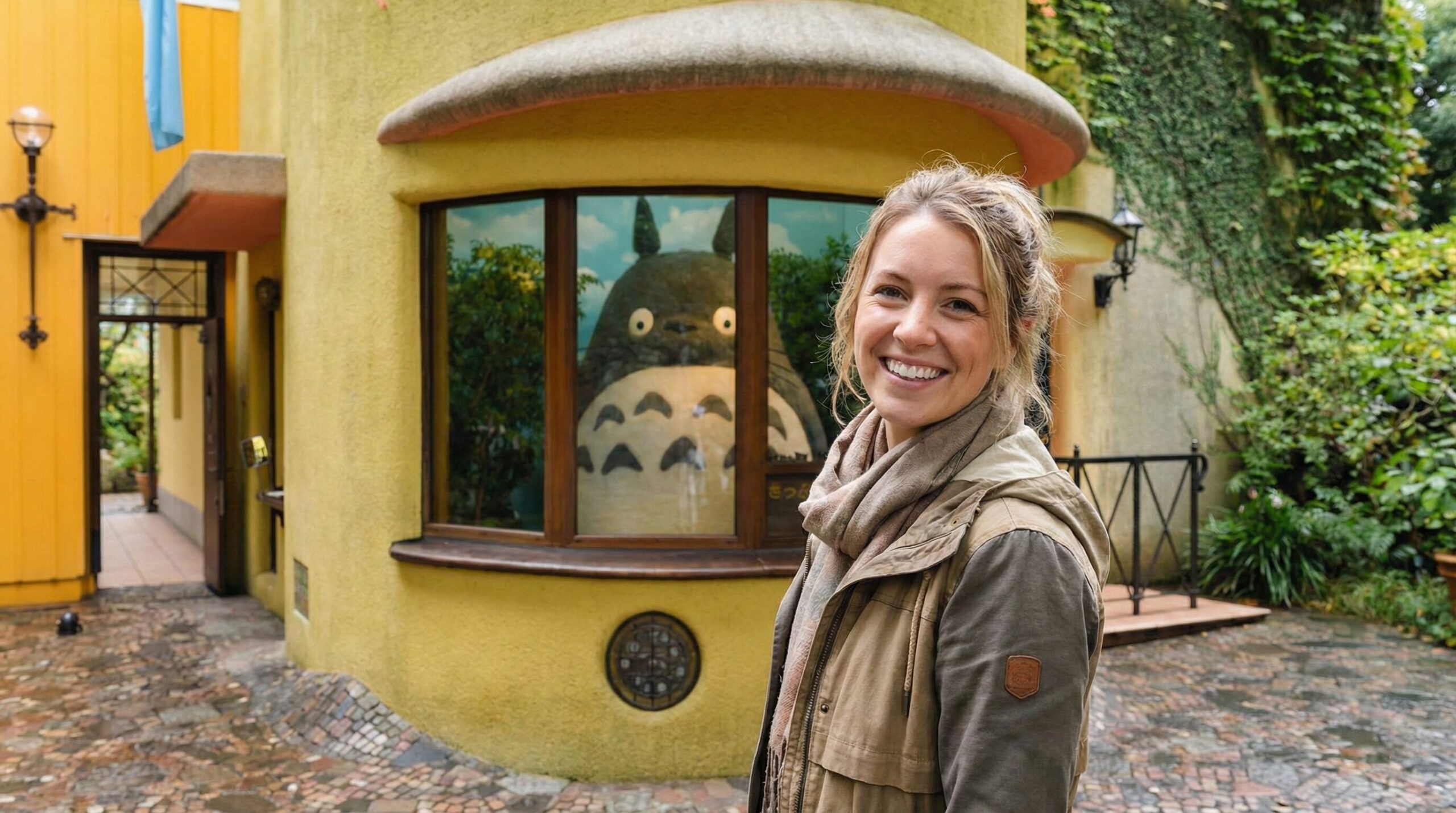
Studio Ghibli occupies a special place in global animation history. Founded by Hayao Miyazaki and Isao Takahata, the studio created cinematic worlds that feel both intimate and fantastical — stories where forests breathe, soot sprites scuttle through attics, and spirits board trains in the rain.
For many travelers, visiting the Ghibli Museum in Mitaka, Tokyo, feels like stepping into these worlds. This Studio Ghibli Museum Guide is designed to help first-time visitors understand how to access the museum, what they’ll experience inside, how ticketing works (a surprisingly intricate process), and how to make the most of a visit.
Whether you’re a lifelong fan of My Neighbor Totoro, Spirited Away, or Princess Mononoke, or simply curious about Japan’s most beloved animation studio, this guide offers a comprehensive and practical walkthrough. From navigating Mitaka Station and booking sold-out tickets, to understanding the museum layout, the Saturn Theater screenings, and nearby food options, this guide provides actionable insights for domestic and international travelers alike.
- Key Details and Breakdown
- Practical Examples and Recommendations
- Tips for Travelers
- Conclusion
Key Details and Breakdown
What Is the Ghibli Museum?
The Ghibli Museum is a multi-purpose cultural space that combines:
- An art gallery
- A mini cinema
- A research and archive center
- An interactive play space
- A rooftop garden
- A themed café
- A specialized gift shop
It opened in 2001 and was personally designed by Miyazaki to feel like “a place where children and adults can explore, imagine, and discover.” The museum is intentionally whimsical, featuring:
- Staircases that lead to nowhere
- Narrow hallways and tiny doors
- Murals and stained glass
- Real equipment used in filmmaking
- Display cases filled with original sketches
Photography is prohibited inside, preserving the sense of discovery.
Where Is the Ghibli Museum Located?
The Ghibli Museum is located in Mitaka City, a suburban area west of central Tokyo.
Address (English):
1-1-83 Shimorenjaku, Mitaka-shi, Tokyo 181-0013
Nearest Stations:
- Mitaka Station (JR Chuo Line) — ~15–20 minute walk
- Kichijoji Station (JR Chuo Line / Keio Inokashira Line) — ~20–25 minute walk through Inokashira Park
Both routes are scenic and easy for families with children.
The Ticket System Explained (Important!)
The museum is reservation-only — tickets are not sold at the door.
Why Tickets Are Hard to Secure
- Limited daily time slots
- No walk-in admission
- Extremely popular with overseas fans
Where to Buy Tickets
Depending on your region, you can buy tickets via:
For International Visitors:
- On the official Lawson Ticket website
- Via authorized travel agencies (e.g., JTB)
- Through tour packages
- Through Loppi machines (in Japan)
- Note: While possible, this is risky for travelers as tickets usually sell out weeks in advance. Booking online before arriving in Japan is strictly recommended.
For Japan Residents:
- Lawson convenience store Loppi machines
- Lawson Ticket Japan website
Ticket Release Schedule
Tickets go on sale specifically on the 10th of every month at 10:00 AM Japan time for the following month’s admission. They sell out extremely quickly (often within minutes).
Pro Tip:
If aiming for peak holiday seasons, set calendar alerts for ticket drops.
Ticket Pricing
Ticket prices are intentionally affordable:
- Adults (19+): ¥1,000
- Youths (Ages 13–18): ¥700
- Children (Ages 7–12): ¥400
- Toddlers (Ages 4–6): ¥100
- Under 4: Free
Prices may vary slightly based on sales channel.
Timed Entry System
Ticket holders choose a time slot, typically:
- 10:00 AM
- 12:00 PM
- 2:00 PM
- 4:00 PM
Visitors may stay inside until closing regardless of entry time.
Museum Layout & Key Attractions
This Studio Ghibli Museum Guide breaks down major sections so fans know what to expect.
Entrance & Lobby
Upon entering, guests receive:
- A physical film ticket strip
- Museum pamphlets
The film strip features actual 35mm frames from Ghibli movies — a collectible keepsake.
Saturn Theater (Exclusive Short Films)
One of the highlights is the Saturn Theater, which screens exclusive Ghibli short films.
Details:
- Unique shorts not shown outside the museum
- Different films rotate throughout the year
- Films last ~10 minutes
- English subtitles usually not available
Popular shorts include:
- Mei to Koneko Bus (Mei and the Kittenbus)
- Chuumon no Ooi Ryouriten
- Hoshi wo Katta Hi
Many Ghibli fans visit multiple times solely for these rare screenings.
Permanent Exhibitions
There are interactive exhibits explaining:
- How animation works
- Traditional hand-drawn techniques
- Storyboarding
- Character development
- Background painting
Exhibits include:
- Zoetropes
- Flipbooks
- Light tables
- Pencil-test stations
One famous exhibit shows Totoro and Catbus in zoetrope motion, a museum favorite that demonstrates frame-by-frame animation principles.
“Where a Film is Born” Rooms
This section recreates Miyazaki’s workspaces and includes:
- Art books
- Rough sketches
- Storyboards
- Paint supplies
- Reference materials
Walls are covered in pinned sketches, offering insight into how Ghibli scenes evolved from rough lines to final backgrounds.
Catbus Room (Kids Only)
This section features a giant Catbus plush, which children under a certain age may climb and interact with.
Note:
Due to its delicate construction, adults are not allowed on the Catbus, though they may observe.
Rooftop Garden
The rooftop is home to:
- A life-sized Robot Soldier from Laputa
- Lush greenery
- Hidden pathways
Photography is allowed outside, so this becomes the main photo spot for visitors.
Gift Shop (MAMMA AIUTO!)
The museum shop sells:
- Limited-edition figurines
- Art reproductions
- Original sketches
- High-quality prints
- Stationery & books
- Exclusive plush toys
Many items are museum-exclusive and not available online.
Café & Food Options (“Straw Hat Café”)
The on-site café offers:
- Hot meals
- Sweets and desserts
- Seasonal drinks
- Outdoor seating areas
Menu favorites include:
- Hot dog plates
- Seasonal parfaits
- Milk ice cream
- House-made lemonade
Be prepared for long lines, especially midday.
Inokashira Park (Nearby)
The museum borders Inokashira Park, an ideal pre- or post-visit activity.
The park offers:
- Swan boats
- Tree-lined paths
- Shaded benches
- Small shrines
- Kichijoji-side shopping streets
Fans often describe the walk as part of the Ghibli experience.
Practical Examples and Recommendations
This Studio Ghibli Museum Guide offers sample itineraries, access routes, budget breakdowns, and nearby attractions.
How to Get to the Ghibli Museum
From Shinjuku
- JR Chuo Line → Mitaka Station (~20 min)
From Shibuya
- Keio Inokashira Line → Kichijoji Station (~30 min)
From Tokyo Station
- JR Chuo Line → Mitaka Station (~30 min)
Walking Routes
Mitaka Station Route:
- Follow signs to the “Ghibli Museum”
- Walk through residential streets + park pathway
Kichijoji Station Route:
- Pass through Inokashira Park
- Scenic and peaceful
- Recommended for first-time visitors
Recommended Visit Duration
Average museum visit time:
- 2–4 hours
If adding the park and café:
- 4–6 hours total
Suggested Half-Day Itinerary (Example)
Morning Visit (Best Option):
- 9:30 AM: Breakfast near Kichijoji Station
- 10:00 AM: Museum entry
- 11:15 AM: Saturn Theater screening
- 12:00 PM: Explore exhibitions & rooftop
- 1:00 PM: Lunch at Straw Hat Café or Kichijoji
- 2:00 PM: Walk through Inokashira Park
- 3:00 PM: Shopping in Kichijoji Sun Road area
Suggested Full-Day Anime Fan Itinerary
Combine Ghibli with Akihabara or Nakano Broadway:
Option A: Ghibli → Nakano Broadway → Shinjuku
- Morning: Ghibli Museum
- Afternoon: Nakano Broadway (retro anime shops)
- Evening: Shinjuku dinner
Option B: Ghibli → Akihabara
- Morning: Ghibli Museum
- Afternoon: Akihabara’s electronics & figure shops
Perfect for animation collectors.
Budget Breakdown
Approximate per-person costs:
| Category | Cost |
| Museum Ticket | ¥1,000 |
| Transportation | ¥400–¥800 round trip |
| Café Lunch | ¥1,200–¥2,200 |
| Souvenirs | ¥1,000–¥10,000 |
Budget travelers can substitute convenience store lunch for ¥300–¥600.
Nearby Attractions Worth Adding
Kichijoji Station
- Boutiques
- Coffee shops
- Bookstores
- Music shops
- Vintage clothing
Inokashira Park Zoo
Family-friendly animal exhibits + aquarium
Harmonica Yokocho
- Tightly packed alleyway
- Yakitori stands
- Old Tokyo drinking culture
Musashino Hachimangu Shrine
- Historical landmark
- Quietly maintained
Makes for balanced cultural day trips.
Tips for Travelers
To make this Studio Ghibli Museum Guide useful in real planning, here are essential travel tips.
Best Time of Day to Visit
- Morning slots (10:00 AM) have shorter café lines
- Afternoon slots (2:00 PM) better for relaxed park strolls
- Late slots (4:00 PM) offer quiet, but café may sell out items
Best Times of Year
Spring (March–May):
- Cherry blossoms in Inokashira Park
- Pleasant weather
Autumn (October–November):
- Gorgeous foliage
- Comfortable temperatures
Avoid:
- Golden Week (late April–early May)
- Obon (mid-August)
- Year-end holidays (late December)
Crowds + ticket difficulty increase during these times.
Ticketing Tips (Important for Success)
- Tickets sell out quickly → Plan 1–3 months ahead
- Use official channels to avoid scams
- No same-day walk-ins allowed
- For families: pick early time slots
Travel agencies sometimes sell package tours that include guaranteed tickets.
Photography Rules
- No photography inside the museum
- Photography permitted:
- Garden areas
- Rooftop
- Exterior
- Surrounding park
Respect the rules — staff enforce them politely but firmly.
Food & Café Tips
- Café lines can be 1–2 hours on weekends
- Outdoor terrace seating is pleasant in spring
- Café may run out of seasonal desserts late in the day
Budget-friendly alternative:
- Eat in Kichijoji after your visit
Souvenir Shopping Tips
The museum shop is popular — keep these in mind:
- Many items are exclusive
- Stock rotates seasonally
- Afternoon slots may have reduced stock
- Figurines & prints are fragile → pack carefully
Fans often set aside ¥5,000–¥20,000 for shopping.
Child-Friendly Considerations
The museum appeals across generations:
- Strollers are not allowed inside the museum building. There is a designated stroller parking area located outside strictly for storage during your visit.
- Catbus room is for young children only
Accessibility Notes
The museum includes:
- Elevators
- Ramps
- Accessible restrooms
- Staff trained to assist
However, narrow staircases may require adjustments for some guests.
Conclusion
The Ghibli Museum is not a traditional tourist museum — it’s an imaginative space designed to slow you down, encourage childlike curiosity, and offer insight into the creative spirit behind some of the world’s most cherished animated films. A successful visit isn’t about checking off displays or taking photos; it’s about immersion.
With proper planning, an understanding of the ticketing system, and realistic expectations about what you can (and cannot) do inside, fans can transform a simple museum stop into a highlight of a Tokyo trip. As this Studio Ghibli Museum Guide shows, the experience goes far beyond admiring art — it’s about walking through creative processes, watching exclusive short films, enjoying themed food, and exploring a peaceful park that feels like a backdrop from a Miyazaki film.
Whether you’re traveling alone, with friends, or with children discovering Totoro for the first time, the Ghibli Museum offers a unique blend of nostalgia, craftsmanship, and quiet wonder. It remains one of Japan’s most rewarding cultural attractions, appealing to lifelong fans and first-time visitors alike.