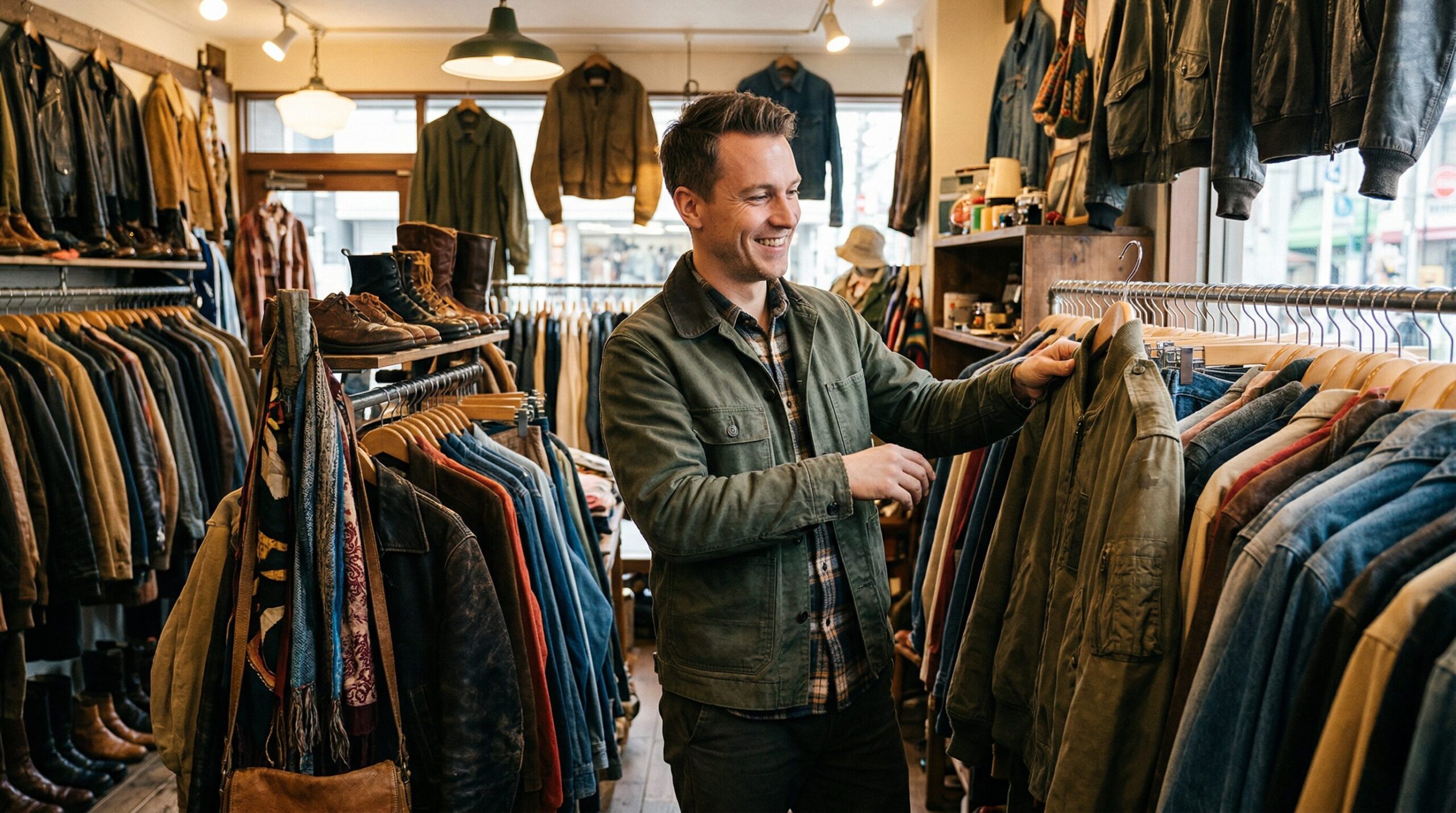
When most travelers picture the shopping districts of Tokyo, they envision the towering, multi-story glass facades of Ginza or the flashing digital billboards illuminating the massive department stores in Shibuya. It is a city that famously races toward the future, constantly reinventing its skyline and its trends. However, just a few train stops away from these glittering avenues lies a completely different sartorial world—one defined not by the new and shiny, but by the beautifully worn, the meticulously preserved, and the historically significant. For decades, Japanese buyers have quietly traveled the globe, scouring estate sales in the American Midwest, deadstock warehouses in rural France, and old tailor shops in London. They brought the absolute best of the 20th century back to Japan. Today, the country is widely considered the greatest repository of vintage clothing on earth. For the mindful traveler, exploring Tokyo’s best vintage shops is not simply a shopping excursion; it is a cultural deep-dive. It is an opportunity to observe the uniquely Japanese dedication to craft, preservation, and obsessive curation. Whether you are searching for a perfectly faded 1960s denim jacket, a piece of pre-war French workwear, or simply wish to admire the museum-level archives, navigating these hidden boutiques offers a profound look into Tokyo’s authentic creative heartbeat.
The Philosophy of ‘Furugi’: Key Details and Breakdown
To truly appreciate the landscape of Tokyo’s best vintage shops, one must first understand the cultural approach to furugi (old clothes). In many Western countries, “thrifting” implies digging through massive bins for a cheap bargain. In Japan, vintage retail is treated with the same reverence as curating an art gallery. Understanding this anatomy helps elevate the experience from simple retail to historical observation:
- The Mastery of Curation: A defining characteristic of a top-tier Tokyo vintage shop is its narrow, obsessive focus. You will rarely find a chaotic mix of eras. Instead, you will discover tiny, unmarked boutiques that sell only 1950s American sportswear, or only European military garments from WWII. The shop owners are essentially fashion historians, possessing encyclopedic knowledge of zipper manufacturing dates, loom types, and dye techniques.
- Immaculate Condition: The Japanese concept of mottainai (a sense of regret concerning waste) deeply influences the vintage market. Garments are not simply hung on a rack; they are meticulously cleaned, professionally repaired with traditional techniques, and pressed. A 70-year-old canvas hunting jacket will often be presented in a condition that rivals a brand-new luxury garment.
- The “Reverse Import” Phenomenon: Historically, the flow of vintage garments went from the West to Japan. Today, the quality of Tokyo’s archives is so renowned that international designers, celebrities, and heritage collectors travel to Japan to buy these pieces back. You are browsing the same racks used for research by global fashion houses.
The Archival Corridors: Practical Examples and Recommendations
Tokyo’s vintage scene is heavily decentralized. While the neighborhood of Shimokitazawa is famous worldwide, it has become heavily trafficked by tourists and leans toward affordable, 1990s streetwear. For the mature traveler seeking heritage quality and deeper cultural immersion, these specific neighborhoods reward slow, observant exploration.
The Refined Archives of Nakameguro and Yutenji
Located along the Meguro River, the adjacent neighborhoods of Nakameguro and Yutenji offer a sophisticated, quiet atmosphere. The vintage shops hidden in the residential backstreets here cater to a discerning adult clientele, focusing on high-end preservation, rare European workwear, and beautifully aged leather.
Highlights of a Nakameguro/Yutenji Walk:
- Jantiques: This is arguably the most legendary vintage shop in Tokyo, operating almost like a secret museum. Stepping inside feels like entering the eclectic study of a 19th-century explorer. The curation spans from the 1800s to the 1980s, featuring everything from Victorian-era French linen smocks to rare Native American silver jewelry. The visual merchandising alone is a masterclass in atmospheric design.
- Vase: Located in a quiet, ivy-covered building, Vase focuses on an incredibly avant-garde mix of vintage and artisanal contemporary brands. The pieces here are highly sculptural, often focusing on the draping and texture of aged fabrics. It is a quiet, contemplative space that feels entirely removed from the city’s noise.
- The Coffee Culture Intersection: The vintage culture in this area is inextricably linked with the local coffee scene. After browsing, you can seamlessly transition into a small, independent roastery to review your purchases over a meticulously poured hand-drip coffee, watching the neighborhood’s creative class go about their day.
The Subcultural Heart of Koenji
If Nakameguro is the polished study, Koenji is the raw, beating heart of Tokyo’s underground. Located in the western part of the city, Koenji is famous for its live music venues, unpretentious izakayas, and an incredibly dense concentration of vintage shops. It is the center of the city’s counter-culture.
Highlights of a Koenji Walk:
- The Safari Network: Safari is not a single shop, but a network of specialized boutiques scattered across Koenji. Each numbered store has a distinct focus. “Safari 1” might specialize in pristine, vintage Ralph Lauren and American traditional menswear, while another focuses entirely on high-end European tailoring and rare leather shoes. It is a highly organized, premium thrifting experience.
- Sokkyo: For the traveler interested in the darker, more poetic side of vintage, Sokkyo is a revelation. The shop feels like an art installation, specializing in beautifully decayed, oversized, and genderless garments. The lighting is low, the atmosphere is hushed, and the clothing is treated as wearable sculpture.
- The Look Street (Pal Shopping Street): Walking down the covered arcades and the famous “Look Street,” you are surrounded by the true fabric of the neighborhood. The vintage shops here are interspersed with local greengrocers, old record stores, and tiny yakitori stands, offering a profoundly authentic slice of daily Tokyo life.
The Denim Purists of Ura-Hara (Harajuku’s Backstreets)
While the main avenue of Takeshita Street in Harajuku is overwhelming and geared toward teenagers, the maze of backstreets known as Ura-Hara (Hidden Harajuku) is the historic birthplace of Japanese streetwear and the absolute epicenter of global denim culture.
Highlights of an Ura-Hara Walk:
- BerBerJin: This is the undisputed temple of vintage denim. For collectors, making a pilgrimage to BerBerJin is mandatory. The basement level houses “the archive,” where perfectly preserved Levi’s from the 1920s and 1930s hang in temperature-controlled environments, commanding prices akin to fine art. Even if you are not buying, observing the profound reverence the staff has for indigo canvas is an incredible cultural experience.
- The Americana Obsession: The shops in this specific pocket of Tokyo highlight the deep, post-war Japanese fascination with American culture. You will find meticulously categorized racks of 1950s bowling shirts, Vietnam-era military surplus, and perfectly cracked 1970s rock band t-shirts, preserved with a level of care rarely seen in their countries of origin.
Mindful Shopping: Tips for Travelers
Navigating Tokyo’s best vintage shops requires a slightly different approach than visiting a standard retail store. The garments are often fragile, one-of-a-kind pieces of history. To ensure a seamless and respectful experience, keep these practical tips in mind:
- The Fitting Room Etiquette: Never bring food or drinks into a vintage shop. When you find a piece you want to try on, do not simply walk into a fitting room. Always approach a staff member, hold up the garment, and ask, “Shichaku shite mo ii desu ka?” (May I try this on?). Furthermore, if you are trying on tops, you may be handed a light, disposable face cover to prevent makeup or natural oils from transferring onto the delicate fabrics.
- Understanding Sizing Realities: Vintage sizing is notoriously challenging, and this is compounded when shopping in Japan. A “Large” from the 1960s fits very differently than a modern “Large,” and garments often shrink over decades of washing. Do not rely on the tag; you must try the garment on. If you are a larger Western traveler, finding correct sizes in vintage Japanese shops can require patience, as the imported sizes historically catered to a smaller local demographic.
- Tax-Free Shopping (Tax-Free): Many established vintage stores offer tax-free shopping for international tourists, saving you the 10% consumption tax on purchases usually over 5,000 yen. You must bring your physical passport. A photo on your phone is not legally accepted. Look for the red and white “Tax-Free Shop” sticker on the window.
- Respect the Price Tag: It is a common misconception that second-hand equates to inexpensive. In Tokyo, you are paying for the profound labor of sourcing, the cost of expert restoration, and the rarity of the archive. Haggling or bargaining is not a part of Japanese retail culture, even in vintage shops. The price listed on the tag is final.
Conclusion
Japan’s true beauty often reveals itself in the quiet dedication to craftsmanship and the deep respect for the past. It is found in the meticulous repair of a torn seam, the careful conditioning of a seventy-year-old leather jacket, and the encyclopedic knowledge of a shopkeeper standing behind a wooden counter in a quiet neighborhood. By taking the time to explore Tokyo’s best vintage shops, you step away from the fleeting, disposable nature of modern consumerism. You engage with spaces that actively preserve history and celebrate the enduring character of well-made things. It is time to go beyond the ordinary shopping guides, slow your pace, and discover the rich, authentic, and impeccably curated Tokyo that the locals know best.