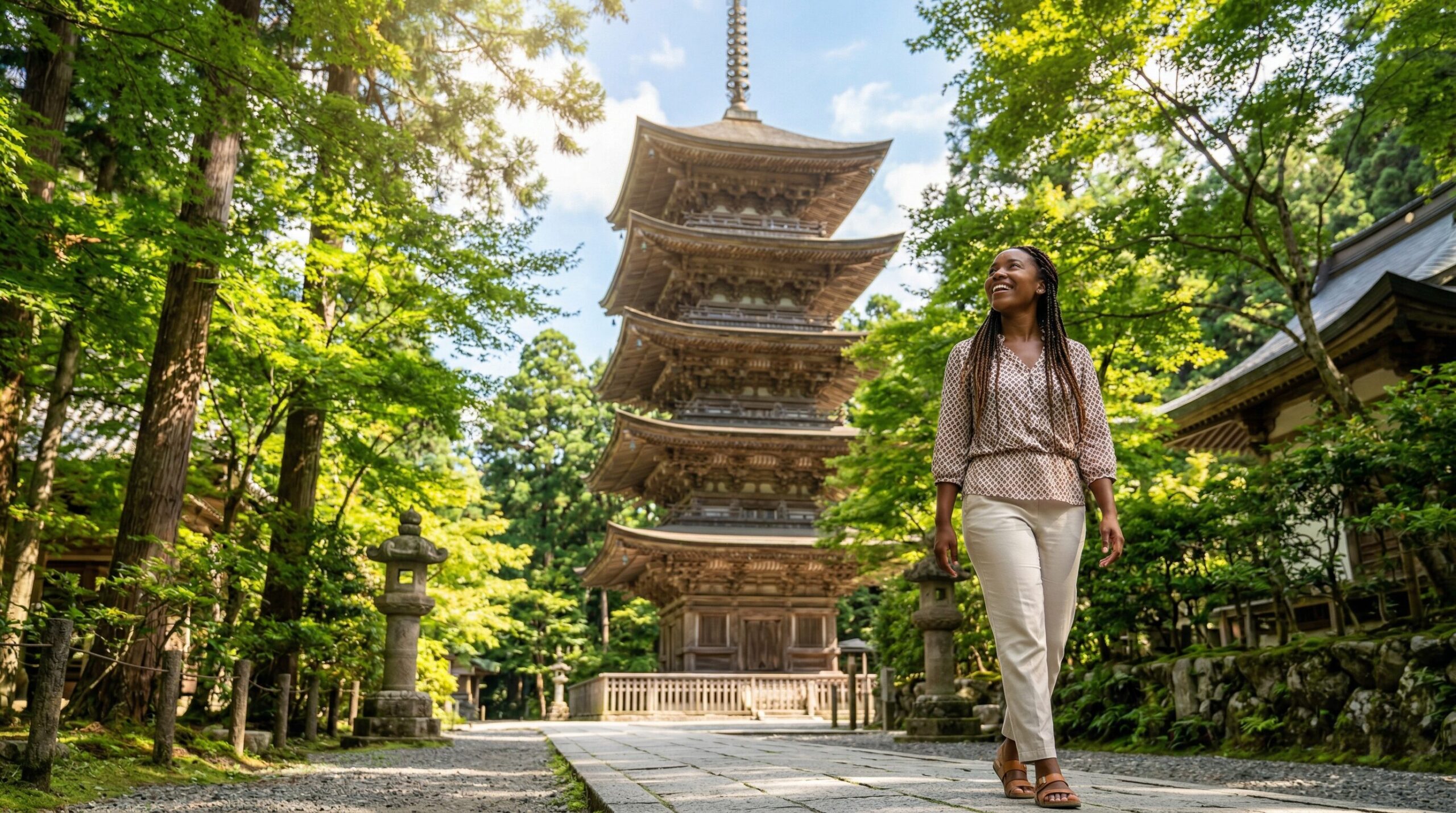
When you close your eyes and picture Kyoto, a very specific silhouette inevitably comes to mind. It is the sweeping, tiered roofline of a traditional wooden pagoda piercing the sky. For most travelers, this image is inextricably linked to a handful of globally famous monuments: the iconic, five-story Yasaka Pagoda dominating the sloping streets of Higashiyama, or the towering wooden spire of To-ji visible from the windows of the Shinkansen. These structures are undeniable architectural masterpieces, but they come with a modern caveat: they are perpetually surrounded by a suffocating sea of tour groups, smartphone cameras, and heavy foot traffic. For the mindful traveler looking to travel deeper and experience the real, resonant atmosphere of Japan’s ancient capital, standing shoulder-to-shoulder in a crowded viewing spot often shatters the spiritual illusion. The original purpose of these towering structures was not to serve as a backdrop for a quick photograph, but to inspire quiet reverence and house sacred relics. To recapture that intended silence, you must look away from the heavily marketed center of the city. Scattered across the surrounding mountainsides, tucked deep into forested valleys, and hidden within vast, labyrinthine temple complexes are the hidden pagodas in Kyoto. Seeking out these secluded architectural wonders is the ultimate way to escape the crowds. This guide will help you navigate the quiet outskirts of the ancient capital, leading you to the serene, moss-covered sanctuaries where the true spirit of Kyoto remains untouched.
The Architecture of Reverence: Key Details and Breakdown
Before embarking on a journey to find the hidden pagodas in Kyoto, it is essential to understand what you are actually looking at. A pagoda (to in Japanese) is not merely a decorative tower; it is a profound feat of ancient engineering and spiritual symbolism. When you step off the beaten path to observe these structures in their quiet, natural environments, keep these key details in mind:
- The Spiritual Purpose: Japanese pagodas trace their origins back to the Indian stupa. They were originally built for one specific purpose: to house the ashes or relics of the historical Buddha. Even when empty of physical relics, they stand as a towering representation of the Buddha’s presence and teachings, designed to draw the eye—and the spirit—upward toward the heavens.
- The ‘Shinbashira’ Engineering Marvel: Japan is a country plagued by massive earthquakes, yet the country’s ancient wooden pagodas almost never collapse. The secret lies in the shinbashira—a massive, central wooden pillar that runs down the core of the structure. It acts as a shock absorber, allowing the individual stories of the pagoda to sway independently during a tremor, dissipating the kinetic energy. Understanding this makes observing these ancient towers even more awe-inspiring.
- Tahoto vs. Goju-no-to: As you explore, you will primarily encounter two distinct styles. The Goju-no-to is the classic, soaring five-story pagoda. However, many hidden mountain temples feature a Tahoto—a unique, two-story pagoda characterized by a square lower floor and a cylindrical upper floor, topped with a pyramidal roof. The Tahoto is heavily associated with the esoteric Shingon and Tendai sects of Buddhism, which historically favored remote mountain locations.
- The Philosophy of Placement: Unlike Western cathedrals built in the center of bustling town squares, Kyoto’s most authentic pagodas were intentionally built in harmony with nature. Their placement relies heavily on the surrounding topography, utilizing the backdrop of ancient cedar forests, steep cliffs, or autumn maples to enhance their spiritual gravity.
Sanctuaries in the Shadows: Practical Examples and Recommendations
To find these quiet spires, you must be willing to trade the convenience of the central subway lines for local buses, rural trains, and winding mountain footpaths. Here are four exceptional hidden pagodas in Kyoto that reward the slow and observant traveler.
The Mountain Sentinel at Yoshimine-dera (Nishiyama)
While tourists flock by the tens of thousands to the bamboo groves of Arashiyama in the west, very few venture further south into the Nishiyama (Western Mountains) range. Here, carved into the steep, densely forested hillside, lies Yoshimine-dera.
Highlights of the Yoshimine-dera Pagoda:
- The Tahoto: The temple boasts a stunning, designated Important Cultural Property—a two-story Tahoto pagoda dating back to the early 17th century. Its dark, weathered wood and elegant proportions are a masterclass in understated beauty.
- The Unobstructed Panorama: Because the temple is built high on the mountain slope, the plaza in front of the pagoda offers one of the most spectacular, unobstructed panoramic views of the entire Kyoto basin. On a clear day, you can see all the way across the city to the Higashiyama mountains.
- The Autumn Isolation: While famous autumn foliage spots in the city center require waiting in line, Yoshimine-dera offers a fiery landscape of red maples surrounding the pagoda with only a fraction of the crowds. The silence here is profound, interrupted only by the wind moving through the valley.
The Samurai’s Sunset at Konkai Komyo-ji (Kurodani)
Located on a hill in the eastern part of the city, Konkai Komyo-ji (affectionately known by locals simply as Kurodani) is a massive temple complex with deep ties to the Tokugawa shogunate and the Shinsengumi samurai police force. Despite its historical importance and proximity to the Philosopher’s Path, it remains conspicuously absent from most English itineraries.
Highlights of the Kurodani Pagoda:
- The Three-Story Monolith: If you walk past the massive main halls and climb a steep, long stone staircase through a historic cemetery, you will reach the summit of the hill. Here stands a magnificent three-story wooden pagoda (Sanju-no-to), built in the Edo period.
- The Magic Hour: This is arguably the greatest secret sunset spot in all of Kyoto. Because the pagoda sits high on the western-facing slope of the Higashiyama mountains, it catches the last, golden rays of the setting sun. Sitting on the stone steps beneath the pagoda, looking down over the darkening roofs of Kyoto as the sky turns purple, is an unforgettable experience.
- Absolute Serenity: Because it requires a physical climb through a quiet graveyard, casual tourists almost never make it up here. You will often have the entire summit, and the pagoda, entirely to yourself.
The Forest Treasure of Kaijusen-ji (Kizugawa)
To truly commit to exploring the hidden pagodas in Kyoto, you must look beyond the city limits and head into the rural southern stretches of Kyoto Prefecture. Located in the deeply forested mountains of Kizugawa is Kaijusen-ji, a temple that houses a true national treasure.
Highlights of the Kaijusen-ji Pagoda:
- A Kamakura-Era Masterpiece: Standing in a small, mossy clearing is an immaculate five-story pagoda built in the Kamakura period (1185–1333). It is officially designated as a National Treasure of Japan. The elegant, sweeping curves of its roofs and its vibrant, vermilion-painted woodwork stand in striking contrast to the deep green of the surrounding forest.
- The Miniature Scale: Unlike the massive, imposing spire of To-ji in the city center, the Kaijusen-ji pagoda is relatively small (about 17 meters tall). Its delicate, approachable scale gives it a uniquely intimate, fragile beauty.
- The Journey is the Destination: Getting here requires a rural train ride and a steep, challenging hike up a mountain road. This physical effort acts as a natural filter; only the most dedicated travelers and architecture enthusiasts make the journey, ensuring the atmosphere remains impeccably quiet.
The Mossy Elegance of Jojakko-ji (Arashiyama)
While Arashiyama itself is incredibly crowded, the crowds generally stick to the main street, the bamboo grove, and Tenryu-ji Temple. If you push slightly further north, up the slopes of Mount Ogura, the throngs thin out dramatically. Here, you will find Jojakko-ji, a temple that blends seamlessly into the mountainside.
Highlights of the Jojakko-ji Pagoda:
- The Hidden Tahoto: After climbing a steep stone stairway lined with brilliant green moss and overhanging maples, you reach a clearing halfway up the mountain. Here stands a beautiful, early 17th-century Tahoto pagoda.
- The Thatched Roof Aesthetics: What makes this pagoda unique is the atmosphere of the surrounding temple. Jojakko-ji features structures with traditional thatched roofs (rather than standard tiles), giving the entire complex a rustic, deeply historic feel that complements the elegant lines of the pagoda.
- A Quiet Retreat: Even during the peak cherry blossom or autumn leaf seasons, the elevated, slightly hidden nature of this pagoda makes it a perfect sanctuary for those who need a moment of rest after navigating the chaos of the lower Arashiyama districts.
Mindful Exploration: Tips for Travelers
When you bypass the major tourist hubs to seek out the hidden pagodas in Kyoto, you are often venturing into remote, highly preserved spiritual spaces. To ensure your journey is safe, respectful, and smooth, keep these essential tips in mind:
- Embrace the Climb (and Dress for It): Almost without exception, the most beautiful, secluded pagodas in Kyoto were built on the slopes of mountains (sangaku bukkyo – mountain Buddhism). Getting to them will require climbing steep, uneven, and sometimes slippery stone staircases. Leave the fashionable sandals at the hotel; wear sturdy, comfortable walking shoes with good grip.
- Cash for the Quiet Corners: While central Kyoto is increasingly card-friendly, remote mountain temples operate exclusively on physical yen. You will need cash to pay the modest entrance fees (usually 400 to 600 yen), buy an omamori (amulet), or receive a goshuin (temple stamp). Always carry a coin purse and several 1,000-yen notes.
- The Etiquette of Photography: These hidden temples are not photo studios; they are active places of worship. While taking photos of the exterior of a pagoda is universally accepted, never point your camera into the open doors of a main hall where monks may be praying or sacred statues are housed. Look for the “No Photography” signs, and if in doubt, keep the camera down.
- Timing is Everything: To maximize the profound silence of these locations, aim to arrive the moment the temple gates open (usually 8:30 AM or 9:00 AM). The morning mist still clinging to the cedar trees around a hidden pagoda creates an ethereal, deeply moving atmosphere that vanishes by midday. Alternatively, as mentioned with Kurodani, late afternoon offers its own quiet magic.
Conclusion
The true beauty of Japan’s ancient capital is rarely found at the end of a selfie stick in a crowded plaza. It is not something you can easily consume or capture in passing. Kyoto’s most profound moments require physical effort, intentional timing, and a willingness to step off the meticulously paved path. By dedicating time in your itinerary to seek out the hidden pagodas in Kyoto, you elevate your journey from a standard holiday to a meaningful exploration. You trade the claustrophobic, commercialized tourist traps for the expansive, silent beauty of the Japanese mountainside. You stop simply looking at the history of the city, and begin to actually feel its ancient, enduring pulse. It is time to go beyond the ordinary, lace up your walking shoes, and discover the quiet, soaring architecture that the real Japan fiercely protects.