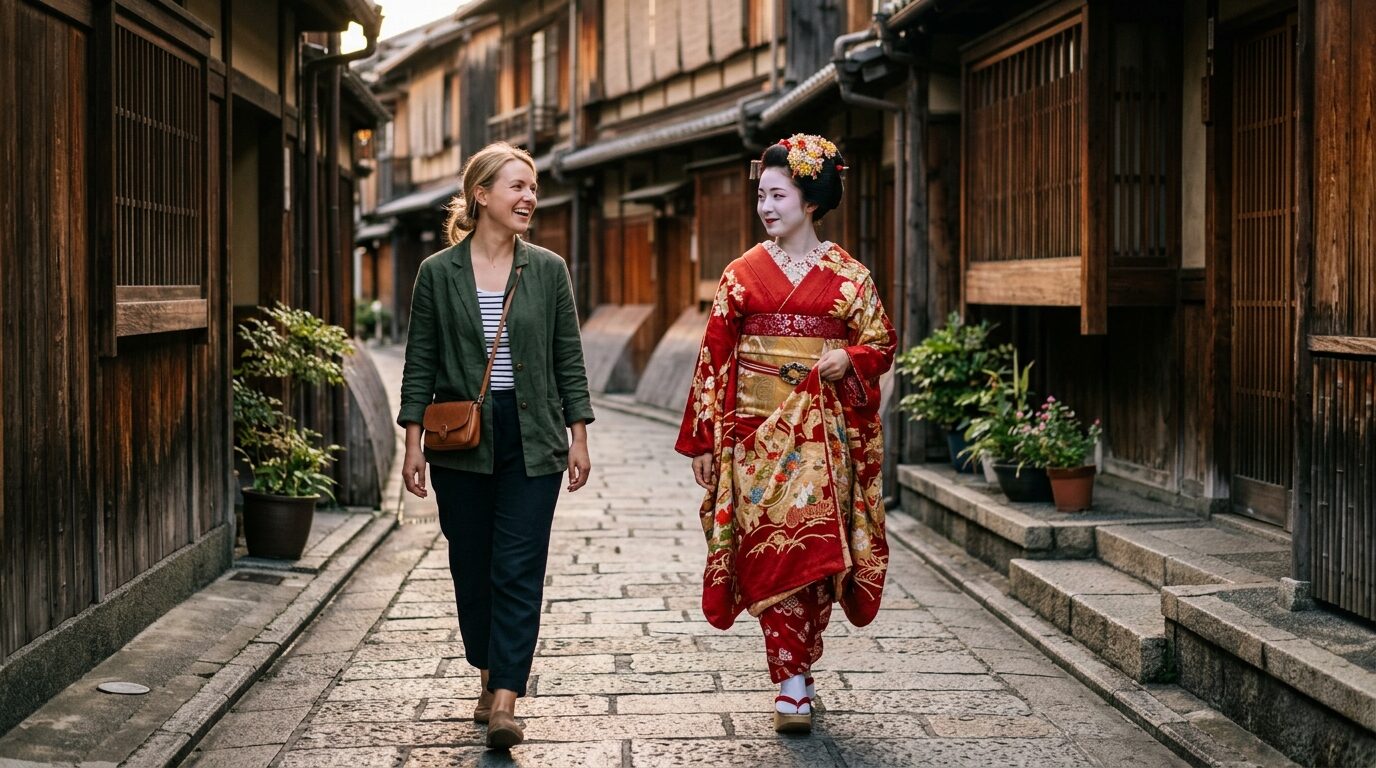
Dusk in Kyoto’s traditional districts feels like stepping through a portal. As the evening shadows stretch across the cobblestones of Gion and the paper lanterns flicker to life, a distinctive sound pierces the quiet murmur of the city: the rhythmic clip-clop of wooden okobo sandals. For a fleeting moment, a figure wrapped in vibrant silk and stark white makeup glides past a wooden lattice door and vanishes into a teahouse.
For many travelers, catching a glimpse of these elusive women is the holy grail of a Kyoto visit. Yet, this brief, often misunderstood encounter only scratches the surface of a deeply complex, centuries-old tradition.
To truly experience the living art of Kyoto, understanding geisha and maiko culture is essential. It requires moving beyond the superficial stereotypes perpetuated by pop culture. These women are not relics of the past, nor are they mere tourist attractions. They are highly skilled artisans, guardians of traditional Japanese music, dance, and conversation. They are the beating heart of Kyoto’s kagai—the “flower towns.”
This guide invites you to explore the real Japan. By unraveling the history, dedication, and etiquette surrounding this enigmatic world, you will gain a profound appreciation for one of Japan’s most beautiful and enduring living traditions.
Key Details and Breakdown: The World of the Flower Towns
To understand this culture, we must first correct a common misconception. In Kyoto, the term “geisha” is rarely used. Instead, locals use the term geiko, which translates beautifully to “a woman of art.”
Geiko vs. Maiko: The Stages of Mastery
The journey to becoming a fully-fledged artisan is grueling and requires years of unwavering dedication.
- The Maiko (The Apprentice): A maiko (“child of dance”) is an apprentice geiko, typically between the ages of 15 and 20. She is easily recognizable by her elaborate appearance. Maiko wear incredibly colorful, long-sleeved kimonos with a trailing obi (sash) that can weigh up to several kilograms. Their hair is styled using their natural hair, adorned with seasonal kanzashi (hairpins) that change every month.
- The Geiko (The Master): Once an apprentice graduates (around age 20), she becomes a geiko. Her appearance reflects her maturity and mastery. The kimono becomes more subdued in color with shorter sleeves, and she wears a specialized wig rather than styling her own hair. Her makeup is less dramatic, emphasizing her refined elegance and the depth of her artistic skill.
The Ecosystem of the Kagai
Kyoto’s geiko and maiko do not exist in isolation. They are supported by a tight-knit ecosystem within the five designated kagai (flower towns): Gion Kobu, Gion Higashi, Miyagawacho, Pontocho, and Kamishichiken.
- The Okiya (Boarding House): This is where a maiko lives during her apprenticeship. The “mother” of the house (okaasan) manages her training, provides her exquisite kimono, and guides her career.
- The Ochaya (Teahouse): This is where the actual entertainment takes place. Geiko and maiko do not work in the teahouses; they are dispatched to them from their okiya to entertain guests at private banquets called ozashiki.
- Ichigensan Okotowari (No First-Time Customers): Traditionally, ochaya operate on a strict “introduction only” policy. This is not out of elitism, but trust. Banquets run on a tab system, and the teahouse must trust that the patron will settle the bill later.
Practical Examples and Recommendations: Experiencing the Art
While entering a private ochaya without an introduction is nearly impossible for the average traveler, there are deeply respectful and authentic ways to witness the living art of Kyoto firsthand.
Attend the Seasonal Public Dances
The most spectacular way to see geiko and maiko perform is during their annual public dance performances. Each of the five kagai hosts its own event, usually in the spring or autumn.
- The Miyako Odori (Cherry Blossom Dances): Held by the Gion Kobu district every April, this is the most famous event. Dozens of maiko and geiko perform synchronized dances on a grand stage, surrounded by magnificent seasonal backdrops.
- The Kamogawa Odori: Held in May by the Pontocho district, this performance often includes dramatic plays alongside traditional dance, showcasing a different facet of their training.
- Recommendation: Book tickets months in advance. Opt for the first-class tickets that include a pre-performance tea ceremony, where a working geiko or maiko prepares and serves matcha green tea to the guests.
Book an Arranged Cultural Experience
Several high-end hotels, luxury ryokans (traditional inns), and specialized cultural concierges can now arrange authentic ozashiki experiences for foreign visitors.
- The Experience: You will be hosted in a private tatami-mat room. The evening includes a multi-course kaiseki dinner, traditional dances performed just a few feet away, and the opportunity to converse with the maiko (usually with the help of a translator) and play traditional drinking games like Konpira Fune Fune.
- The Authentic Angle: This bridges the gap between observation and participation. It allows you to ask the artisans about their daily lives, their training, and their dedication to the arts, transforming them from mysterious figures into real, hardworking artists.
Explore the Quieter Kagai
If you wish to walk the streets of the flower towns, skip the overcrowded main street of Gion (Hanamikoji).
- Kamishichiken: Located in northwest Kyoto near Kitano Tenmangu Shrine, this is Kyoto’s oldest and quietest kagai. The wooden architecture here is pristine, and you can observe the atmosphere of a traditional geisha district without the overwhelming crowds of the city center.
Tips for Travelers: The Rules of Respect
As tourism in Kyoto has surged, the kagai have faced significant challenges. Instances of “tourist paparazzi” chasing maiko down the street have deeply distressed the local community. Engaging with the living art of Kyoto requires strict adherence to respectful etiquette.
- They Are Commuting to Work: When you see a geiko or maiko walking on the street, she is not on display. She is actively commuting to an appointment at a teahouse. Do not block her path, do not try to stop her for a selfie, and do not touch her expensive kimono.
- Observe Without Intruding: If you wish to take a photograph, do so from a respectful distance without using a flash. Better yet, lower your camera and simply appreciate the fleeting moment with your own eyes.
- Respect Private Property: Do not lean against the delicate wooden lattice walls (koushi) of the teahouses, and never peek into private doorways.
- Support Legitimate Culture: Avoid “maiko makeover” studios if you are seeking authenticity. While dressing up can be fun, remember that wandering the streets in a rented kimono does not equate to the years of rigorous artistic training a true artisan undergoes. Invest your travel budget in tickets to the official dances or an arranged cultural dinner instead.
Conclusion
The allure of Kyoto lies not just in its ancient temples or quiet Zen gardens, but in the people who carry its history forward into the modern age. The geiko and maiko of the flower towns are living vessels of Japanese heritage. They dedicate their youth to mastering the shamisen, perfecting the subtle tilt of a fan, and preserving the intricate art of hospitality.
Embracing the living art of Kyoto is a lesson in mindfulness. It teaches us to look past the vibrant exterior and recognize the profound discipline and grace beneath. When you walk the lantern-lit streets of Kamishichiken or watch the precise, sweeping movements of a maiko’s dance, you are not merely sightseeing. You are bearing witness to a breathtaking, enduring devotion to beauty. It is time to step back, observe with respect, and experience the profound elegance of the real Japan.